
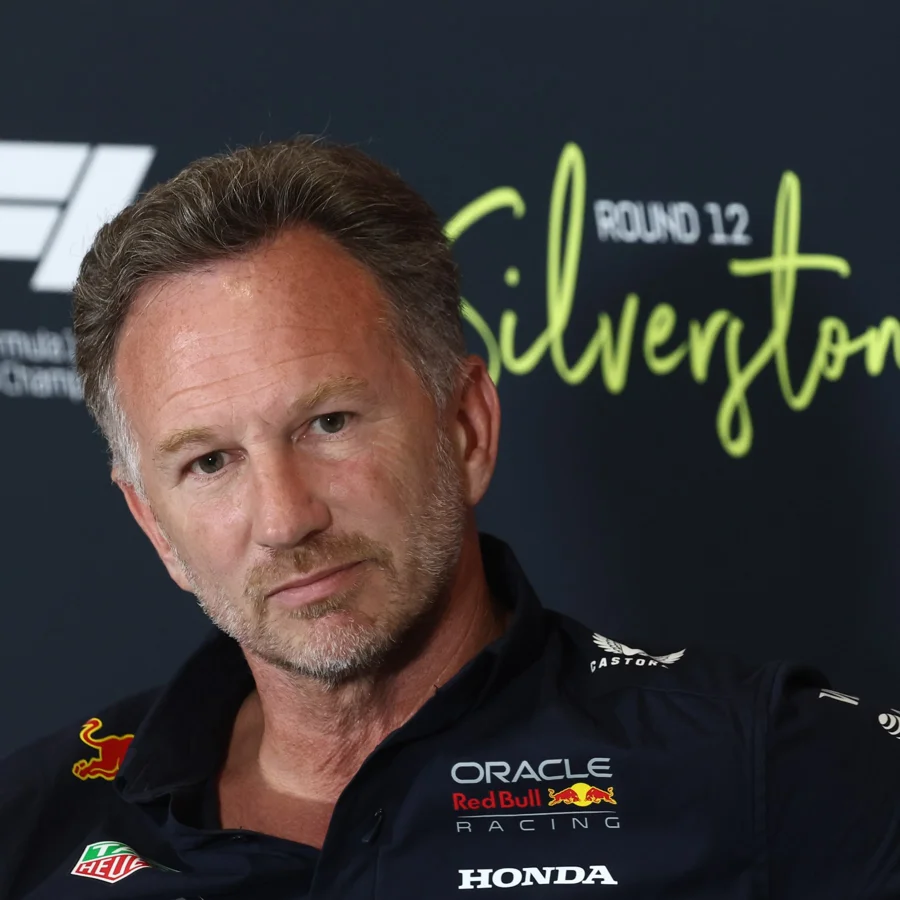

Christian Horner began his role as the youngest team principal in Formula 1 history when he took charge of Red Bull Racing in 2005. Over the course of his 20-year leadership, Horner oversaw an era defined by intense competition, multiple championships, and a demanding environment for Red Bull F1 drivers under Horner, shaping the careers of 14 drivers across various phases of the team’s evolution.
Throughout this period, Horner became known as a formidable team leader who maintained strict expectations and drove the team to achieve six constructors’ and eight drivers’ world championships. His influence helped forge Red Bull into a dominant force, although not every driver thrived under his rigorous management.
The Early Years of Red Bull Racing: Establishing Foundations and Early Struggles
David Coulthard, the Scottish veteran racer, was Red Bull’s first prominent driver when the team debuted in 2005. His consistent performances helped bring credibility to the newly formed team emerging from the Jaguar legacy. Horner later acknowledged Coulthard’s critical role in building the team’s infrastructure, which laid the groundwork for future success. Coulthard achieved Red Bull’s first-ever podium at the 2006 Monaco Grand Prix before retiring prior to the team’s championship-winning era. He has remained a close friend of Horner and an ambassador for Red Bull since leaving F1.
Christian Klien, retained from Jaguar’s previous lineup, struggled to match Coulthard’s pace. Though showing some early promise with points finishes in 2005, his inconsistent form led to his rotation with Robert Doornbos in 2006 and eventual dismissal. Klien became an early example of a driver with potential who could not meet Horner’s demanding results criteria.
The Italian Vitantonio Liuzzi, sharing driving duties with Klien, was unable to make an impact in his brief stint, failing to score points in his four races. Sent to the junior Toro Rosso team in 2006, Liuzzi never returned to Red Bull’s top squad.
Dutch driver Robert Doornbos started as a reserve driver but was promoted temporarily in 2006 amid team changes. While showing respectable speed and having history with Horner from their time at Arden Motorsport, he was deemed not capable of championship-winning performance and was ultimately replaced.
The Rise to Champions: Key Drivers Who Shaped Red Bull’s Golden Era
Mark Webber’s tenure at Red Bull coincided with the team’s ascension from midfield contender to race winner. With nine victories and involvement in four constructors’ titles, Webber was vital but frequently overshadowed by teammate Sebastian Vettel. The rivalry culminated in tension, such as the infamous ‘Multi-21’ race order incident, which complicated Horner’s management role. Despite never securing a world championship, Webber received credit from Horner for pushing the team forward during its dominant years. Webber later distanced himself from Horner after leaving the team, keeping future protege Oscar Piastri away from both Horner and Red Bull.
Sebastian Vettel represents Horner’s defining success: a driver transformed into a four-time world champion from 2010 through 2013. Vettel’s dominance marked Red Bull’s first golden era. Though Red Bull faltered following major regulatory changes in 2014, and Vettel departed for Ferrari, Horner regarded his exit as both professionally unavoidable and emotionally difficult, yet continued to speak highly of his former champion.
Daniel Ricciardo, promoted to the senior team in 2014, was regarded as a future world champion. He outperformed Vettel in his first season and won three races, becoming a fan favorite with his aggressive style and charismatic personality. Nevertheless, mechanical issues and perceived shifting team priorities toward rookie Max Verstappen delayed his ascent. Ricciardo surprised many by departing in 2018, though his relationship with Horner remained positive, with Horner lamenting that Ricciardo left before reaching his full potential at Red Bull.
The Transition Period: Difficult Promotions and Demotions
Daniil Kvyat’s rapid promotion to replace Vettel in 2015 proved to be a challenge. The Russian young driver lacked consistency and confidence, and a series of mistakes led to a harsh mid-season demotion back to Toro Rosso. Horner later reflected that the timing of Kvyat’s promotion was perhaps mishandled, as it ultimately paved the way for Verstappen’s historic debut with Red Bull.
Max Verstappen’s arrival in 2016 represented a bold gamble by Horner and the team, elevating an 18-year-old driver to the top tier. The move paid off immediately when Verstappen won his first race in Spain, becoming the youngest winner in F1 history. Verstappen has since dominated the sport, winning four consecutive world championships from 2021 to 2024 and becoming the cornerstone of the team’s future. Despite occasional public criticism from his father Jos Verstappen, the relationship between Horner and Verstappen has remained strong.
Pierre Gasly was promoted from Toro Rosso following Ricciardo’s departure but struggled significantly in the high-pressure Red Bull environment. Lagging far behind Verstappen’s pace, Gasly was demoted back to the junior team midway through 2019. Gasly later found success with AlphaTauri and moved on to race for Alpine.
Alex Albon, Gasly’s replacement in 2019, showed potential with two podium finishes and impressed Horner with his racecraft. However, he was unable to maintain consistent results comparable to Verstappen and was replaced in 2021. Horner opted to retain him as a simulator and reserve driver before Albon eventually left Red Bull to join Williams.
Later Developments: Stabilizing and Shuffling Seats
By 2021, Red Bull’s second driver seat had become unstable, prompting Horner to bring in Sergio Perez, the first driver outside of Red Bull’s junior program in over ten years. Perez brought much-needed consistency and experience, making significant contributions to the 2021 and 2022 constructor title battles and achieving multiple race wins. Nonetheless, a growing performance gap between him and Verstappen by 2023 led Horner to eventually decide on Perez’s departure in 2024.
Newcomers Liam Lawson and Yuki Tsunoda faced steep challenges in securing their positions within the team during Horner’s final period at Red Bull. Lawson’s promotion in early 2025 was brief; after only two races, poor results led Horner to replace him with Tsunoda, who himself showed flashes of talent but struggled with inconsistency and lacked the pace to challenge Verstappen. Horner acknowledged rushing Lawson’s promotion and recognized the fiercely unforgiving nature of the environment he had cultivated. Upon Horner’s exit in July 2025, Tsunoda publicly thanked him for his support, though his future at Red Bull remained uncertain.
Christian Horner’s Enduring Influence and Red Bull’s Next Chapter
Christian Horner’s tenure as team principal was defined by his relentless pursuit of excellence and uncompromising management style, which has left an indelible mark on Formula 1 and Red Bull Racing. His ability to identify and nurture talent while maintaining a high-pressure environment resulted in multiple world championships and established Red Bull as a powerhouse. However, this often came with harsh consequences for those unable to meet expectations.
As Horner steps away, Red Bull faces the challenge of balancing ongoing dominance with driver development stability and managing internal dynamics carefully. The legacy he leaves behind is a complex mixture of triumph, talent, rivalry, and ruthlessness that will shape the team‘s direction for years to come.
Our Reader’s Queries
Q. Why is 17 banned in F1?
A. Number 17 is the only driver number in Formula 1 that has been officially retired. This was done to honor Jules Bianchi. Bianchi, who was from France, had this number during a tragic accident at the 2014 Japanese Grand Prix.
Q. Which F1 driver has ADHD?
A. Lewis Hamilton, born in 1985, is a British racer in Formula One. He races for Mercedes and previously raced for McLaren. He openly talks about his experience with ADHD and shares his various interests.
Q. Why is number 17 banned in F1?
A. In 2015, the number 17 was retired to honor Jules Bianchi, who passed away from injuries after a crash at the 2014 Japanese Grand Prix.
Q. Is number 69 allowed in F1?
A. Drivers can pick their own numbers from 0 to 99, except for number 1. Only the World Drivers’ Champion can use number 1 if they want to, but it’s not compulsory.