
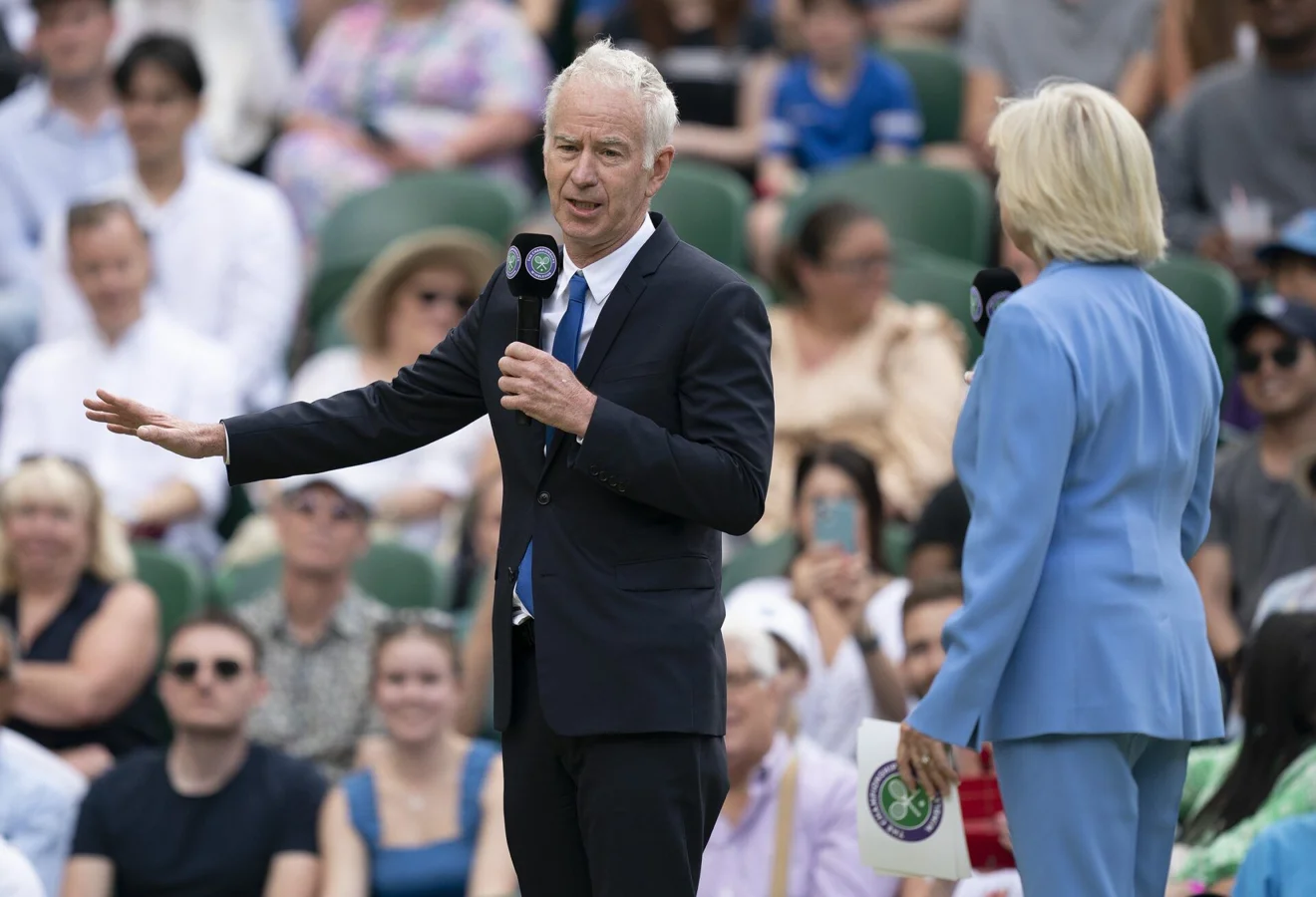

Amid a surge of new talent both on the tennis courts and in broadcasting, legendary columnist Sally Jenkins issued a sharp critique of John McEnroe’s approach to tennis commentary this week. Writing for the Washington Post, Jenkins criticized McEnroe and his brother Patrick for what she called a lack of preparation and engagement during broadcasts of major tournaments like Wimbledon and Roland Garros.
Incidents Highlighting McEnroe’s Broadcasting Shortcomings
Jenkins cited several moments that reveal McEnroe’s apparent disinterest, including a live broadcast incident at the French Open where he arrived hours late, frustrating his studio co-hosts. During Wimbledon, McEnroe incorrectly labeled a serve by Grigor Dimitrov as the biggest he had ever seen in the tournament, overlooking a faster serve that took place earlier. At the 2023 Australian Open, McEnroe expressed surprise over Chinese player Juncheng Shang’s nickname “Jerry,” only to be informed on air that Shang lived in Florida.
Comparison With Emerging Tennis Commentators
In contrast, newer voices such as Brian Anderson and Andre Agassi at TNT have won praise for their insightful coverage during the French Open, attracting record audiences. ESPN’s Mike Monaco is also gaining attention, despite being mentioned in Trinity Rodman’s critiques of Wimbledon coverage related to her boyfriend, Ben Shelton. Analysts like Sloane Stephens and Andy Roddick appear poised to become the next generation of respected tennis commentators.
Decline in McEnroe’s Broadcasting Effectiveness
Jenkins argued that John McEnroe seems disengaged from studying recent developments and current players, weakening the quality of his broadcasts. Highlighting the McEnroes’ former on-court knowledge, she wrote,
“When each retired, he knew the games and habits of his opponents and how to find all the angles against them,”
but added these days are behind them. Jenkins also described the McEnroes as delivering about as much information to audiences as
“a couple of air compressors, complete with the irritating hissing.”
Wider Criticism of Sports Analysts Shows Ongoing Challenges
The Washington Post columnist drew parallels with the criticisms faced by other veteran sports analysts such as Charles Barkley, John Smoltz, and Wayne Gretzky who have also been accused of losing passion or depth as commentators over time. This points to a broader challenge within sports broadcasting of maintaining audience engagement through continuous preparation and learning.
What the Future Holds for Tennis Commentary
While Jenkins acknowledged there remains a place for John McEnroe in tennis media, she suggested that as tennis evolves with fresh stars like Carlos Alcaraz, Coco Gauff, Janik Sinner, Emma Raducanu, and Ben Shelton rising, newer analysts such as Andre Agassi or Andy Roddick might be more fitting successors. Jenkins encouraged a shift toward broadcasters who actively study the sport and connect with emerging talent, thereby enriching the viewing experience.
New Voices Enhancing Tennis Broadcasts
Jenkins concluded by emphasizing the abundance of capable and engaged commentators who improve tennis coverage by delivering insightful analysis, stating,
“There is a raft of truly talented voices out there who apply themselves and enhance the audiovisual medium with real insight,”
—Sally Jenkins. With tennis being broadcast across multiple networks worldwide and shared often through world feeds, the quality of commentary plays a crucial role in fan engagement and the sport’s global appeal.