
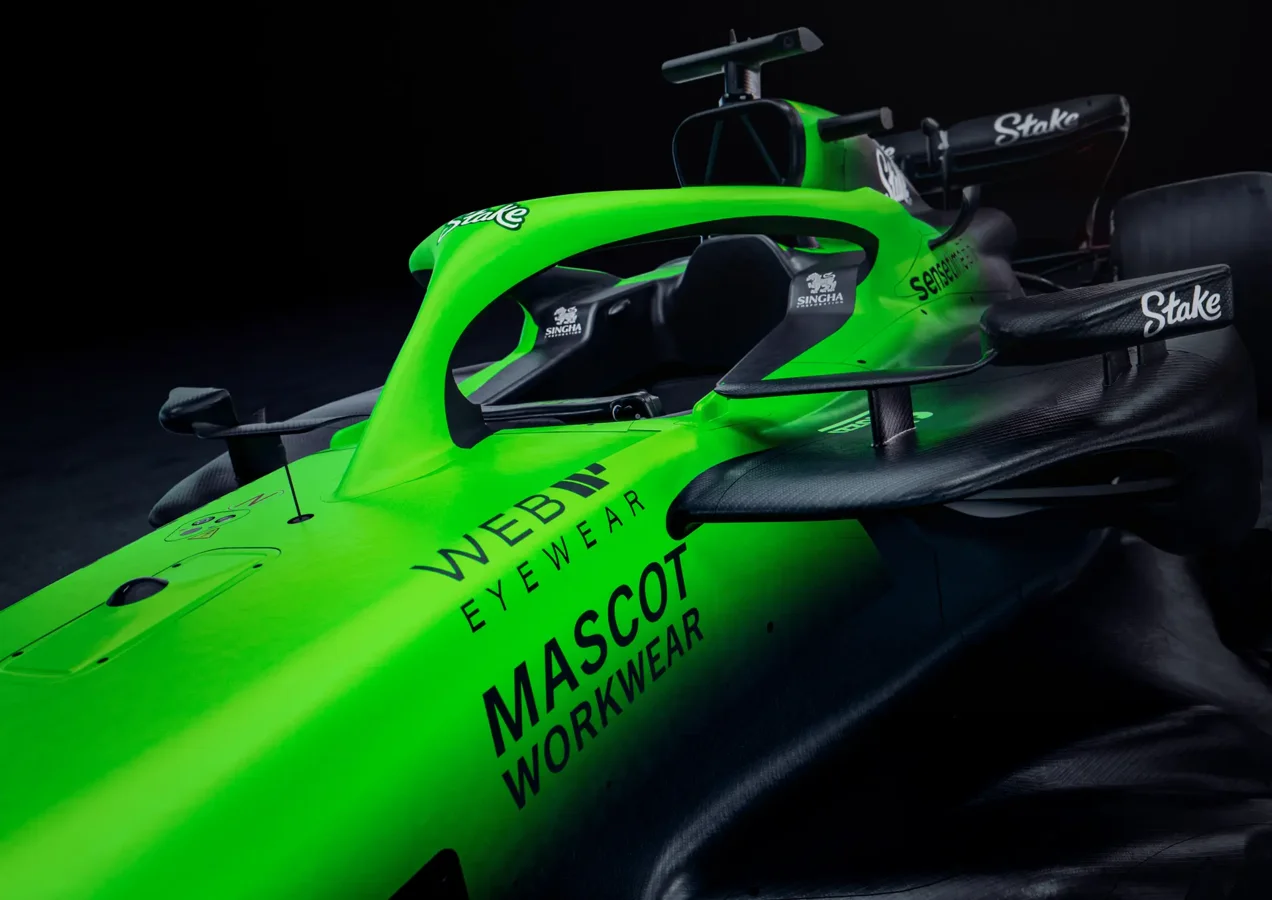

After a disappointing and point-less 2024 season, Valtteri Bottas decided to end his stint with the Sauber F1 team. The Finnish driver reflected on the team’s trajectory, calling his move “a mistake” and noting that while the first year showed promise, the following period went downhill. Bottas explained that the initial three-year plan, which included clear targets, was abandoned after Fred Vasseur’s departure.
Fred Vasseur left Sauber at the end of 2022 to join Ferrari, and Andrea Seidl from McLaren took over as team principal. The team, which competed as Alfa Romeo before, began to decline during the 2023 season, culminating in their fellow Swiss team scoring only four points in 2024. Zhou Guanyu’s unexpected eighth place was the team’s only top-10 finish in 24 races, preventing a sweep of failure.
Behind the scenes, criticism mounted toward previous management for sacrificing the 2024 and 2025 seasons in hopes of building a stronger future under Audi’s entry in 2026. This approach appeared to dampen team morale and led to Sauber lagging in the fiercely competitive midfield.
Management Overhaul and Renewed Focus on Short-Term Performance
As Sauber began its transformation into Audi’s works team, significant leadership changes were made to stabilize the present while preparing for the future. In August, Mattia Binotto, formerly of Ferrari, stepped in as CEO, overseeing broader team strategy. Meanwhile, ex-Red Bull sporting director Jonathan Wheatley was appointed team principal, taking charge of daily operations for the first time.
One of Binotto’s early priorities was to address short-term performance issues as a foundation for long-term success. Rather than splitting the team’s efforts between current and future projects, he emphasized cohesion, recognizing that much of the personnel and equipment would serve both agendas.
Performance Gains Sparked by Technical Upgrades and Driver Confidence
At the start of 2024, Sauber’s new C45 car kept the team near the back of the midfield. Nico Hulkenberg’s surprising six points in the rain-affected opening race in Melbourne provided a brief uplift but was not typical of the initial season’s results. However, targeted aerodynamic upgrades introduced in Barcelona—new floor, sidepods, and front wing—marked a turning point, later reinforced by further refinements in Silverstone.
These technical enhancements yielded precious tenths of a second, bringing Sauber back into midfield contention. The team scored points for four consecutive weekends after Barcelona, surpassing Red Bull and advancing in the standings from last place to sixth. The squad began challenging Williams, which had previously held fifth position in the constructors’ championship.
With improved car performance, Sauber’s morale visibly lifted. Hulkenberg’s podium finish at Silverstone, aided by tricky weather conditions, injected a fresh sense of belief within the team based at Hinwil.
“We talked about how important momentum is in a team. And so really, for me, what I take from today is people start believing in us,”
Jonathan Wheatley, Team Principal
“I can say the words. I can say we’re gaining momentum. I can say we’re putting performance on the car. I can say all the hard work Mattia’s been putting in before I came here is coming to light. But it’s true.”
Jonathan Wheatley, Team Principal
Improved Car Dynamics Enhance Driver Performance and Consistency
The upgraded C45 also provided greater confidence for both Hulkenberg and rookie Gabriel Bortoleto. This comfort translated into more consistent qualifying lap times and steadier race performances, critical for staying competitive amid a highly congested midfield.
“I think we’ve all seen a confidence in both drivers with the car since Barcelona,”
Jonathan Wheatley, Team Principal
“And I think that’s it. It was very peaky before. You probably noticed it was difficult for the drivers to consistently improve in qualifying, which was one of our big problems. I can remember in Jeddah, even on the brakes into Turn 1, both drivers had problems getting that right. Now, we don’t even talk about it.”
Jonathan Wheatley, Team Principal
Remaining Challenges in a Fierce Midfield Battle
Despite recent progress, it would be premature to declare Sauber’s current performance as the new standard. The F1 midfield is exceptionally tight, and much of Sauber’s gains have been aided by rival teams like Williams encountering difficulties and Racing Bulls displaying inconsistency. Variability in performance is inevitable as the season progresses.
Williams, having shifted focus away from 2025 development to concentrate fully on 2026, has reduced its pace, narrowing its points advantage over Sauber. Now only 18 points separate the Swiss outfit from Williams, with Racing Bulls and Aston Martin closely following. The fight for fifth place in the constructors’ championship is intensifying as Sauber closes the gap.
“We’re just going to take it a race at a time,”
Jonathan Wheatley, Team Principal
“We’re enjoying our race. We put more performance on the car again this weekend. Let’s see what Spa holds for us.”
“We’ve got a very long journey towards where we need to be as a team. And it’s a great stepping stone on that journey.”
Jonathan Wheatley, Team Principal
Looking Ahead: Building on Momentum Toward 2026
Sauber’s recent resurgence, highlighted by Hulkenberg’s Silverstone podium and a steady run of points finishes, signals a significant turnaround after a difficult period marked by management changes and strategic pivots. The integration with Audi’s future plans continues, but the focus on establishing solid short-term performance is proving vital.
With Jonathan Wheatley’s leadership and Mattia Binotto’s strategic oversight, Sauber aims to narrow gaps further in the midfield while strengthening its internal organization. Their efforts will be closely watched as the team targets consistency and aims to sustain progress heading into the 2026 regulatory changes and the official Audi takeover.
Our Reader’s Queries
Q. Why is 17 banned in F1?
A. Number 17 is the only officially retired driver number in Formula 1. This honors Jules Bianchi, a French driver. Bianchi was using number 17 when he had a tragic accident at the 2014 Japanese Grand Prix.
Q. Which F1 driver has ADHD?
A. Lewis Hamilton, born in 1985, is a British race car driver active in Formula One. He races for Mercedes and previously drove for McLaren. Hamilton openly talks about his experiences with ADHD and shares his various interests and hobbies.
Q. Is number 69 allowed in F1?
A. Drivers can pick any permanent number between 0 and 99, except for 1. The number 1 is reserved for the World Drivers’ Champion if they wish to use it, but it’s not mandatory.
Q. What F1 drivers have ADHD?
A. Lewis Hamilton, also known as Sir Lewis Carl Davidson Hamilton, was born in 1985. He is a British Formula One driver for Mercedes and previously raced for McLaren. Hamilton openly talks about having ADHD and shares his various interests and hobbies.