
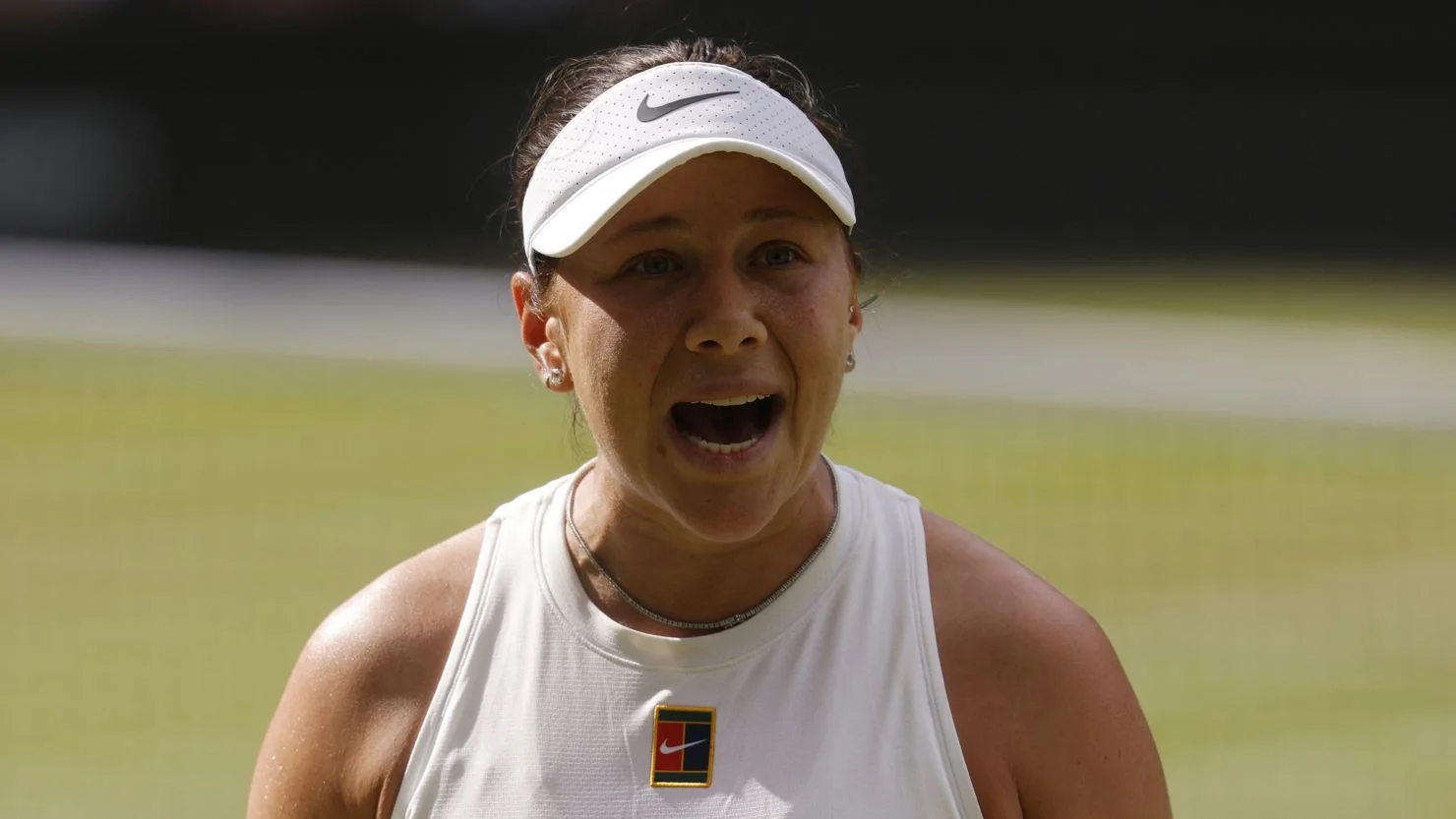

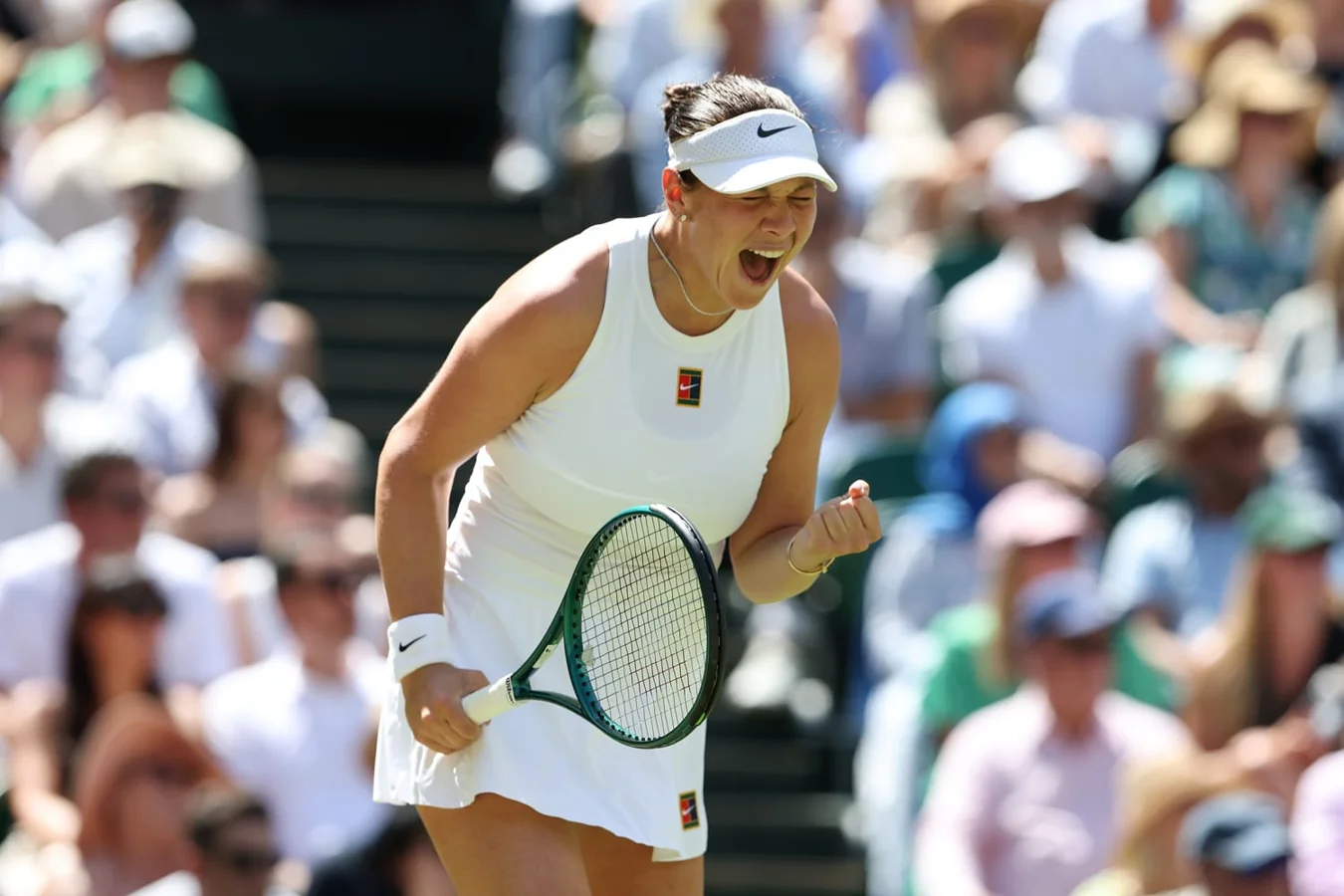
The 2025 Wimbledon women’s final will be remembered more for its unusual scoreline than for competitive drama, as Iga Swiatek swept Amanda Anisimova 6-0, 6-0 in under an hour. The match, held on Centre Court, marked Swiatek’s first Wimbledon championship, while Anisimova, making her Grand Slam final debut, struggled visibly under pressure.
Anisimova’s challenges in managing nerves became apparent early, and the one-sided nature of the match has reignited discussions on whether the women’s final format at Wimbledon should be reconsidered to better balance competitiveness and player endurance. The “Amanda Anisimova Wimbledon final” has therefore become a focal point for debate around potential changes to the traditional best-of-three sets structure.
Former Player Laura Robson Advocates for Best-of-Five Sets to Ease Pressure
Laura Robson, a British tennis figure, expressed during a BBC Radio 5 Live interview her belief that transforming the women’s final to a best-of-five sets format could alleviate some of the intense pressure players face. She argued this could offer competitors like Anisimova more time to adjust and find their rhythm in high-stakes matches.
Robson explained that when a player falls behind early in a three-set match, it can feel like the match is over too quickly, especially on a stage as intimidating as Wimbledon’s Centre Court. She noted:
“This is when you are desperate for the women’s final to be a best-of-five,”
—Laura Robson, Tennis Commentator
She continued, emphasizing the benefit of having more sets to play through nerves and gain confidence:
“But if you know I can knuckle down and there are at least another two sets that my opponent has to win, then it can settle you down massively.”
—Laura Robson, Tennis Commentator
Robson recalled previous men’s finals where longer matches allowed players to overcome early nerves and mount comebacks, citing Carlos Alcaraz’s 2023 Wimbledon final against Novak Djokovic. Alcaraz lost the first set handily but ultimately prevailed in a five-set encounter, underscoring the value of extended formats in managing pressure and pacing.
Annabel Croft Expresses Concern That Longer Matches Could Increase Injury Risks
In contrast, another former British tennis professional, Annabel Croft, spoke to BBC Radio 5 Live after the final and expressed reservations about extending women’s matches to five sets. She questioned the physical toll such a change could impose on players, considering the demanding nature of the current tour schedule.
Croft explained that three-set matches on grass courts have already stretched to lengthy durations, stating:
“There were many matches even at Queen’s Club when we were watching, and some of the women’s matches, best of three, were going three hours on the grass, the men a little bit quicker because of their big serves and power going through the court, the matches were a little bit more efficient.”
—Annabel Croft, Former Tennis Player
She added:
“But if you’re three hours for three sets, can you imagine five…”
—Annabel Croft, Former Tennis Player
Highlighting injury concerns, Croft argued that increasing match length could exacerbate existing physical challenges for players, saying:
“I don’t think it’s good for their bodies. If they need to sustain themselves on the tour, I don’t think the body can keep hammering itself with the amount of injuries that players are sustaining these days.”
—Annabel Croft, Former Tennis Player
She concluded her stance plainly:
“So I don’t think I am that keen on best-of-five sets for the women, I think there are enough injuries as it is anyway.”
—Annabel Croft, Former Tennis Player
Her position underlines concerns shared by many regarding player welfare and the demands of a tennis calendar that tests athletes’ endurance.
Ongoing Debate on Match Formats Reflects Broader Questions of Competitiveness and Player Health
The contrasting viewpoints between Robson and Croft encapsulate the complexity of the discussion about altering the women’s final format at Wimbledon. On one hand, a best-of-five set structure could grant players like Amanda Anisimova a greater opportunity to recover from early setbacks and showcase their true potential on the sport’s biggest stage. On the other hand, longer matches might pose additional physical risks in an already grueling professional circuit.
While the current best-of-three format remains standard on the women’s tour, the decisive outcome in the 2025 final has magnified calls for new ideas to enhance fairness and excitement at Grand Slam events. Future decisions will likely weigh the balance between preserving tradition, protecting player health, and ensuring matches deliver compelling competition.
As Wimbledon and other Grand Slams consider their formats, the legacy of this unusual final could be a catalyst for meaningful change in how women’s tennis is contested at the highest level.
Our Reader’s Queries
Q. Why did Amanda Anisimova take a break?
A. Anisimova shared a post to explain her recent situation and future steps. She has faced mental health challenges and burnout since summer 2022. Attending tennis tournaments has been overwhelming. Right now, her main focus is improving her mental health and taking some time off.