
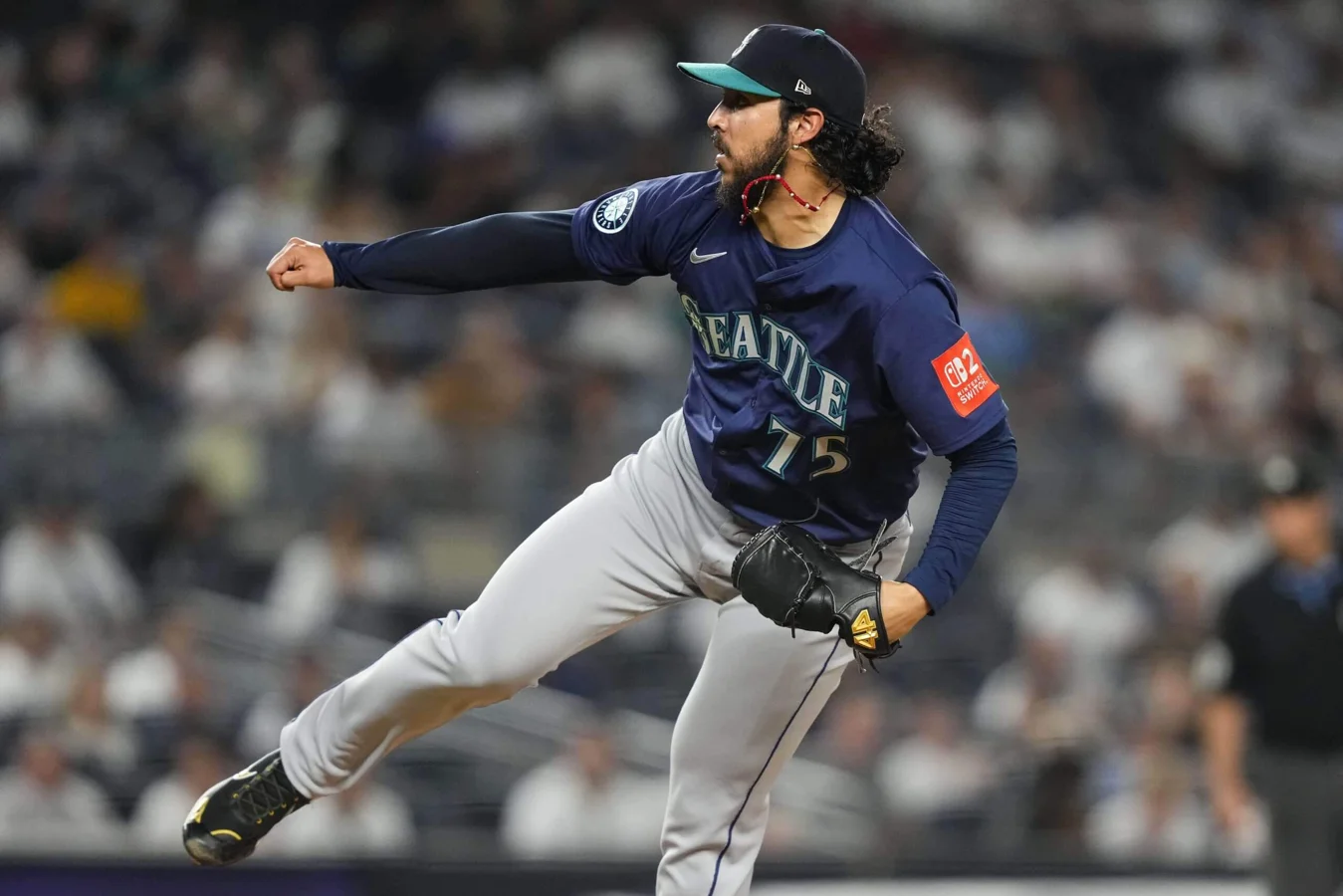

The New York Yankees’ decision to trade elite reliever Andrés Muñoz without receiving an immediate major-league return has come under intense scrutiny after a recent game in the Bronx. Observers and analysts noticed baserunners seemingly communicating pitch types through conspicuous signals, raising questions about the team’s strategy and rationale behind “Andrés Muñoz Yankees pitch signals.”
Confusing Moves Raise Eyebrows During Yankees-Mariners Game
During a nationally televised matchup against the Seattle Mariners, viewers spotted Yankees’ baserunners acting unusually on second base while Muñoz was pitching. These actions appeared to serve as signals relayed to batters, suggesting that the Yankees might be exploiting knowledge about their former pitcher right on the field. Instead of protecting secrets, it seemed the team was drawing attention to Muñoz’s tendencies after letting him go.
MLB analysts on the show MLB Now mocked the irony of the situation, critiquing the Yankees’ approach as both baffling and counterproductive. Brian Kenny highlighted the trend, saying,
“It’s the latest on how teams can use scouts, tech, or anything to try to get a pitcher who’s given something away,”
suggesting that the Yankees were overly transparent with their former star.
One analyst was particularly struck by the runners’ activity, saying,
“I’ve never seen runners on second base with this kind of action,”
and questioned the direction of attention from Cody Bellinger, who seemed to be looking toward the first base coach rather than the pitcher. The implication was clear that the signals to batters were deliberate, not accidental.
Debate Over Strategy and Possible Regret From the Yankees
The conversation gained intensity when former Major League player Yonder Alonso weighed in on the controversy. He acknowledged that while the tactics may have been legal, their wisdom was questionable.
“You might face this team in the postseason,”
Alonso warned,
“Why let everybody know, especially Muñoz in Seattle, hey, they’ve got something going on?”
Alonso’s comments underscored how revealing these signals might backfire if the Mariners faced the Yankees in important games.
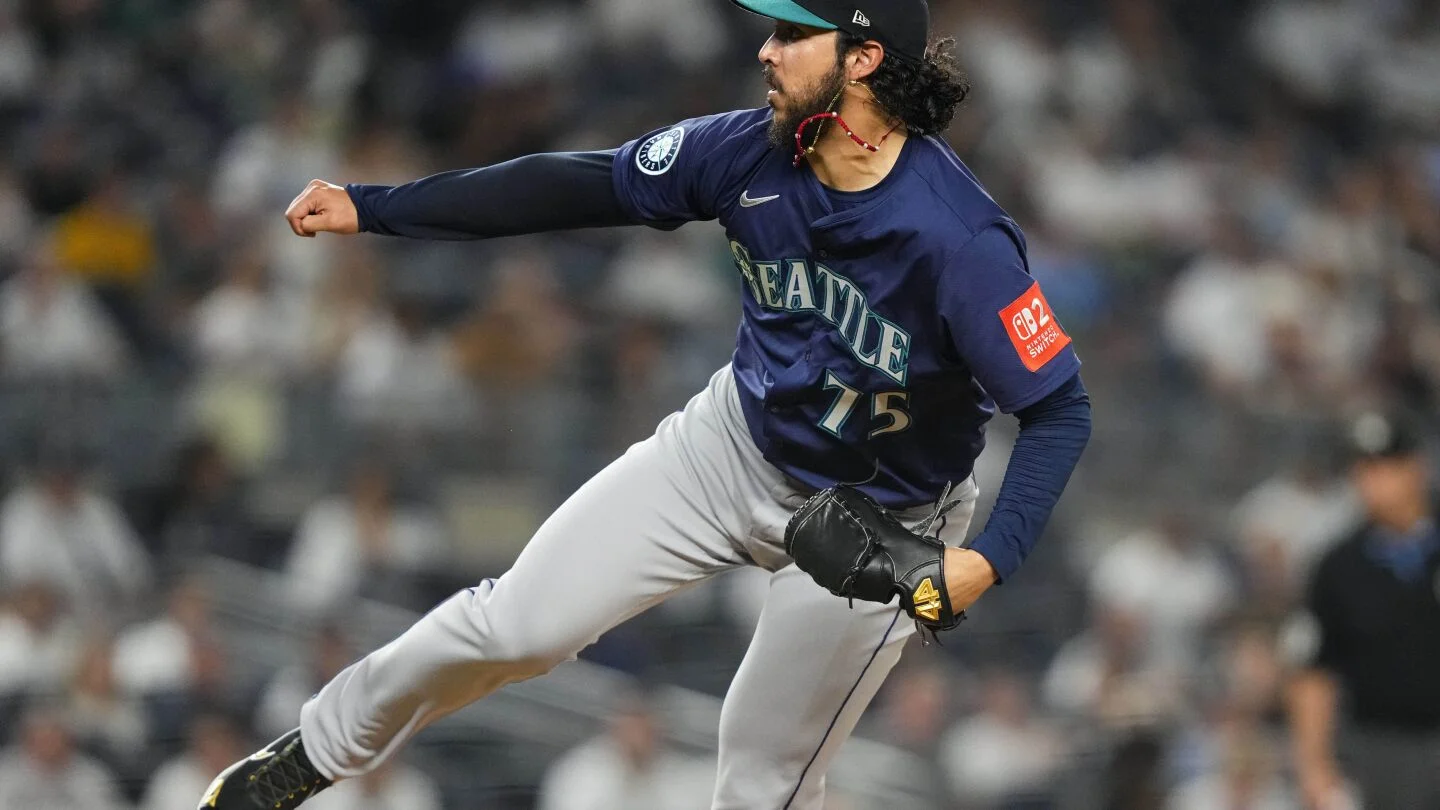
Alonso also suggested that Muñoz might have inadvertently contributed to the issue by exposing his pitching grip.
“I also think he just opened up his glove completely to second base… so they were seeing grip as well, right?”
he noted, emphasizing the risk of unintentionally aiding opponents through visible tells.
The situation portrayed a messy picture for a franchise known for discipline, as they appear to have lost a valuable bullpen asset and are now seemingly showing their hand publicly. Analysts viewed this as more than just pitch tipping—it was a sign of possible second thoughts about trading away Muñoz.
MLB Now Sees a Deeper, Calculated Game Beyond Pitch Tipping
Experts on MLB Now argued that the events during the Yankees-Mariners broadcast were not random but part of a strategic attempt to decode Muñoz’s pitching. Cody Bellinger’s focused eye contact with the first base coach indicated a rehearsed signaling system. According to panel discussions, this involved advanced scouting techniques including AI analysis and real-time interpretation aimed at exploiting Muñoz’s habits. The Yankees were executing a premeditated game plan rather than reacting spontaneously.
This tactic was not new for the Yankees. In 2023, a similar incident involved Aaron Judge, who gave subtle signals by glancing at the first base coach just before hitting a pivotal 3-2 slider from Blue Jays reliever Jay Jackson. Jackson later admitted that he had been tipping his pitches by changing his glove position, which the Yankees’ coaching staff noticed and took advantage of. Analysts saw this as a pattern where the Yankees use detailed scouting and communication to gain an edge on pitchers’ tells.
Advice for Mariners and a Look at Baseball’s Cat-and-Mouse Battle
Alonso urged the Mariners to respond firmly to these developments. He said,
“You’ve got to have better ball security,”
and suggested bringing in Travis Chapman, the first base coach, to the batter’s box for closer observation.
“If you think something is going on, it’s on you, first of all, to protect it. And then it’s on you to correct it. The Yankees did nothing wrong. Seattle needs to correct it.”
This highlighted the responsibility of teams to safeguard their pitching signals in a highly competitive environment.
The ongoing scenario reveals how baseball teams continually engage in intricate tactics resembling a chess match, balancing deception, interpretation, and countermeasures. Whether the Yankees’ apparent eagerness to expose Muñoz’s pitching signals is a calculated move or an act of desperation remains debatable, but the episode underscores the intense scrutiny and psychological warfare that defines modern Major League Baseball.
As the season progresses, teams like the Mariners will likely tighten protocols to avoid being outmaneuvered again, while the Yankees may continue to exploit their scouting acumen. Fans and analysts alike will watch closely to see if such gameplay shifts the competitive balance or draws criticism over sportsmanship.