
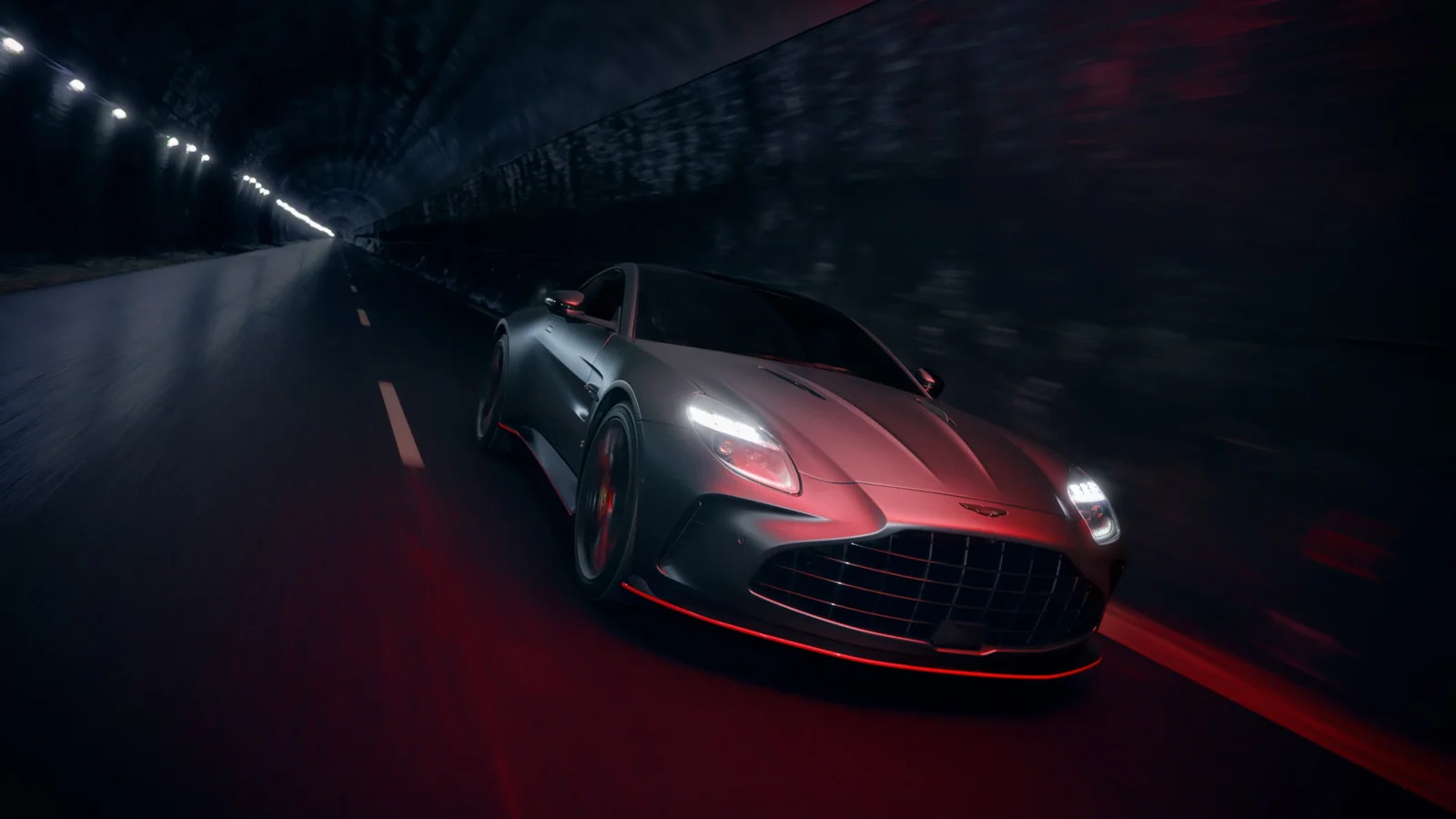

Aston Martin’s 2026 Formula 1 car will be designed under the guidance of renowned engineer Adrian Newey, with significant contributions from artificial intelligence technology. This development comes as part of a new partnership announced at the Monaco Grand Prix, where CoreWeave joined forces with Aston Martin as the official AI cloud computing and infrastructure partner, aiming to elevate the team’s design, aerodynamics, and race strategy analytics.
Enhancing Aerodynamics and Strategy Through AI Integration
CoreWeave’s collaboration with Aston Martin extends beyond traditional design methods, incorporating powerful AI cloud capabilities to enhance precision in car development. The partnership focuses on using AI to support aerodynamic analysis and optimize race strategies, offering real-time analytics from drivers combined with advanced simulations. These innovations utilize the latest NVIDIA GPUs, ensuring high-performance computing power directly impacts both design iterations and live race decisions.
Advanced Wind Tunnel Facility Powered by AI Technology
A key aspect of the partnership involves Aston Martin’s investment in upgrading their Silverstone campus, notably the new wind tunnel facility. AI cloud infrastructure is central to this facility’s function, accelerating the aerodynamic testing process by enabling hundreds of simulations and tests on various car components before finalizing the best versions for track use. This approach prioritizes speed and efficiency, aligning computational advances with rapid physical development cycles.
Shared Vision for F1 as a Platform for High-Performance AI Engineering
Jean English, CoreWeave’s chief marketing officer, emphasizes the convergence of expertise and technology within the partnership. She states,
“CoreWeave signed the partnership with the Aston Martin team to be the official AI Cloud Computing and Infrastructure partner, and very specifically to bring a new level of precision to car design, aerodynamics, how to think about the straight race strategy and analytics,”
underscoring the deep integration of AI into all facets of the team’s work.
English further highlights:
“Then we are also doing the race side to make sure that we’ve got the real-time analytics coming in from the drivers, and we obviously have the ability for us to help move the team to an AI cloud, and that’s with the latest NVIDIA GPUs (graphics processing units) available on the market.”
Regarding the partnership’s timing, she adds,
“We’re very excited about the partnership, the CoreWeave wind tunnel, and with Adrian now on board, it’s a perfect time for us to think about what can be powered by CoreWeave’s powerful AI capabilities.”
She also reflects on the shared ambition behind the collaboration:
“We have a perfect alignment of the talent and technology, and now fierce ambitions together. When we had a shared vision, we thought of F1 as not just being a racing platform, but together we really saw it as providing the ground for high-performance AI engineering.”
And on the purpose-built nature of the AI cloud environment, English explains,
“You know, we are an AI cloud. We are purpose-built for AI. We are really focused on providing the speed, the performance, the reliability, the expertise that helps unleash AI’s full potential.”
Looking Ahead: The Impact of AI on Aston Martin’s F1 Future
The new multi-year agreement between Aston Martin and CoreWeave reflects a broader shift in how Formula 1 teams blend advanced technology with traditional engineering. By embedding AI deeply into design and race operations, Aston Martin aims to accelerate innovation and enhance their competitiveness on the grid. As Jean English notes,
“It’s a multi-year partnership, so we’ll continue to stay curious and to have bold ambitions together. I think it’s a fascinating time to be in F1 and be at the pinnacle of what can happen with AI. AI is not a futuristic concept. It is absolutely a fundamental tool to how to think about transforming F1.”
If CoreWeave’s AI solutions successfully advance Adrian Newey’s design ideas, Aston Martin is poised to become a formidable frontrunner in Formula 1, marking a new era where human expertise and artificial intelligence work seamlessly to create cutting-edge racing technology.
Our Reader’s Queries
Q. Why is 17 banned in F1?
A. In Formula 1, the number 17 is the only driver number that has been officially retired. This honors Jules Bianchi, a French racer who was wearing 17 when he had a terrible accident at the 2014 Japanese Grand Prix.
Q. Which F1 driver has ADHD?
A. Born in 1985, Lewis Hamilton is a British Formula One racing driver who races for Mercedes and has also raced for McLaren. He openly shares his experience living with ADHD and talks about his varied interests and hobbies.
Q. Is number 69 allowed in F1?
A. Drivers can select their own, permanent numbers ranging from 0 to 99, except for the number 1. Only the World Drivers’ Champion has the option to use the number 1. However, using this number is not mandatory for them.
Q. Which F1 drivers have ADHD?
A. Lewis Hamilton is a British racing driver born in 1985. He participates in Formula One for Mercedes and has also raced for McLaren. He openly talks about living with ADHD and shares his wide range of interests and hobbies.