
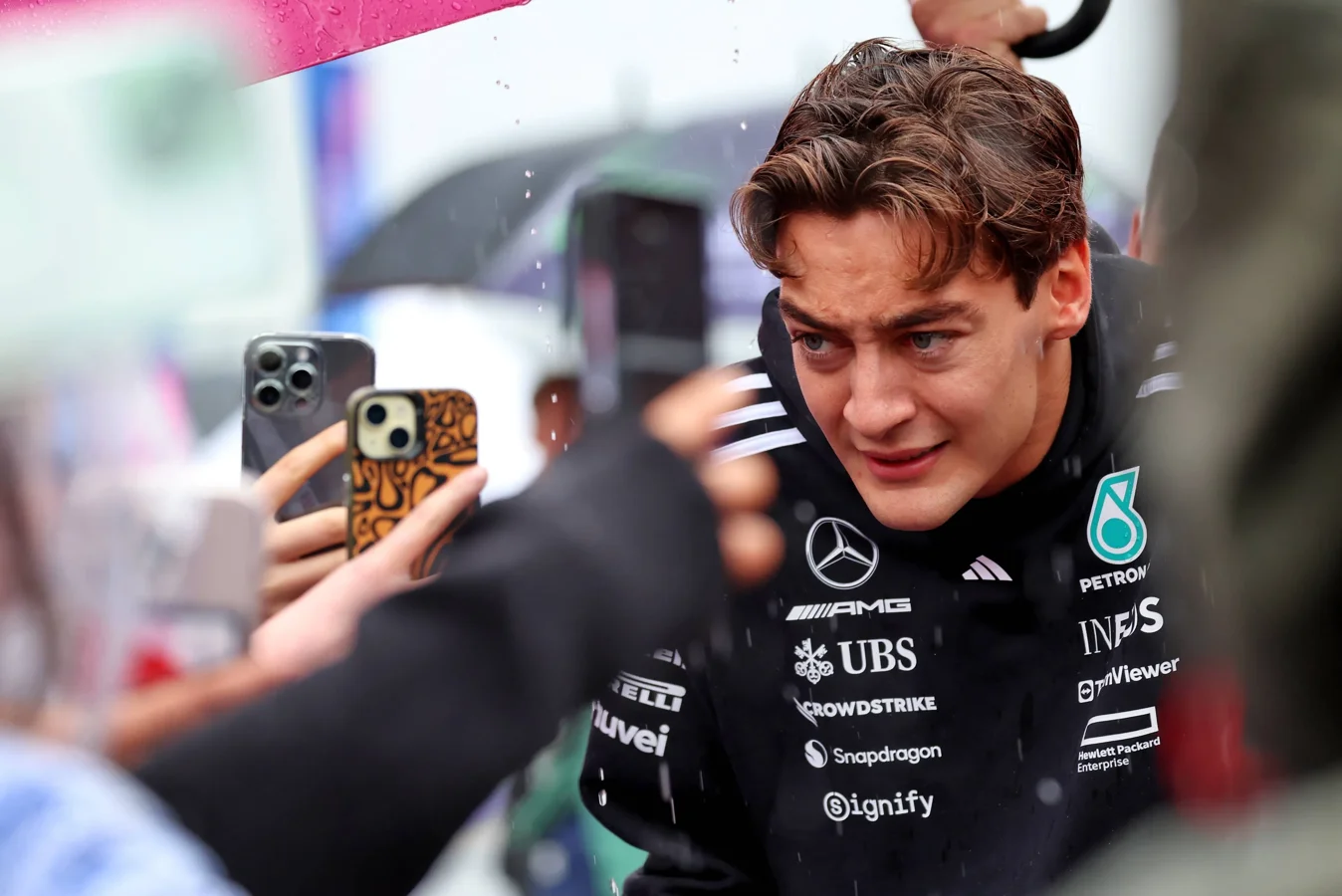

Aston Martin has become the center of fresh speculation regarding George Russell’s potential move as contract uncertainties grow ahead of the 2026 Formula 1 season. Rumors suggest the British team could pursue the Mercedes driver if he becomes available on the market, stirring intense discussion among fans and pundits alike.
However, team principal Andy Cowell promptly dismissed these claims, tempering the anticipation of supporters eager for a dramatic driver reshuffle. With Mercedes currently assessing their lineup around Max Verstappen’s uncertain status, Russell’s contract situation remains a prominent topic throughout the paddock.
Upcoming Changes and Contract Ambiguity at Mercedes
Two Mercedes seats are expected to open for the 2026 season, yet neither George Russell nor rising talent Andrea Kimi Antonelli have secured contracts beyond the current year. At the same time, Max Verstappen’s potential departure from Red Bull adds another layer of uncertainty, fueling further speculation about team compositions in the next Formula 1 era.
Despite ongoing rumors, Aston Martin’s Chief Technical Officer Mike Cowell has reaffirmed the team’s commitment to their current drivers, Fernando Alonso and Lance Stroll. He emphasized that maintaining driver consistency is a strategic priority as the sport prepares for sweeping regulatory changes, particularly with the arrival of redesigned power units.

Aston Martin’s Focus on Stability Amid Regulatory Shifts
Mike Cowell highlighted the importance of a stable driver lineup through the start of Formula 1’s new regulations in 2026. According to Cowell, retaining Alonso and Stroll gives Aston Martin an advantage by allowing engineers to concentrate on enhancing aerodynamics and power unit performance without having to adjust frequently to new driver dynamics.
“Securing both Alonso and Stroll lays the bedrock for the coming seasons,”
Cowell stated, reflecting a shared belief across Aston Martin’s Silverstone factory. This commitment underscores the team’s long-term approach in pursuit of maximizing their competitive edge with the forthcoming technical changes.
Contract Speculation Fuels Paddock Conversations Ahead of 2026
The paddock remains abuzz with speculation about driver contracts and potential alliances as major Formula 1 regulatory reforms loom. While media coverage often intensifies rumors, the teams continue to publicly reaffirm loyalty to their present lineups, emphasizing stability during this transitional period.
Fans and analysts are encouraged to stay updated on these developments, as upcoming technical innovations, race performances, and contract announcements will shape racing dynamics and influence each team and driver’s prospects well into the 2026 season and beyond.
Profile of George Russell’s Racing Career and Current Standing
George William Russell, born on February 15, 1998, in King’s Lynn, Norfolk, is a British racing driver currently competing for Mercedes in Formula One. Beginning his karting career in 2006, Russell quickly advanced through junior categories, clinching titles such as the MSA British championship and British Open championship by 2009.
His progression included success in the Rotax Mini Max category and multiple championships, culminating in his participation in the 2018 FIA Formula 2 Championship with ART Grand Prix, where he also served as a Mercedes-AMG Petronas Motorsport F1 reserve driver. Russell now races with the number 63.
In the current season, George Russell has achieved eight podium finishes, three race wins, and two pole positions, positioning him second in the championship standings with 285 points. He holds sector records at four circuits, boasts 25 career victories from 180 starts, and has recorded 12 fastest laps, contributing to Mercedes leading the constructors’ championship.
Our Reader’s Queries
Q. Why is George Russell 63?
A. Russell got number 63 from the kart that his brother had rented back then.
Q. Why is George Russell’s number 63?
A. George Russell, driver #63, races for Mercedes and honors his family by displaying part of their legacy on his car. “Sixty-three was my brother’s number,” Russell explained.
Q. How much was George Russell underweight?
A. Before taking out a required fuel sample, Russell’s car weighed exactly 798 kg. The sample included three 0.5 kg portions of fuel. This made the car 1.5 kg lighter than the allowed weight in the end.