


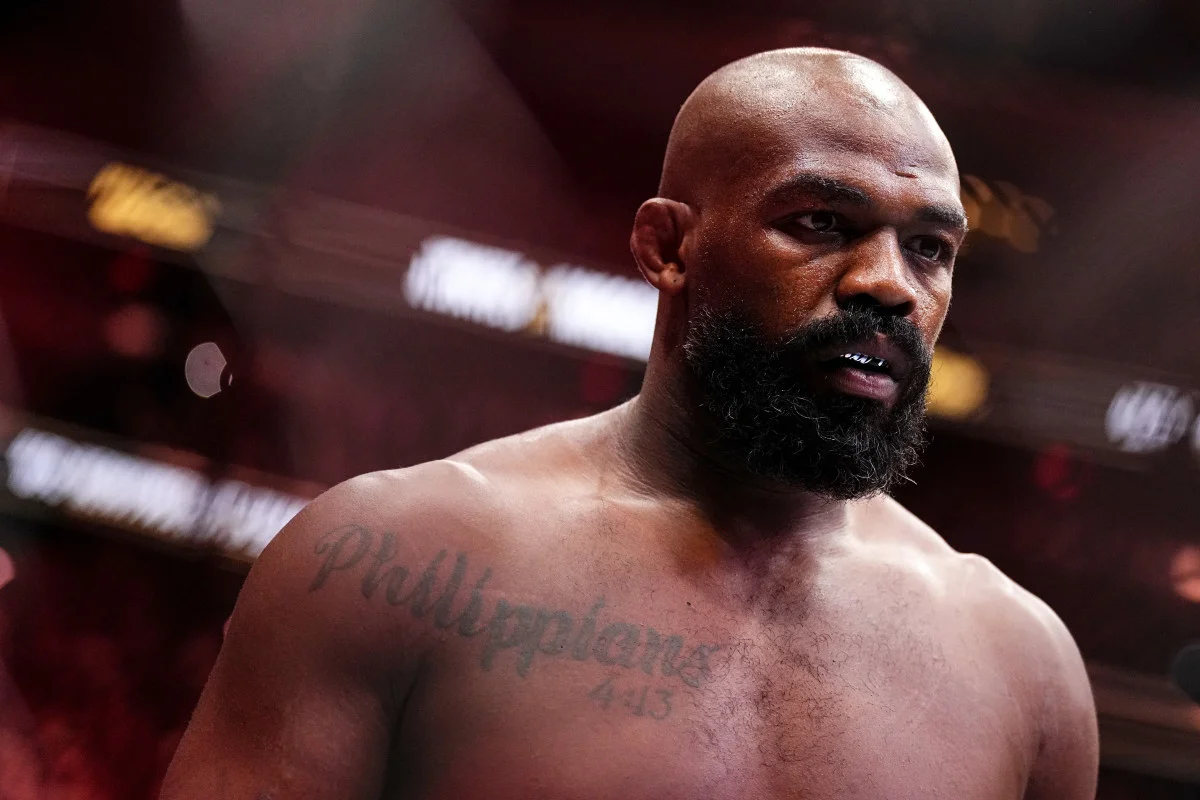
Jon Jones is reportedly reconsidering his retirement with the prospect of a high-profile “Presidential Belt” superfight, reigniting discussions about who he will face. While Tom Aspinall seems caught in uncertainty over a potential title bout, former champion Alex Pereira is increasingly viewed as the more viable contender to challenge Jones in what could become a landmark UFC event.
The Complex Path to Defeating Jon Jones
Tom Aspinall, the UK’s rising star in the UFC, was initially seen as the natural contender to dethrone Jon Jones and claim undisputed supremacy. However, a vocal segment of fans and analysts suggest Aspinall may not be the straightforward opponent many assume, thereby making this fight one Jones could be hesitant to accept. Others view Aspinall as too inexperienced to truly threaten Jones’ legacy, marking him as less of a priority in Jones’ comeback considerations.
Jones himself appeared willing to prolong negotiations for a fight with Aspinall, reportedly stretching discussions over seven months with pay-per-view compensation demands that fueled speculation about his reluctance. Meanwhile, the announcement by former President Donald Trump about a UFC card at the White House in 2026 has introduced a fresh incentive for Jones, who has now hinted at returning from retirement with this event in mind.
Tom Aspinall’s Status and the Shifting UFC Landscape
Tom Aspinall, the UFC’s ninth-ranked pound-for-pound fighter and an accomplished heavyweight, remains in a state of limbo regarding his positioning for a major title fight. His combination of speed, ground control, and knockout power makes him a significant threat in the division, but this very prowess has made him a risky opponent for Jones.
Alan Jouban, speaking on MMAJunkies’ podcast, expressed doubt over the likelihood of a Jones vs. Aspinall matchup, emphasizing that the American fighter might prefer an opponent like Alex Pereira, a contender perceived as more beatable. Jouban stated,
“Maybe you could put Jon Jones in some type of title fight if he was gonna [at all] fight Tom Aspinall…I don’t think that happens. What I think is, if the opportunity for Jon Jones to realistically come back — he says, ‘Dana, I want to come back on this card,’ I think he looks for a fight with a guy like Alex Pereira…[Cause] I think Tom Aspinall is the biggest, baddest man on the planet…I think he runs through Jon Jones.”
—Alan Jouban, UFC Analyst
This view underlines the tension between Aspinall’s rising profile and Jones’ strategic career management, as Jones weighs legacy against risk.
Alex Pereira: A More Strategic Comeback Opponent
Alex Pereira, known for his striking prowess and status as a two-division UFC champion, has long been a target opponent for Jones in pursuit of a legacy-defining matchup. Pereira’s powerful knockouts and tenure as a former light heavyweight champ bring undeniable star power and danger to the super fight narrative. His global following and viral appeal—fueled by his stoic demeanor and knockout skills—position him as a bigger name with crossover appeal, potentially making him a more commercially valuable adversary than Aspinall.
Despite losing his championship at UFC 313, Pereira demonstrated significant improvement in grappling defense and wrestling, suggesting he has addressed some previous vulnerabilities in his ground game. This progress enhances his appeal as a feasible challenge for Jones, especially if he moves to heavyweight.
With Pereira’s established fanbase and broad recognition—ranging from international boxing followers to MMA enthusiasts in Asia and beyond—he offers a marquee fight that could drive significant PPV sales and attention. For Jones, this fight matters not only for legacy but also for maximizing spectacle and impact.
The Impact of the Proposed White House UFC Event
Former President Donald Trump’s announcement of a UFC card at the White House in 2026 sparked immediate interest and strategic reconsideration among top fighters, especially Jones. The prospect of competing on such a historic platform appears to have provided Jones with the motivation to reverse his retirement decision rapidly.
Jones described the announcement as deeply motivating, saying,
“Donald made his announcement on the morning of the Fourth of July — I called the UFC headquarters that very same afternoon, …I’ll just leave it at that. America! Now that tickles my pickle…[Yea] It would be, [All-time classic fight] …for me it’s about the opportunity to represent America at the White House. I don’t care who I fight that night. I found my reason why, that’s what I needed, something that was more than money.”
—Jon Jones, UFC Fighter
This statement illustrates that Jones’ return hinges on something beyond monetary compensation or legacy alone; the symbolic significance of fighting at the White House offers a unique incentive.
Why Aspinall’s Position Remains Uncertain
Although Dana White mentioned that a Jones vs. Aspinall pay-per-view main event would be his preference for the White House card, Aspinall’s involvement is not guaranteed. Jones’ extensive negotiations on PPV terms and his insistence on additional value in the fight indicate that factors beyond performance and rankings affect decision-making.
Tom Aspinall’s aggressive yet calculated style has made him one of the most formidable heavyweights, with fast-paced knockouts and minimal fight downtime marking his UFC tenure. His compact fight time of approximately two minutes per bout hints at explosive effectiveness, reinforcing why fans see him as a dangerous contender. Still, Jones’ deliberate stalling and compensation demands suggest reluctance to risk his unmatched reputation on one young contender.
The Possible Superfight Scenario and Its Implications
If Jones returns for the White House event, a superfight against either Aspinall or Pereira carries major implications for the UFC heavyweight division and Jones’ legacy. Pereira’s move to heavyweight could open a safer path for Jones to secure a high-profile victory while Aspinall waits in the wings as a challenging but riskier option. This dynamic creates a tense environment where legacy, financial gain, and career longevity all influence fight selection.
A showdown featuring Jones and Pereira, associated with a “Presidential Belt” title, would energize the MMA community and likely attract global attention due to the fighters’ combined star power and stylistic contrast. Meanwhile, Aspinall’s limbo status highlights ongoing complexities in matchmaking at the highest levels of UFC competition.
As Jon Jones edges closer to confirming his comeback plans, fans and insiders will closely watch negotiations and fighter decisions leading up to the 2026 White House UFC card, which could redefine heavyweight hierarchy and culminate in one of the sport’s most anticipated superfights.
Our Reader’s Queries
Q. What did Jon Jones test positive for?
A. As a consequence, Jones received a temporary suspension. On September 13, USADA stated that Jones’s “A” and “B” samples were positive for Turinabol. Therefore, the California State Athletic Commission changed the fight result to a no contest.
Q. What was Jon Jones tested positive for?
A. During the hearing, it was uncovered that Jones tested positive for clomiphene and letrozole metabolites. These are present in Tadalafil, a drug used for erectile dysfunction, which Jones admitted to using.