
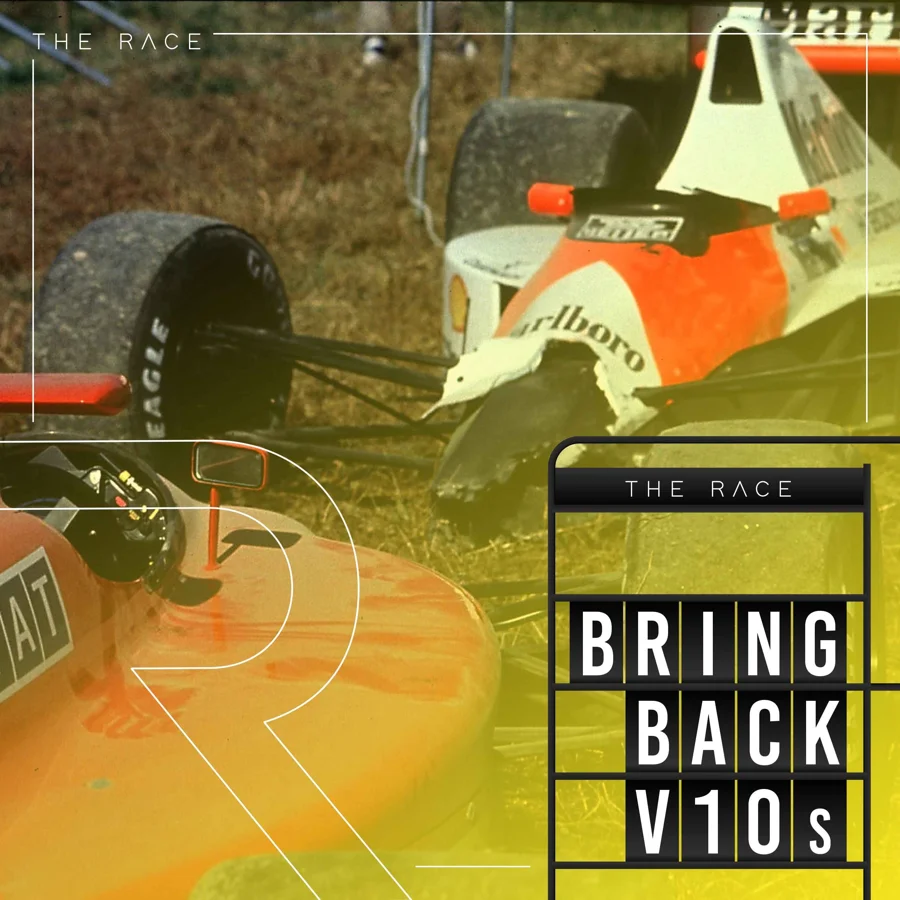

F1 expert Andrew van de Burgt has strongly criticized Ayrton Senna’s collision with Alain Prost during the 1990 Japanese Grand Prix, calling it one of the worst displays of sportsmanship in Formula 1 history. This controversial crash eliminated both drivers from the race and handed Senna his second F1 world championship.
The crash, which took place at the first corner on the opening lap of the 1990 Japanese GP, remains one of the most notorious moments in F1 rivalry. Senna deliberately collided with Prost after the Frenchman had overtaken him early on, a move Senna later admitted was intentional.
F1 Commentator Denounces Senna’s Driving Conduct at Suzuka
On The Race’s Bring Back V10s podcast, Andrew van de Burgt expressed his harsh judgment of Senna’s actions during that incident. Van de Burgt described the collision as an example of unsportsmanlike behavior rarely seen in the sport.
“It’s one of the worst pieces of sportsmanship I’ve ever seen. It’s petulant, petty, it’s a horrendous piece of driving,” said van de Burgt.
“And the fact that he effectively got away with it, I think is a bit of a stain on F1 in general, to be honest with you,” he added.
Senna had started the race from pole position but was frustrated because he was forced to begin on the dirtier side of the track. He approached race stewards requesting a change, initially receiving approval, though the decision was ultimately overturned by FISA president Jean Marie Balestre. Senna believed Balestre favored Prost, who was French, and felt the refusal unfairly disadvantaged him.

Additionally, the FIA rules restrained Senna from moving across the yellow line at pit exit, preventing him from better positioning himself on the grid. This contributed to the collision seen as predictable by many, including commentator Murray Walker, who famously highlighted the incident live.
Senna’s Justification of His Risky Racing Tactics After the Crash
Ayrton Senna defended his maneuvers in a 1990 interview with Sir Jackie Stewart, where he explained his mindset when attempting the risky move on Prost. Stewart showed him footage of the collision and raised concerns about its safety.
“By being a racing driver, you are under risks all of the time. By being a racing driver means, you are racing with other people and if you no longer go for a gap that exists, you’re no longer a racing driver,” said Senna.
This statement highlighted Senna’s belief that taking such risks was an intrinsic part of being a top-level competitor, even when it involved dangerous contact with rivals.
Background Context of the Senna-Prost Rivalry Leading Up to 1990
The collision at the 1990 Japanese Grand Prix was not the first time Senna and Prost clashed at Suzuka. The previous year, while teammates at McLaren, the two drivers collided again, but that incident ended in heartbreak for Senna. Although he won the 1989 race, he was later disqualified after cutting the final chicane, nullifying his victory and damaging his championship chances.
These contentious battles between Senna and Prost heightened tensions and set the stage for the deliberate crash in 1990, which ensured Senna secured the title at Prost’s expense.
Impact and Legacy of the 1990 Japanese GP Collision
The 1990 crash remains a defining moment in Formula 1 history because of how it showcases the extremes of competitive rivalry and questions about sportsmanship. Van de Burgt’s condemnation highlights ongoing debates regarding the ethics of aggressive driving tactics and the role of governance in managing fairness within the sport.
Senna’s actions at Suzuka reinforced his reputation as a fiercely determined driver willing to make controversial decisions to win, while provoking criticism for undermining the spirit of clean racing.
As the Ayrton Senna 1990 Japanese GP crash continues to be analyzed, it serves as a reminder of how tensions between drivers and officials shape both championships and the legacy of the sport itself.
Our Reader’s Queries
Q. Why is 17 banned in F1?
A. In Formula 1, number 17 is the only driver number that has been officially retired. This was done in honor of Jules Bianchi. The French driver had number 17 during a tragic accident at the 2014 Japanese Grand Prix.
Q. Which F1 driver has ADHD?
A. Lewis Hamilton, born in 1985, is a British Formula One racer. He drives for Mercedes and formerly raced with McLaren. Hamilton openly shares his experiences with ADHD, while also exploring his varied hobbies and interests.
Q. Is number 69 allowed in F1?
A. Drivers can pick a permanent number between 0 and 99, but not 1. Only the World Drivers’ Champion can use number 1 if they want, but they don’t have to choose it.
Q. What F1 drivers have ADHD?
A. Lewis Hamilton, whose full name is Sir Lewis Carl Davidson Hamilton, is a British race car driver born in 1985. He races in Formula One for the Mercedes team and has also driven for McLaren in the past. Hamilton openly shares his experiences with ADHD and talks about his various hobbies and interests.