
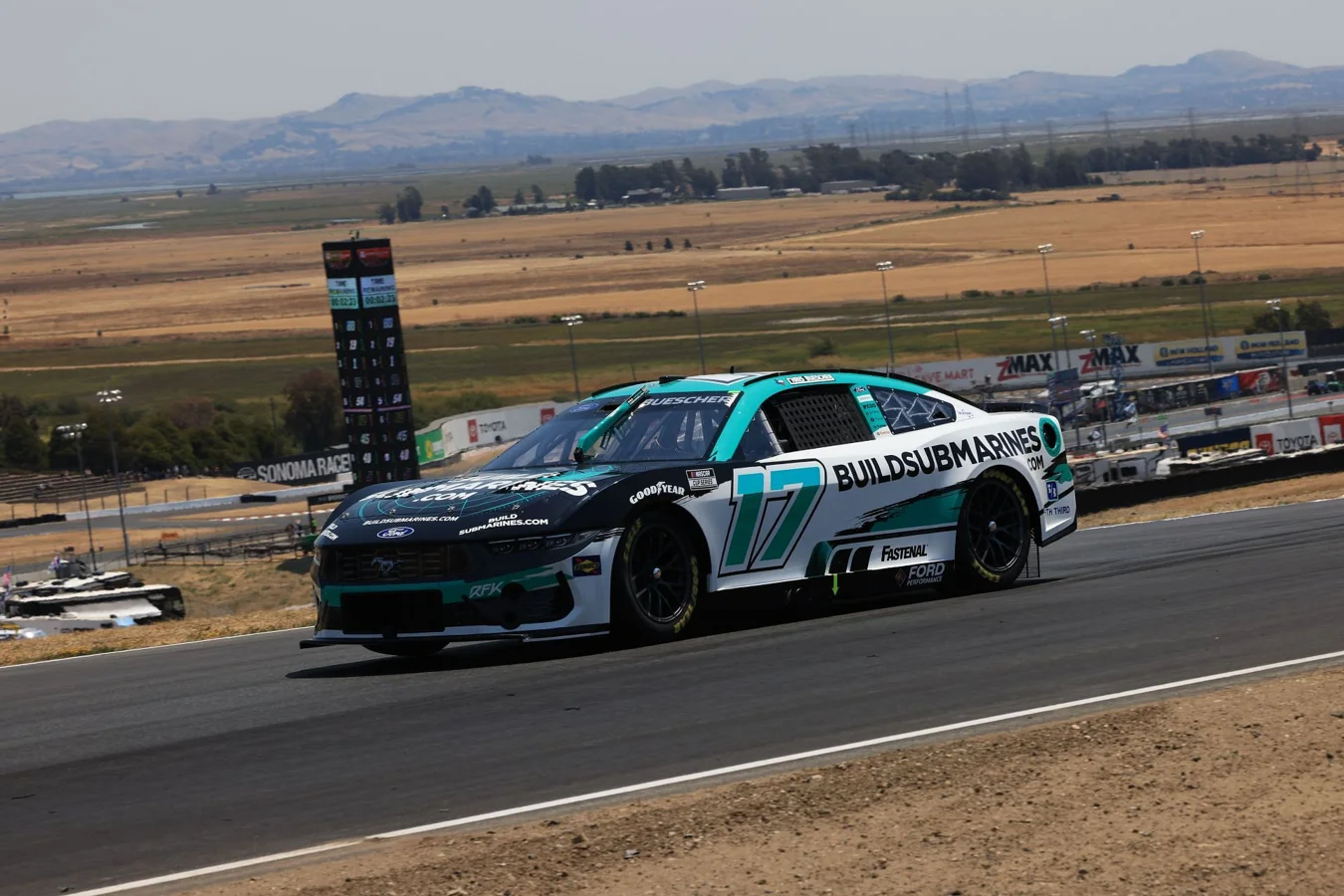

Chris Buescher praised Cody Ware for his courageous decision during a dangerous brake failure at last Sunday’s Chicago Street Race. The incident unfolded when Ware lost braking ability and chose to crash into a tire wall to avoid endangering other drivers. Buescher, who witnessed the event firsthand, commended Ware’s quick thinking and composure under pressure.
Critical Moment During Chicago Street Race
During the intense Chicago Street Race, Ware encountered a sudden brake malfunction as his brake pedal dropped to the floor approaching a tight corner. Faced with no effective way to slow down, Ware rapidly assessed the situation and deliberately steered his car to collide head-on with a tire barrier. This calculated move prevented a possible multi-car crash and minimized risk to others on the track.
Buescher, driving close behind Ware at the time, expressed his astonishment at the severity of the impact and Ware’s survival.
“I’d seen him blow a rotor and I seen the parts scatter as soon as it happened. I was right there,”
Buescher said, reflecting on the moment the failure occurred and the subsequent crash.
Following the race, Buescher spoke with Ware, who was sore but otherwise uninjured from the collision. He praised Ware’s control during the crisis, emphasizing the difficulty of the choice to turn into the wall. Buescher stated,
“I did tell him, ‘I commend you for turning it right’ because that is the hardest thing to convince yourself as a driver if you have a failure, to turn into the wall to try and knock speed out. Instinct is to turn away and say, ‘I’m going to save this, I’m going to get there.’ He did everything right that he could do in that moment.”
The Reality of Crashing Into a Tire Wall
Contrary to some fans’ belief that a tire wall is a softer impact than a concrete barrier, Buescher underscored the seriousness of Ware’s crash. He explained how the configuration of a street course amplifies the impact when compared to an oval track.
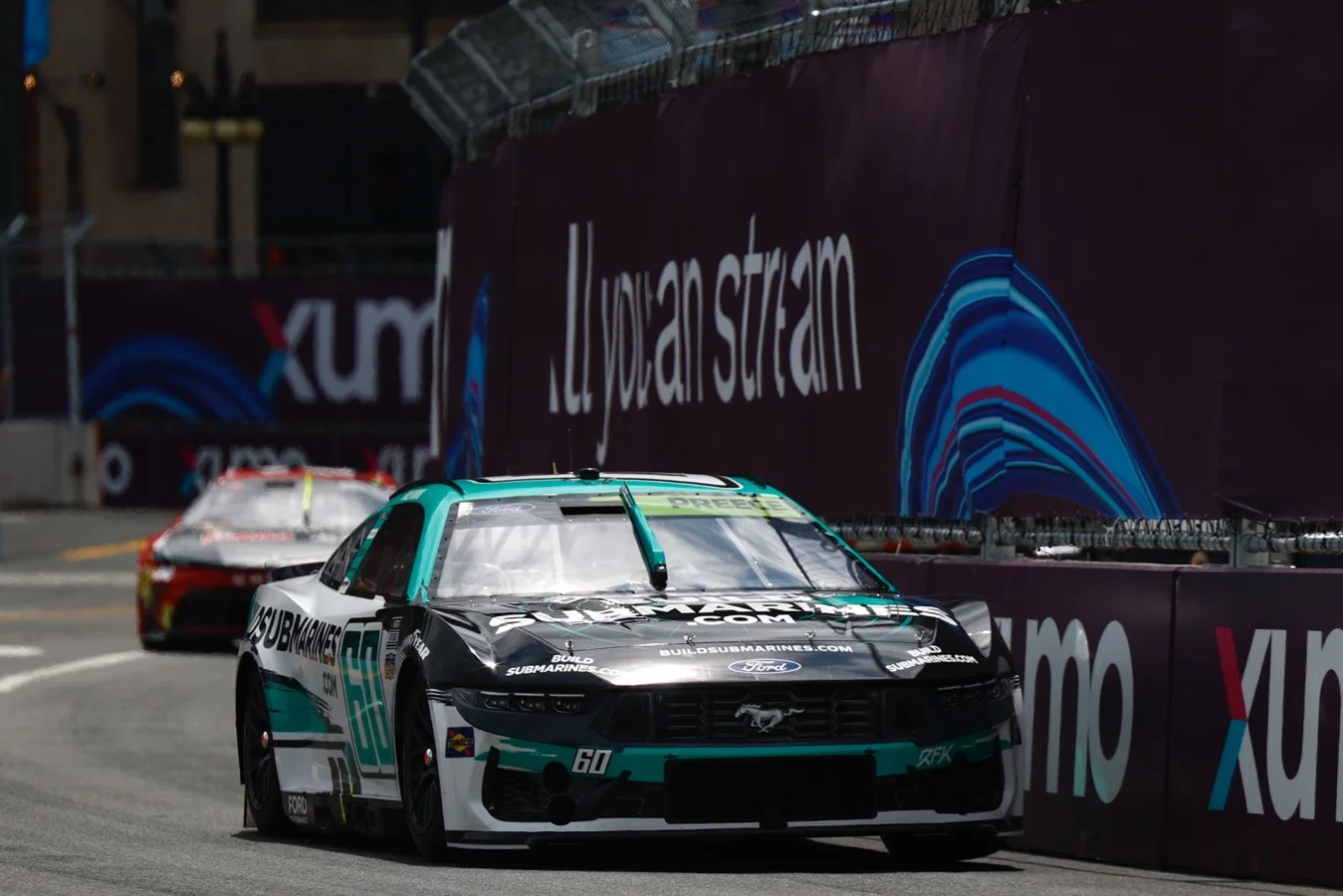
Buescher remarked,
“If it had been an oval, he’d have scrubbed the wall all the way around the corner and come in and said, ‘Man, that sucked.’ But with a street course like that, that impact was massive. I’m glad he’s okay. It’s just really unfortunate.”
Having experienced rotor failures himself, Buescher empathized with Ware’s experience.
“I’ve had rotors blow out and you typically just don’t get a warning,”
he said.
“That initial stab of the (brake) pad and it falls apart and you’re along for the ride.”
Such mechanical failures leave drivers vulnerable and force split-second decisions that could mean the difference between safety and serious injury.
Significance of Quick Decisions on the Track
Buescher’s recognition of Ware’s selfless choice highlights the intense challenges drivers face during mechanical failures. Ware’s decision to absorb the hit alone rather than risk collisions with other competitors exemplifies courage and professionalism in dangerous moments.
This incident serves as a sobering reminder of the risks inherent in high-speed racing, where brake failures can happen without warning. The calm presence Ware showed under extreme pressure not only prevented greater harm but also earned respect from peers like Buescher. Moving forward, such moments underscore the importance of equipment reliability and safety protocols on challenging courses like the Chicago Street Race.