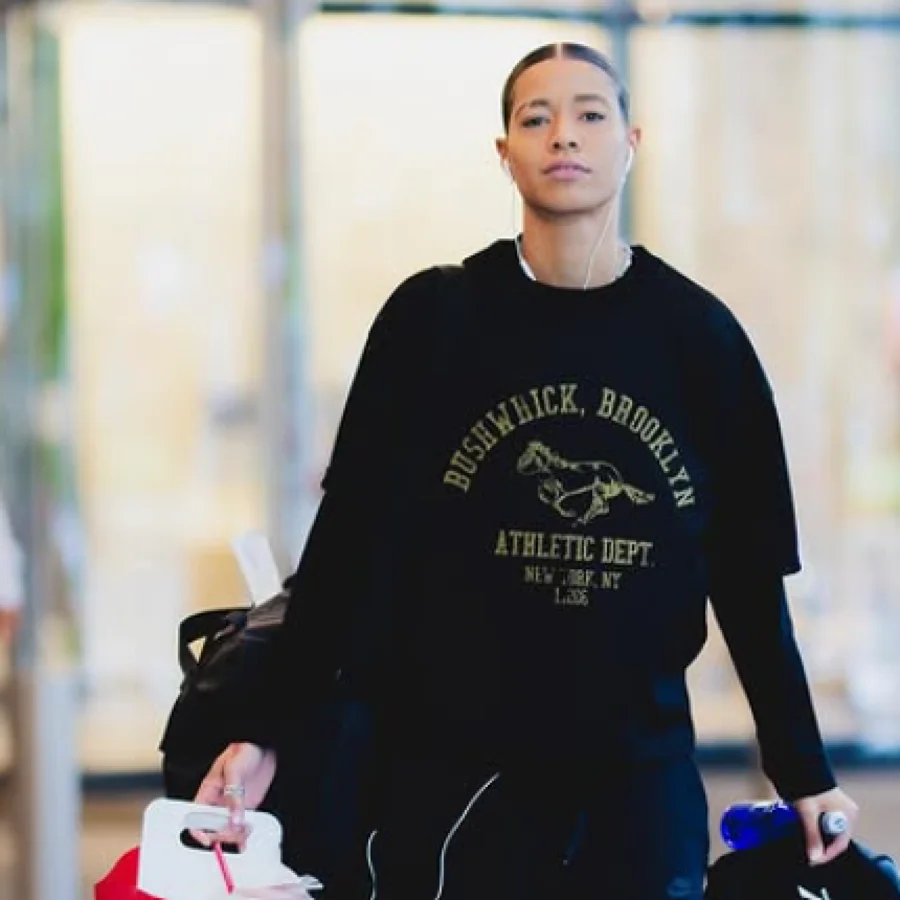
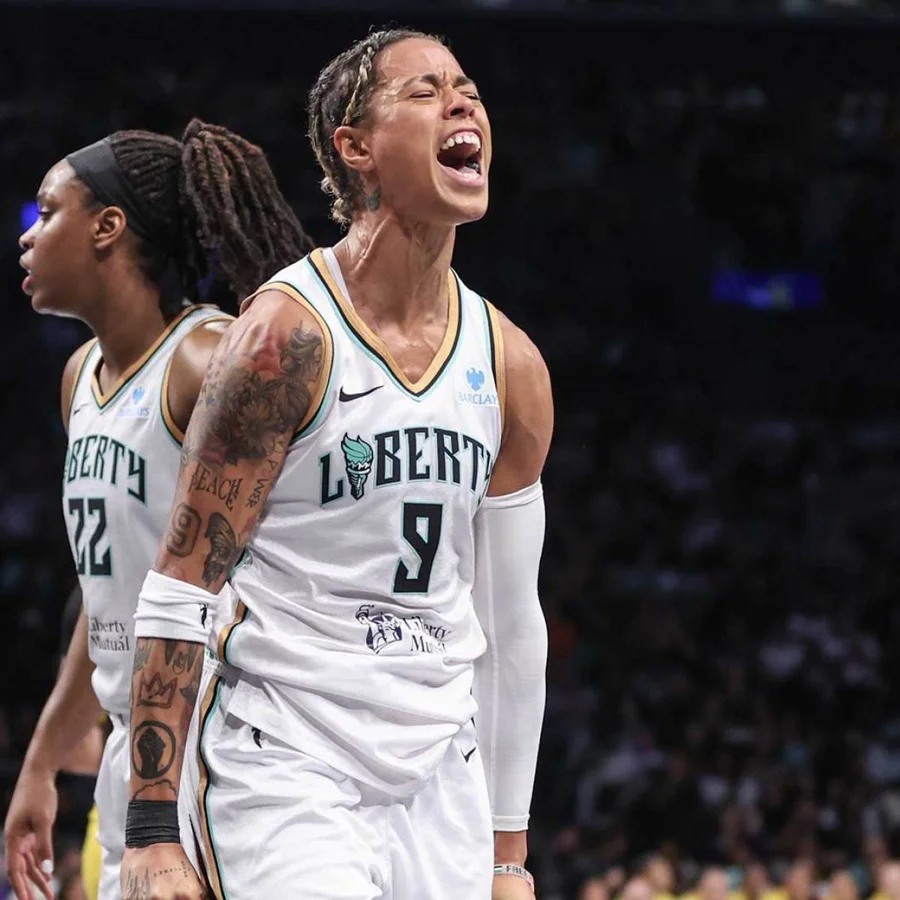
Natasha Cloud challenges WNBA's dress code after fine warning for her hat during New York Liberty game.
Natasha Cloud, a prominent player for the New York Liberty, drew attention on July 8, 2025, after receiving a fine from the WNBA for wearing a hat while sitting on the bench during a game against the Las Vegas Aces. Though sidelined by a left hip injury, Cloud showed vocal support for her team’s 87-78 victory, wearing a cream-colored sleeveless vest and an oversized black-and-white baseball cap that quickly became the center of controversy. This incident sparked renewed debates around the league’s dress code policies and player self-expression.
The WNBA’s decision to fine Cloud over her choice of headwear intensified scrutiny on the league’s sometimes opaque rules regarding player appearance while not on the court. Cloud herself addressed the fine on social media, expressing confusion and frustration about being penalized in a game she was not active in, revealing deeper tensions between individual expression and league regulations.
Cloud’s Outfit and the Controversy Over League Dress Code Enforcement
Cloud’s bench appearance combined a laid-back, stylish ensemble with an oversized vest and wide-leg pants, complemented by striking black loafers. However, the black-and-white baseball hat she wore broke with WNBA protocol, resulting in a fine. When the league announced the penalty, Cloud took to the platform X (formerly Twitter) to question the rationale behind the fine. She wrote,
Image of: Natasha Cloud
“I don’t understand why I receive a fine warning for wearing a hat on the bench for a game I was unable to play in? I just feel like I wanna be alone lolllzzz.”
— Natasha Cloud, WNBA Player
This exchange highlighted the ongoing tension in the league over what is acceptable attire, especially for players not currently participating in the game. Cloud’s affinity for hats has been a consistent feature, seen in previous photos wearing baseball caps emblazoned with local pride messages such as “New York or Nowhere.” Yet, the league’s regulations remain vague, leaving players uncertain about permissible self-expression when not on the court.
WNBA’s Ambiguous Dress Code Compared to NBA’s Clearer Guidelines
Unlike the NBA, which enforces a clear, publicly accessible dress code that explicitly prohibits hats, do-rags, chains, jeans, sneakers, and jerseys while players are on the bench or attending team-related events, the WNBA’s policies are less transparent. The specific rule that Natasha Cloud allegedly violated regarding bench attire has not been clarified, fueling confusion among players and fans alike.
Former WNBA players have commented on the league’s dress code history, indicating its stringent and sometimes inconsistent application. Diana Taurasi, a veteran and outspoken figure, recalled past dress code requirements that mandated formal clothing and footwear during road trips. Taurasi resisted these constraints, using humor and defiance to challenge the system, insisting that if the league wanted players to appear “businesslike,” it should also accommodate them with business-class travel.
“We used to get fined if we had ripped jeans on. On road trips, you had to be dressed in slacks and penny loafers and a button-up,”
— Diana Taurasi, Former WNBA Player
Historical Context: Players’ Previous Pushback Against Restrictions
Natasha Cloud has not been a stranger to challenging the league’s restrictive rules. In 2016, the WNBA fined several teams, including the New York Liberty, Indiana Fever, and Washington Mystics, for wearing plain black warm-up shirts in solidarity with the Black Lives Matter movement. The players chose this action to protest police violence following shootings in Falcon Heights, Baton Rouge, and Dallas, expressing their social justice stance through uniform deviations.
Cloud was vocal in defending the team’s decision and right to advocate publicly. She insisted that players should be able to wear what they want en route to and from games and find alternative ways to make their voices heard if the league tried to limit their advocacy.
“We’re allowed to wear whatever we want to the games, to and from the games. So if they’re going to take away our right and our voice to advocate for something so important to 70 percent of the league which is African American, we’ll find other ways to do it… wear our shirts to and from the game and use the media [to express ourselves],”
— Natasha Cloud, addressing WNBA uniform policies (quoted by Nina Mandell, USA Today)
The Washington Mystics also took a dramatic stance by boycotting post-gameinterviews unless the discussion centered around social justice issues. Their resistance won notable support including from NBA star Carmelo Anthony, who defended their freedom of speech against league penalties.
“Everybody has freedom of speech… I don’t see why there would be a reason for those ladies to get fined.”
— Carmelo Anthony, Former NBA Player
Under this pressure, the WNBA rescinded the fines and recognized players’ rights to protest, marking a pivotal moment in the league’s history on balancing uniform policies with player expression.
Implications of the Fine and What It Signals for Player Expression
Natasha Cloud’s recent fine reignites the ongoing conversation about the WNBA’s dress code and the limits it places on players’ individuality and messages. With ambiguous rules and inconsistent enforcement, the league risks alienating players who seek to express their identities or stand up for causes from the bench or sidelines. Cloud’s experience reflects a broader cultural struggle between institutional control and personal freedoms within professional sports.
The WNBA’s approach contrasts with other leagues like the NBA, where clearer guidelines exist, potentially reducing confusion but also restricting certain forms of expression. This incident could prompt calls for the WNBA to clarify or revise its policies, allowing players to navigate their public personas and advocacy without fear of punitive measures.
As the league grows in popularity and influence, the handling of such controversies will significantly affect player relations, fan support, and the league’s reputation as a progressive sports organization. Natasha Cloud, known for her leadership both on and off the court, continues to challenge the status quo, signaling that issues of dress code and self-expression will remain important topics in the conversation about the WNBA’s future.
Our Reader’s Queries
Q. Who is Natasha Cloud’s wife?
A. “I’m going to marry this girl” is a declaration about Natasha Cloud and Aleshia Ocasio’s relationship, which extends beyond athletics.