
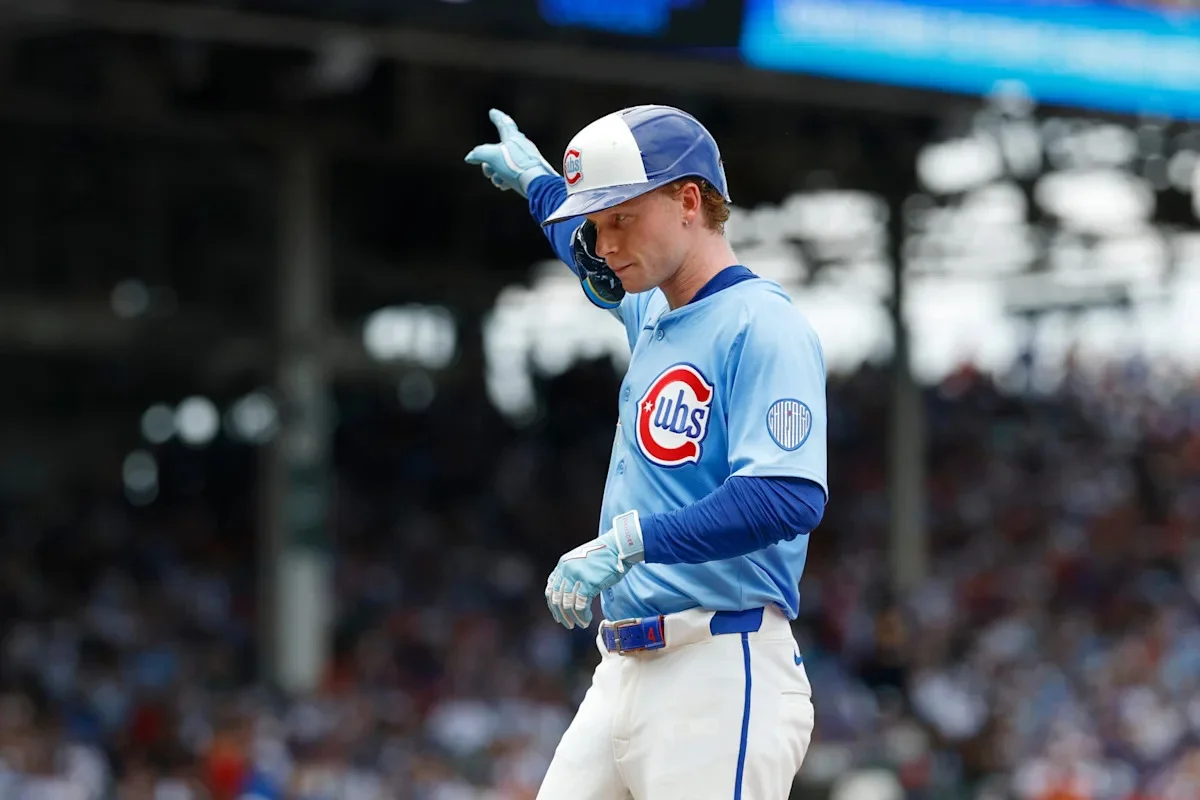

The New York Mets recently attempted to bring Pete Crow-Armstrong back by offering a trade to the Chicago Cubs involving their star slugger Pete Alonso. This move came as a surprising effort to reverse an earlier decision, as the Mets had originally traded Crow-Armstrong away. The attempt underscored how much the Mets now value Crow-Armstrong’s talent after initially parting with him.
How Pete Crow-Armstrong left the Mets
Selected in the first round of the 2020 draft by the Mets, Pete Crow-Armstrong was widely regarded as a promising young player. However, after only one year in the Mets’ minor league system, he was included in a mid-2021 trade to the Cubs. New York sent Crow-Armstrong to Chicago in exchange for Javier Baez, Trevor Williams, and cash, aiming to boost their chances in a playoff push. In hindsight, that trade has not worked out well for the Mets.
Development into a top-tier player
Now 23 years old, Crow-Armstrong has established himself as one of Major League Baseball’s standout prospects. He currently sports a batting line of .269/.307/.555 with 25 home runs and 70 RBIs, alongside an impressive 27 stolen bases that highlight his speed. His rare combination of power and agility has set him apart. Defensively, Crow-Armstrong excels as a center fielder, maintaining a flawless fielding percentage over 828.2 innings with 14 defensive runs saved and 15 outs above average, numbers that are exceptional for his age and experience.

Details of the Mets’ trade proposal
According to Andy Martino of SNY, the Mets initiated trade talks with the Cubs to reacquire Crow-Armstrong. Their proposal involved sending Pete Alonso to Chicago in exchange for controlling Crow-Armstrong’s contract. Alonso, who is having a dominant season, boasts a .281/.373/.534 slash line with 21 home runs and a .907 OPS, and is recognized for elite hard-hit metrics. Despite his current success, Alonso’s contractual status differs significantly from Crow-Armstrong’s.
Why the Cubs declined the offer
The Cubs rejected the deal largely due to Crow-Armstrong’s long-term contract control, which extends through 2031. This provides Chicago with several years of cost-controlled value. By contrast, Alonso’s contract includes an opt-out option after this season, meaning the Mets would risk losing him or having to negotiate a significant long-term extension. From the Cubs’ perspective, trading a player with many guaranteed years left for one who might depart soon was not advantageous.
Pete Crow-Armstrong’s reaction to the trade attempt
When informed about the Mets’ interest in reacquiring him, Crow-Armstrong’s response was lighthearted and surprised. At Yankee Stadium, he said with a smile,
“I did not know that, That’s awesome.”
—Pete Crow-Armstrong. His reaction highlighted the irony of the team that once gave him up now wanting him back, a reminder of how player evaluations can change quickly in professional sports.
Future outlook for the Mets and Alonso’s contract
The Mets face ongoing uncertainty regarding Pete Alonso’s tenure with the team. While Alonso’s performance this season has been exceptional, securing his long-term future will require negotiations that could be complex. Meanwhile, Crow-Armstrong continues to develop with the Cubs, serving as a continual reminder to the Mets of the young talent they relinquished. This situation illustrates the lasting impacts of trades and player development decisions on franchise trajectories.
Our Reader’s Queries
Q. Why do they call Pete Alonso a polar bear?
A. During the 2019 spring training, Alonso, a promising player, stood out. Todd Frazier, a former third baseman known for his personality, gave him the nickname. Frazier said, “In Spring Training, you reminded me of a big polar bear.”
Q. Why is Pete Alonso called a polar bear?
A. Ex-third baseman Todd Frazier first created the nickname due to his lively character. During Spring Training, he told Alonso, “You resemble a big, darn polar bear.” The nickname stayed with Alonso, as he mentioned in 2019 to Jared Schwartz from The New York Post.