
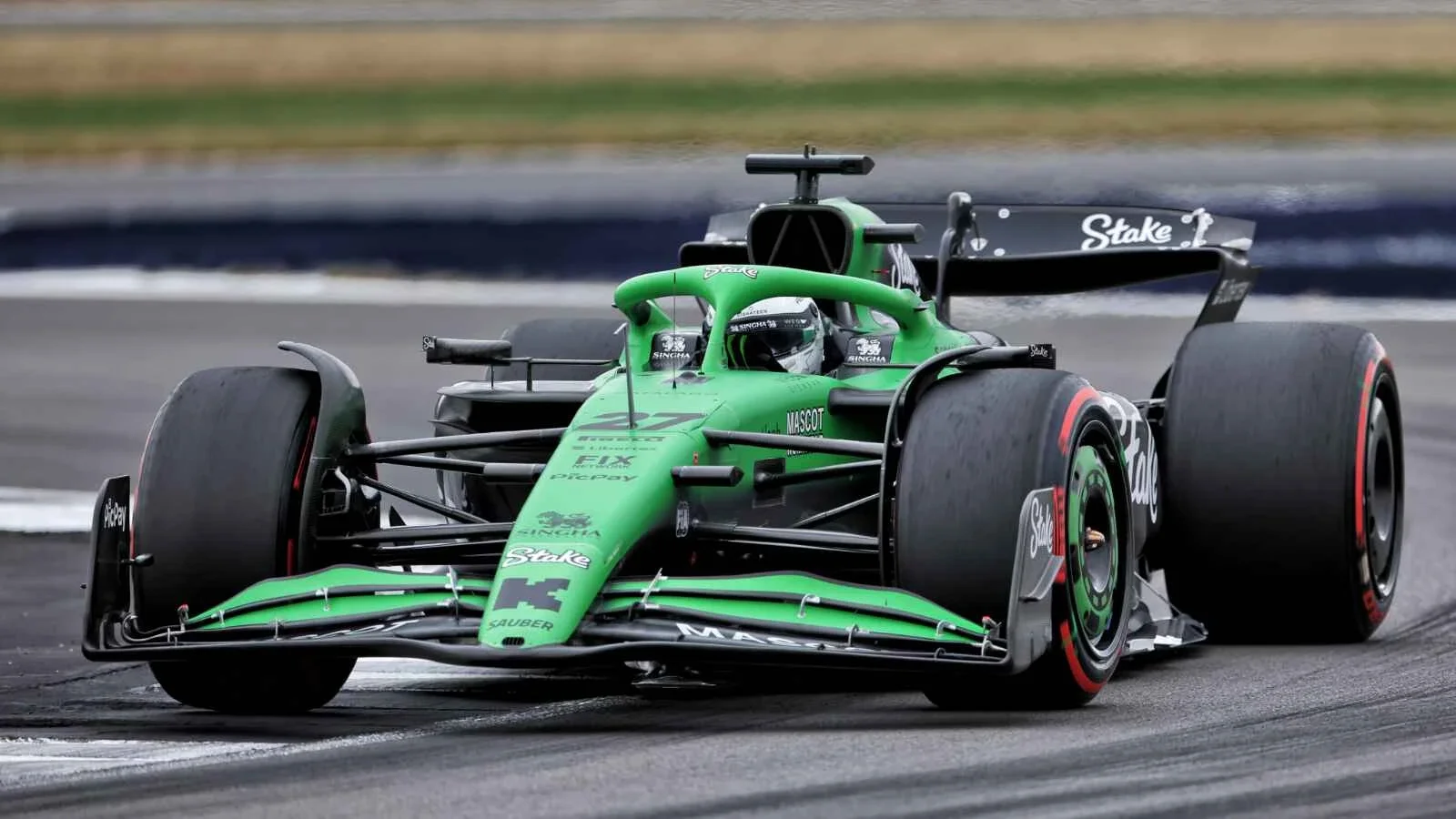

Jonathan Wheatley is eager to extend Sauber’s recent mid-season performance as the team prepares to become the Audi Formula 1 outfit in 2026. After officially joining Sauber in April, Wheatley has overseen a period of steady progress, highlighted by significant results during the 2023 season that have raised optimism for the future transformation.
The Austrian Grand Prix saw Sauber rookie Gabriel Bortoleto score his first F1 points by finishing eighth, while Nico Hulkenberg achieved a remarkable milestone by securing third place at the British Grand Prix, marking Sauber’s first podium since 2012. These achievements underline the team’s growing competitiveness under Wheatley’s leadership and are a key motivation heading into Audi’s full involvement.
Leadership and Teamwork Fuel Improvement
Wheatley, who came to Sauber from Red Bull, credits a solid foundation laid by the team’s COO, Matteo Binotto, for the initial momentum. Since joining, Wheatley has focused on understanding the team’s operations and contributing strategic guidance, which has helped unify efforts on and off the track.
Reflecting on his early months, Wheatley remarked,
“There’s a lot of work going on before I got here, and I don’t want to stand here and take credit for things. It’s a huge team at work here. They made the big steps in terms of equipment but also coaching confidence in the crew and things like pitstops, which are a manifestation of team spirit. When you see a team relaxed delivering good pitstops, that’s a happy team.”
—Jonathan Wheatley, Sauber Team Principal
He also shared his experience of a busy first season, attending ten races in just over three months and witnessing the positive impact of car upgrades, which boosted driver confidence and performance consistency during qualifying and races.

Facing the Challenge of F1’s 2026 Regulation Shift
As Formula 1 prepares for major technical changes in 2026, including new chassis and engine regulations, Wheatley acknowledges the difficulty of competing against well-established frontrunners. However, he sees this challenge as a motivating factor for joining Audi’s ambitious F1 project.
Wheatley recalled the beginning of his involvement, stating,
“It was a year ago, almost to the day, where I had my job interview. I drove from here at Goodwood to Southampton Airport where I met with Audi and we discussed the project. I’ve been on the hook ever since.”
—Jonathan Wheatley, Sauber Team Principal
Growing up enthused by Audi’s rallying history, Wheatley expressed excitement about being part of Audi’s return to top-level motorsport, adding that the project is one of the sport’s most exciting developments and a positive story for Formula 1.
Key Figures Leading Audi’s F1 Ambitions
The transformation into an Audi-operated team involves notable figures such as Oliver Hoffmann, Head of Technical Development at Audi Sport GmbH, and Markus Duesmann, Chairman of the Board of Management of Audi AG. Their leadership is expected to drive technological innovation and ensure competitive progress as Sauber transitions into Audi’s new F1 venture.
Building Momentum for Future Success
Wheatley emphasizes the need for humility and sustained effort to overcome the dominance of established teams. The current progress, bolstered by strategic upgrades and improved team operations, has positioned Sauber to capitalize on unique race conditions, such as wet weather, contributing to recent points and podium finishes.
Looking ahead, Wheatley confidently anticipates his upcoming role representing Audi, stating,
“Very soon I’m going to have four rings on a shirt, and I’m going to be the happiest team principal in F1.”
—Jonathan Wheatley, Sauber Team Principal
With Sauber’s existing momentum and Audi’s investment, the team is set to challenge Formula 1’s status quo and emerge as a competitive force in the sport’s next era.
Our Reader’s Queries
Q. Why is 17 banned in F1?
A. In Formula 1, only car number 17 has been permanently retired as an honor for Jules Bianchi. The French racer wore this number during his tragic accident at the 2014 Japanese Grand Prix.
Q. Which F1 driver has ADHD?
A. Lewis Hamilton, born in 1985, is a British Formula One driver. He races for Mercedes and previously raced for McLaren. Openly, he shares his experiences living with ADHD and explores his various hobbies and interests.
Q. Is number 69 allowed in F1?
A. Drivers can select a permanent number between 0 and 99, except for the number 1. Only the World Drivers’ Champion has the option to use number 1, but it’s not mandatory for them to choose it.
Q. What F1 drivers have ADHD?
A. Lewis Hamilton is a British Formula One racing driver, born in 1985. He races for Mercedes and has previously driven for McLaren. Hamilton openly shares his experiences with ADHD and talks about his various interests and hobbies.