
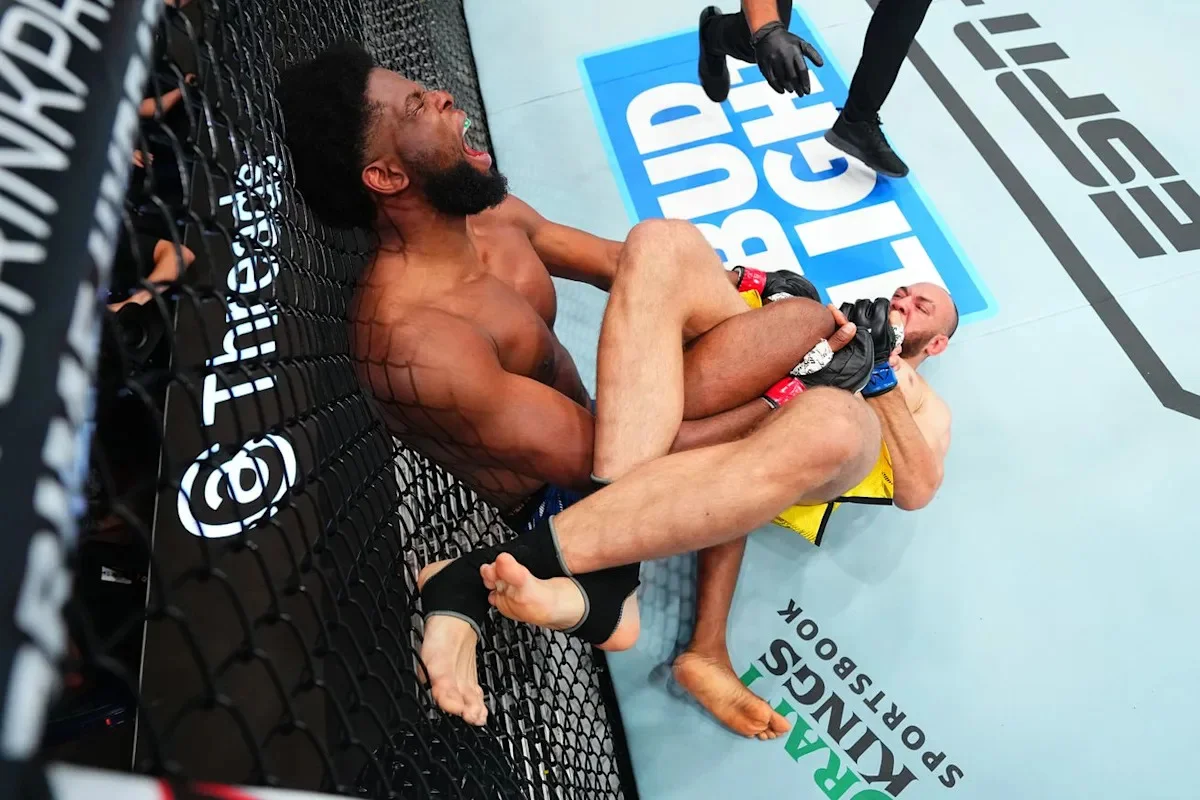

UFC Heavyweight contender Valter Walker secured his third straight win with a swift heel hook submission against Kennedy Nzechukwu at UFC Nashville on July 12, 2025, inside the Bridgestone Arena in Tennessee. Despite his flawless finish record and the division’s scarcity of fighters, Walker openly expressed hesitation about facing a Top 10 ranked opponent at this stage of his career.
Walker emphasized his reluctance due to a shaky start in the bout with Nzechukwu, where his initial mistakes could have cost him dearly against a more seasoned competitor. He is deliberately pacing his progression in the UFC’s heavyweight rankings, valuing readiness over rapid advancement.
Analyzing Walker’s Performance and Mental Approach
Addressing his mindset following his fight, Walker shared,
“I thought I would be more calm. The moment I threw a jab and he held my glove, that surprised me. I thought he was going to back up. I started running and chasing him, and that was a serious mistake. If he was more experienced, someone ranked in the Top 10, he would have knocked me out, no doubt. That’s a mistake… I don’t know why that happened. I don’t know if it was a lack of experience or me being immature because the arena was packed, all that noise.”
—Valter Walker, UFC Heavyweight Fighter
This admission reflects Walker’s anxiety and recognition of the gap between his current skills and those of elite fighters in the division. His unsteady moments in the fight underpin his desire to avoid premature challenges against the top-tier heavyweights.
Walker’s Reluctance to Rush Into Top Rankings
Firm on his decision to avoid rushing into the higher rankings, Walker stated,
“I know the Top 10 guys are on a whole other level. Like I said before, I don’t want to be there now. I’m saying this over and over again—I don’t want to be ranked now. I’m not ready. If I can hold off for a year and a half, two years, cool, then I can be in the rankings. If I go to the rankings now, I’ll be upset. That would be against my will.”
—Valter Walker, UFC Heavyweight Fighter
Walker’s cautious approach underlines his determination to develop his abilities thoroughly before facing the division’s strongest competitors, suggesting a strategic long-term outlook despite the division’s limited roster size.
Lessons Drawn from Brother Johnny Walker’s Experience
Valter referenced his brother Johnny Walker’s career as a warning against advancing too quickly within the UFC hierarchy. He remarked,
“My brother went to the UFC and had three knockouts, and everybody was like, ‘He’ll beat Jon Jones.’ Brother, Jon Jones only fought champions and ex-champions his entire life. Johnny beat three cans. The only real one was Khalil Rountree.”
—Valter Walker, UFC Heavyweight Fighter
Valter also recalled a critical moment during their training in Russia:
“We went to Russia to train at that time, and they offered him Corey Anderson. My coach told him, ‘Man, you’re not ready for Corey Anderson. You’d better say you’re not ready. Not yet.’ Another coach said, ‘No, he’s ready. He will beat Corey Anderson and then fight Jon Jones and become champion.’ When he said that, all the Russians started laughing, They’re honest. Johnny felt offended, you know?”
—Valter Walker, UFC Heavyweight Fighter
This experience proved prophetic as Johnny Walker was soon knocked out by Anderson in under two minutes and struggled to regain his momentum afterward, reinforcing Valter’s view on the importance of patience and preparation.
Future Plans Amid a Limited Heavyweight Division
The UFC heavyweight roster currently contains just 32 fighters, making it unlikely for Valter Walker to experience a slow ascent. Despite this, Walker remains focused on building his career carefully. For his next fight, he has expressed interest in facing undefeated British prospect Mario Pinto, who impressed by dominating Austen Lane in his UFC debut earlier this year.
Walker’s intention to challenge promising rising talent rather than immediately stepping into battles against the division’s top-ranked athletes reveals a strategic mindset aimed at long-term success and avoiding premature setbacks.
Implications for Walker’s UFC Trajectory
Valter Walker’s honest self-assessment and cautious approach highlight the psychological and strategic complexities many fighters face when ascending elite competition levels. His hesitation to leap into the top 10 reflects awareness of the skill gap and risks involved, especially in a division where a single mistake can mean defeat.
By pacing his growth and selectively choosing opponents like Mario Pinto, Walker is prioritizing development over rapid ranking gains, a move that could help extend his career and build resilience. Observers of the UFC heavyweight division will likely watch how this patience impacts Walker’s future success and whether he can break through when the time is right.