
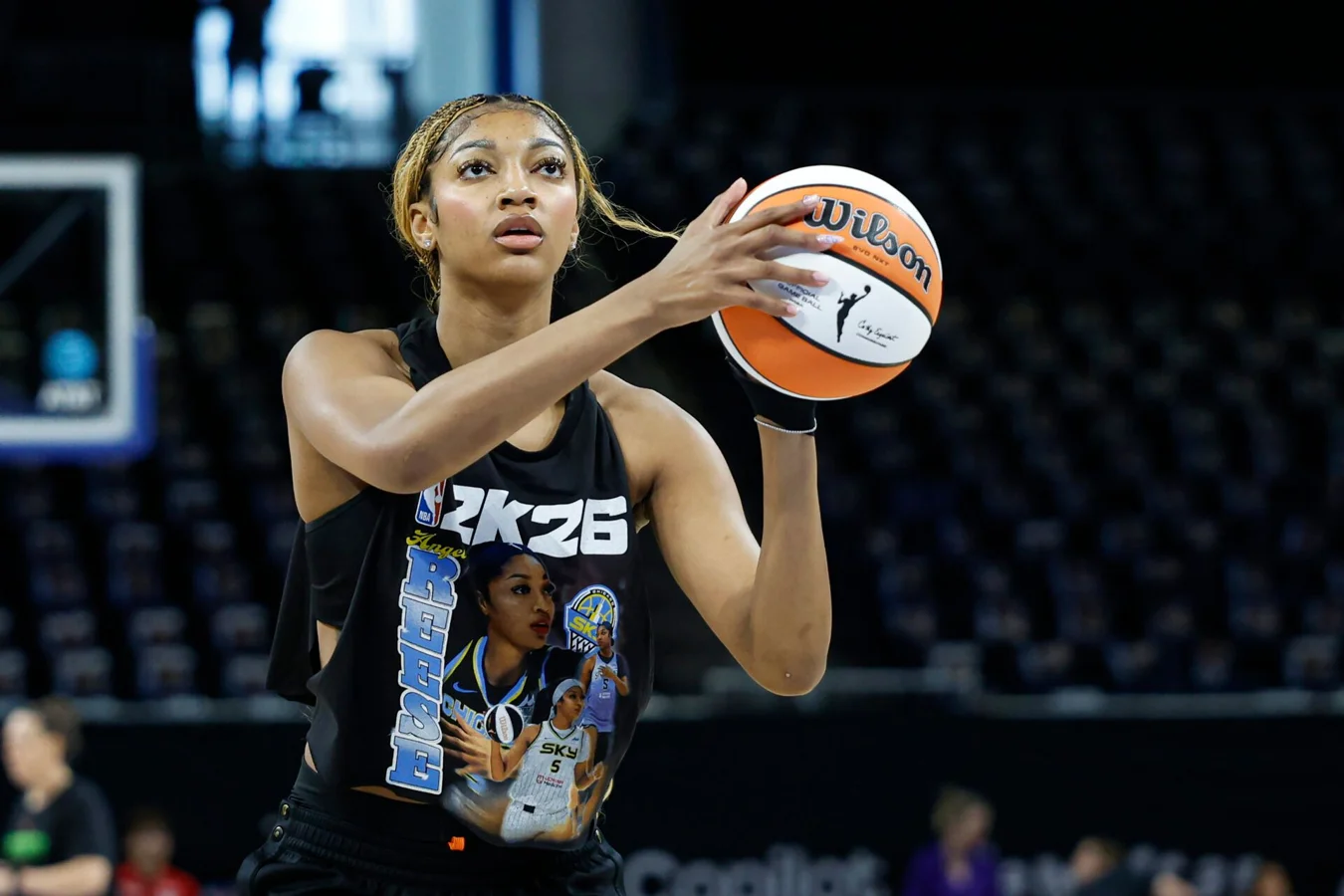

Angel Reese, the notable Angel Reese WNBA rising star, entered her professional career with the Chicago Sky forcefully, shattering early doubts about her limited skill set. Throughout the 2025 season, she has worked diligently to evolve beyond the image of just an interior rebounder, developing into a versatile threat recognized for her ability to score, facilitate, and dominate the boards.
Relentless Double-Doubles Showcase Reese’s Emergence
Reese has been outstanding during an ongoing stretch of nine consecutive double-doubles, averaging 18.1 points, 14.9 rebounds, and 4.1 assists per game while shooting above 50 percent from the field. This remarkable consistency has made her one of the most challenging players defensively in the league. Despite a loss to Napheesa Collier and the Minnesota Lynx, Reese’s impact remains undeniable, as her presence on the court affects opponent strategies.
The Chicago Sky continue to rely on her multi-dimensional game, evident as the team adapts to her growing influence amid competition from other stars like Alyssa Thomas, noted for her trash-talking, and Caitlin Clark, who recently drew attention with her ‘Cookie Monster’ Kobe 6 shoes.
From Tunnel Vision to Playmaking Excellence
Originally criticized for a one-dimensional style, Reese has shifted toward becoming a key facilitator within the Sky’s offense. Her assist numbers have increased by nearly two assists per game, and her assist-to-turnover ratio now exceeds 1.4, a strong figure for a big player in a fast-paced system.
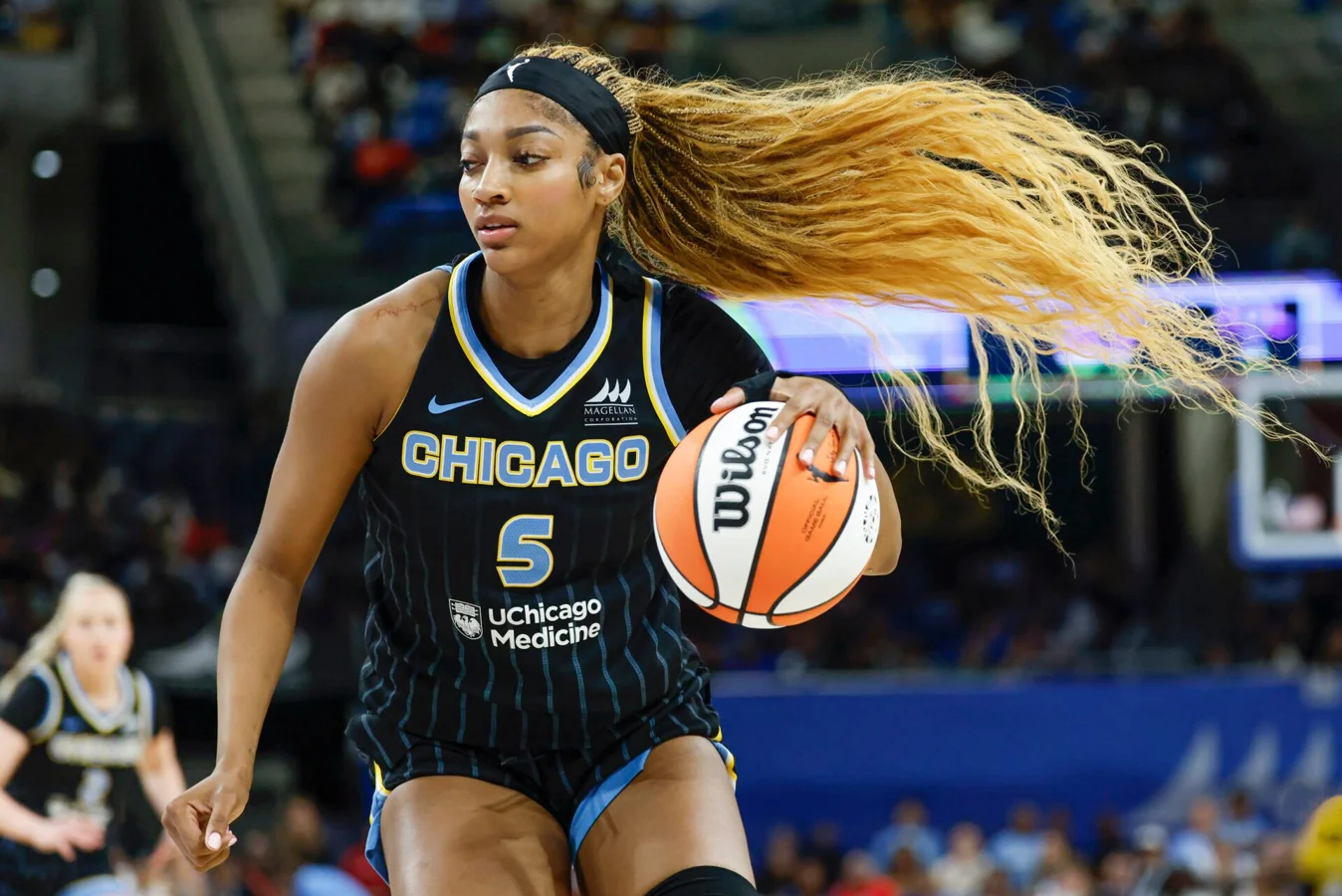
This transformation has been propelled by her effectiveness in the short roll and elbow post, where Chicago’s offense often runs horns sets that highlight her decision-making. With rising confidence, Reese finds open cutters such as Ariel Atkins or creates scoring opportunities by kicking out to shooters when defenders collapse on her.
Her passing has improved dramatically, featuring precision one-handed passes, bounce passes threading through defenses, and long-range skip passes that exploit aggressive defenders. Over just one season, Reese has more than doubled her assist percentage and substantially enhanced her shooting efficiency, reflected in a 3.9-point rise in true shooting percentage from 46.4 to 51.1.
Tyler Marsh, head coach of the Sky, integrates Reese as the central passing hub in his dynamic flow offense, which emphasizes continuous movement and rapid reads. Although not comparable to Draymond Green’s defensive prowess, Reese’s orchestration hints at similarities with Bam Adebayo’s playmaking, as she manages high-low actions, dump-offs, and critical passes out of paint touches, making her a pivotal player in Chicago’s offensive flow.
Shooting Development Rewriting Old Perceptions
Reese’s rookie struggles with shooting efficiency and range have slowly diminished. Though still a developing perimeter shooter, she has increased her overall field-goal percentage to 43.3 and maintained a solid free-throw percentage near 80.
Her three-point attempts have expanded significantly, nearly tripling compared to her college days. Now attempting threes on over 8 percent of her shots, Reese demonstrates growing willingness to stretch defenses beyond the paint. While her three-point percentage remains modest at 22.0 on about 1.5 attempts per game, this added capability is forcing opposing big defenders into difficult decisions—whether to step out risking dribble penetration or stay back and concede open perimeter shots.
This expanded shooting range complements Marsh’s NBA-inspired five-out offensive system, where floor spacing is critical and every player must threaten from distance. Reese’s improved comfort catching and shooting from the slot and wing adds a new vertical dimension to the offense that was absent last year.
Her quick decision-making punishes opponents during late-closeouts, either with a jump shot or an aggressive drive into pick-and-roll or short-roll options.
Pursuing League’s Rebounding Record and Dominance
Reese’s rebounding prowess in the 2025 season is nothing short of historic. Leading the WNBA with an average of 12.8 rebounds per game, including 4.0 offensive boards, she ranks among the all-time elite rebounders. Her defensive rebound percentage of 31.0 and offensive rebound rate of 14.6 underscore her dominance on both ends of the glass.
Through 19 career games with 15 or more rebounds, including a league-record streak of 15 straight double-doubles during her rookie year, Reese has proven her ability to control rebounding battles in traffic and in open space alike. From late June to early July, she averaged 17 rebounds across six games, illustrating her consistent presence on the glass.
One unique achievement sets Reese apart — a historic 10-game stretch with at least 45 assists and 125 rebounds, unmatched by legends such as Candace Parker or Alyssa Thomas. Her rebounding career highs eclipse those of all-time greats like Sylvia Fowles (11.9 RPG) and Tina Charles (11.7 RPG), with Reese posted a 13.1 rebounds per game mark in 2024.
The Chicago offense, guided by Marsh’s strategic use of Spain pick-and-rolls and ghost screens, creates openings for Reese to attack the glass. When immediate scoring chances fail, she cleans up possessions with putbacks or smart outlet passes, exerting control over the game flow.
Should Reese sustain her current trajectory for years, comparisons to Fowles, Charles, and Parker will become common when discussing the best rebounders in the league’s history.
Modernizing the Frontcourt with Kamilla Cardoso
The Sky’s frontcourt features two skilled bigs in Reese and Kamilla Cardoso, drafted closely together despite initial doubts over spacing because neither was a pure shooter. However, Chicago has turned this into an advantage, with Coach Marsh frequently interchanging their roles in high-low sets, second-side actions, and inverted screens.
When Cardoso positions near the rim, Reese often slips to the baseline or acts as a weak-side screener, creating confusion for opposing defenses. Cardoso’s rim protection allows Reese to play more freely on defense, rotating and switching with greater confidence. Together, they form one of the most mobile, instinctive, and disruptive frontcourts currently in the WNBA.
Assessing Reese’s Potential as a Championship Leader
While Angel Reese possesses elite physical tools and production, the question remains whether she can carry a team to a championship.
Three critical areas define the next step in her development:
1. Expanding shooting confidence: Reese does not need to become a three-point specialist on the level of Steph Curry but reaching a shooting respectability similar to Natasha Howard or Candace Parker is essential to prevent defensive congestion in Marsh’s spacing-dependent system. Her increasing willingness to shoot without hesitation signals progress in this area.
2. Becoming a defensive anchor: Reese’s switching ability and basketball instincts suit her to become a defensive cornerstone. Coach Marsh often uses her to “ice” plays by funneling defenders into traps or baiting kick-outs. Enhancing rim protection without sacrificing quickness could elevate her to becoming one of the league’s top all-around defenders.
3. Commanding late-game situations: Elite big players make key plays in crunch time, and Reese’s motor and presence equip her to be a fourth-quarter difference maker. Marsh’s offense offers multiple reads and triggers, and Reese’s ability to make decisive calls under pressure will determine her ultimate impact on winning outcomes.
Although perfection is not a requirement, Reese’s relentless rebounding, physicality, and leadership already position her as an elite talent. The alarming aspect for opponents is her steep growth curve, as she continues to add new dimensions to her game and sharpen her decision-making.
The only remaining question is how far Angel Reese will rise and who, if anyone, can match her continued evolution.
Our Reader’s Queries
Q. What caused Angel Reese’s injury?
A. In a video shared on her TikTok account Sunday night, Reese explained she hurt her hand when she fell while playing. The doctors told her she has a small bone crack and could either choose to have surgery or not have it.
Q. Does Angel Reese have a 1.6 GPA?
A. In March 2024, Reese finished her degree in Interdisciplinary Studies from LSU. Her focus areas included Communication Studies, Leadership Development, and Psychology. This means her GPA was over 2.0, which is needed to graduate.
Q. What did Angel Reese’s parents do?
A. Angel’s skill in basketball comes from her parents, who both played the sport at college and professional levels.