

Brad Keselowski, the 2012 NASCAR Cup Series champion and RFK Racing driver-owner, ignited a fierce discussion in early 2024 by criticizing NASCAR’s planned 2026 schedule, which could feature as many as seven road courses. Keselowski argued that NASCAR, with its deep roots in oval racing since 1949, risks straying too far from tradition, suggesting that sister series IMSA handles road racing better. This sparked divided reactions among fans and drivers, many debating whether the sport’s direction favors road courses excessively. Michael McDowell, a rising road course performer, responded sharply to Keselowski’s comments with a pointed remark emphasizing their differing strengths in racing.
The Battle Over NASCAR’s Road Course Future
Brad Keselowski expressed his concern about NASCAR drifting away from its oval origins because of the increase in road courses on the schedule. He questioned the balance NASCAR is striking as it prepares to include up to seven road events in 2026, noting that IMSA, which focuses more heavily on road racing, manages the format well. His critique reflected an unease among certain purists who worry that NASCAR’s hallmark style might be diluted as the sport evolves.
Michael McDowell wasted no time responding with a blunt jab that underscored Keselowski’s struggles on road courses. McDowell quipped,
Don’t ask a guy who’s not good at road courses.
This sharp remark highlighted McDowell’s success on twisty tracks in contrast to Keselowski’s faltering performance, bringing driver skillsets to the forefront of this ongoing debate.

On the Door Bumper Clear podcast, McDowell expanded on his view:
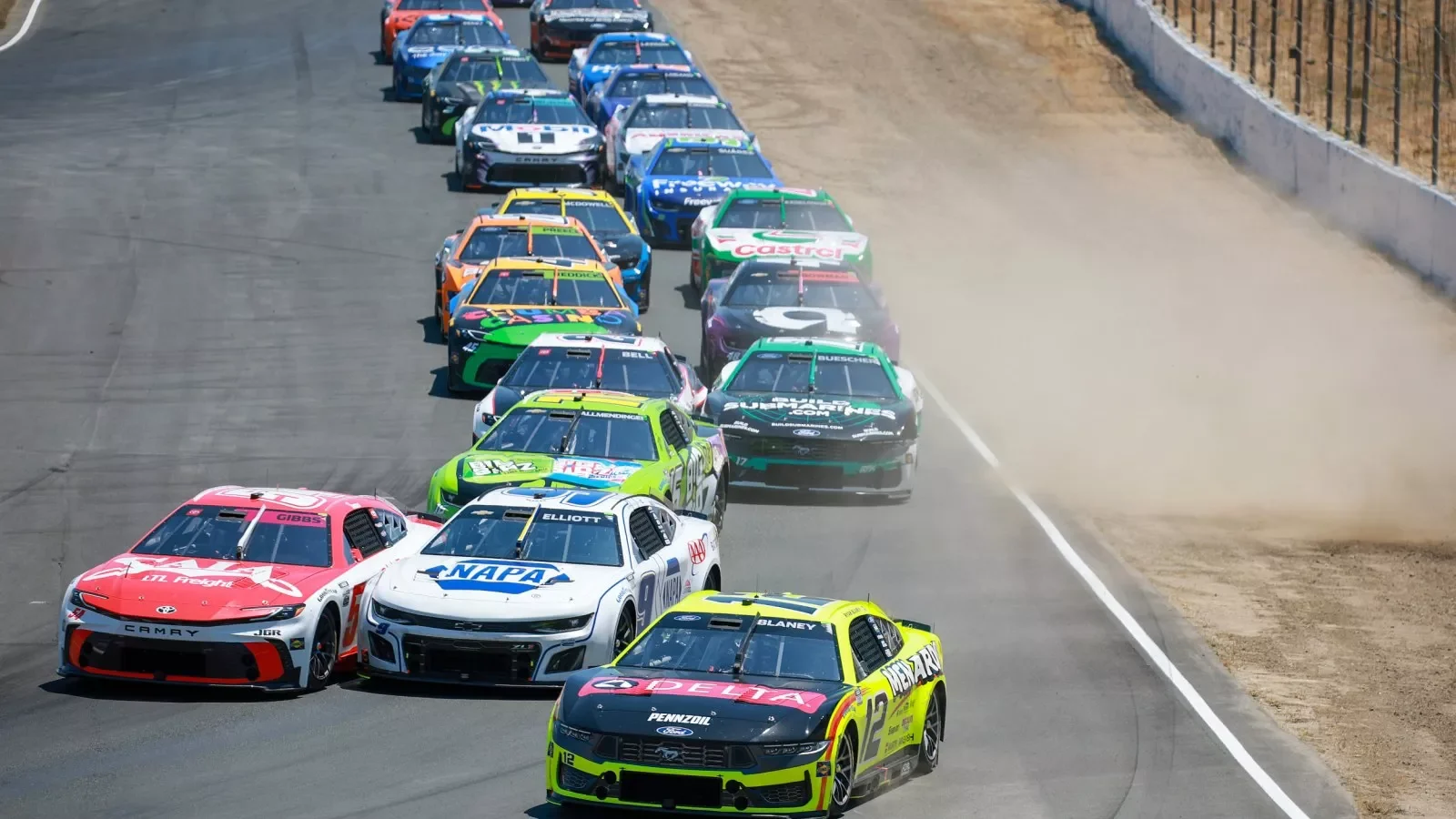
I think Brad is one of those guys that when this next gen car came, the road course stuff was over for him and you know when it comes to the crowds like if he has the fans the fans love road races. They love it now, Sonoma doesn’t hold 100,000 people or have stands for 100,000 people. That place was packed and put on a good show,
he stated, emphasizing how road course events continue drawing large audiences despite Keselowski’s critiques.
Since the introduction of the Next Gen car in 2022, Keselowski’s performance on road courses has notably declined. His last top-10 finish on these tracks was at Sonoma Raceway, after which he struggled to stay competitive. Meanwhile, McDowell has thrived, securing a road course win at the Brickyard and posting consistent top-five finishes at Sonoma. This contrast marks a clear division in how these drivers view NASCAR’s evolving landscape.
McDowell added another biting comment to illustrate the situation:
Obviously I’m biased, but you shouldn’t ask a guy who’s not good at road courses if there should be more road courses, it’s like asking me if there should be more Dovers, there shouldn’t be more Dovers.
This comparison reflects how Keselowski’s road racing difficulties mirror McDowell’s historical challenges at oval tracks like Dover’s “Monster Mile,” where McDowell has yet to crack a top-five finish.
Michael McDowell’s Road Course Success Versus Keselowski’s Oval Strength
Michael McDowell’s record on road courses stands in stark contrast to his struggles on certain oval tracks, such as Dover, where he openly admits underperformance. Despite the challenges oval courses present for him, McDowell has made a name for himself on road courses, consistently finishing in the top 10 at high-profile venues like Watkins Glen and Chicago. Conversely, Brad Keselowski, a driver known for his oval racing prowess, has found himself increasingly frustrated by his diminishing results on road circuits.
The ongoing clash between the two drivers’ specialties highlights NASCAR’s broader struggle to balance its historical identity with the growing prominence of road courses in the schedule. While Keselowski’s warnings appeal to traditionalists, the packed stands at recent road course races demonstrate a shifting fan base eager for more diverse racing formats. McDowell’s confident remarks reinforce the idea that NASCAR’s future may depend on embracing these changes rather than resisting them.
Sonoma Raceway’s Resurfacing and McDowell’s Adaptation
The 2023 repaving of Sonoma Raceway transformed the track‘s character ahead of the 2025 race, demanding a fresh strategy from drivers. Michael McDowell, who finished fourth in that event, described the new slick surface as a notable challenge that required balancing speed with caution. On the Door Bumper Clear podcast, he reflected on the difficulty, admitting to a rare spin early in the race:
I enjoyed the challenge of both. It was very interesting though. We unloaded at Sonoma Lap 1. I mean, I spun out, man,
he laughed. Freddie Kraft’s follow-up highlighted how unusual that was by saying,
I can’t tell you if I’ve spun out by myself in the last 20 years.
Despite this moment, McDowell adapted well and leveraged his tire management skills, securing his best finish of the 2025 season in Wine Country. However, he remains 70 points short of qualifying for the playoffs, making a race win crucial for his postseason hopes. As the lead driver for Spire Motorsports, alongside teammates Carson Hocevar and Justin Haley, McDowell’s performance signals both his personal resilience and the team’s ongoing development.
Looking ahead, McDowell faces Dover once again—a track he half-jokingly wishes to remove from the schedule—but his success at Sonoma shows he is prepared to confront the diverse challenges that NASCAR’s demanding calendar presents.
What McDowell and Keselowski’s Exchange Means for NASCAR’s Direction
This public back-and-forth between Michael McDowell and Brad Keselowski epitomizes the tension NASCAR faces as it tries to evolve while respecting its heritage. Keselowski’s cautionary stance appeals to fans who cherish the sport’s oval racing tradition, while McDowell’s remarks and performances symbolize a new wave favoring variety and innovation.
Fan enthusiasm for road races, demonstrated by sellout crowds at venues like Chicago and packed stands at Sonoma, supports NASCAR’s broader strategy to diversify its schedule. McDowell’s emergence as a road course contender challenges the notion that these tracks represent a departure from true NASCAR racing. Instead, his success suggests that adapting to new formats is essential for future growth.
As NASCAR continues to roll out the 2026 schedule, which may push the boundaries of what some drivers and fans expect, this debate could intensify. The contrast between Keselowski’s resistance and McDowell’s embrace of road courses encapsulates a sport at a crossroads, balancing tradition with innovation amid mounting pressure from competitors, organizers, and the fan base.