
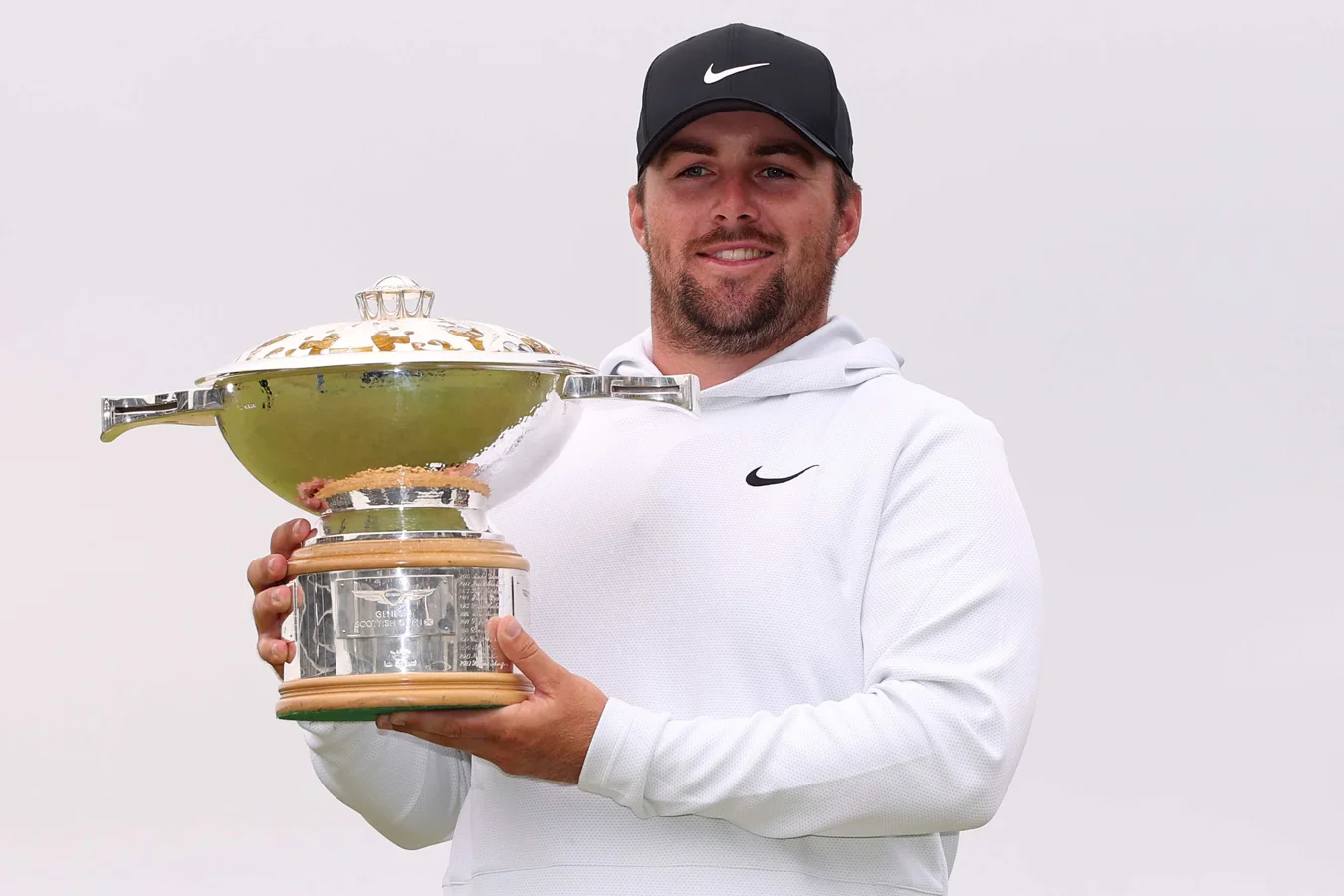

YouTube personality Grant Horvat has announced that he will not participate in the PGA Tour’s Barracuda Championship in 2025 due to restrictions on filming during tournament play. Although he was offered a sponsor‘s exemption to compete, Horvat declined because the Tour’s media rights rules prohibit him from documenting his round, which is central to his career as a content creator.
Horvat revealed the offer during a May video featuring World No. 1 Scottie Scheffler and shared his initial excitement about potentially playing at such a high level. However, he expressed concern that accepting the invitation might take a spot from a touring professional. Despite encouragement from Scheffler, Horvat ultimately chose to prioritize the ability to share his experience on his YouTube channel.
Balancing Competitive Golf and Content Creation
In his public explanation, Horvat thanked the sponsors for their offer but emphasized that the current PGA Tour rules surrounding filming during tournaments made it impossible for him to participate while maintaining his content creation style. He pointed out that his visibility on YouTube is what earned him the invitation, and filming is essential to his work.
“The reason I will not be playing in a PGA Tour event is due to the rules and regulations around media rights and filming during tournament play of a PGA Tour event. Basically, that means I was not going to be allowed to film my round during tournament play,”
Horvat stated in his video.
He added,
“And for me, personally, doing YouTube for a living and wanting to document everything that I do. This is the reason we got the invite in the first place – because of YouTube and because of the amazing experiences that I get to share with you guys.”
Horvat remains hopeful that in the future, conditions will allow him to both compete and document a PGA Tour event.
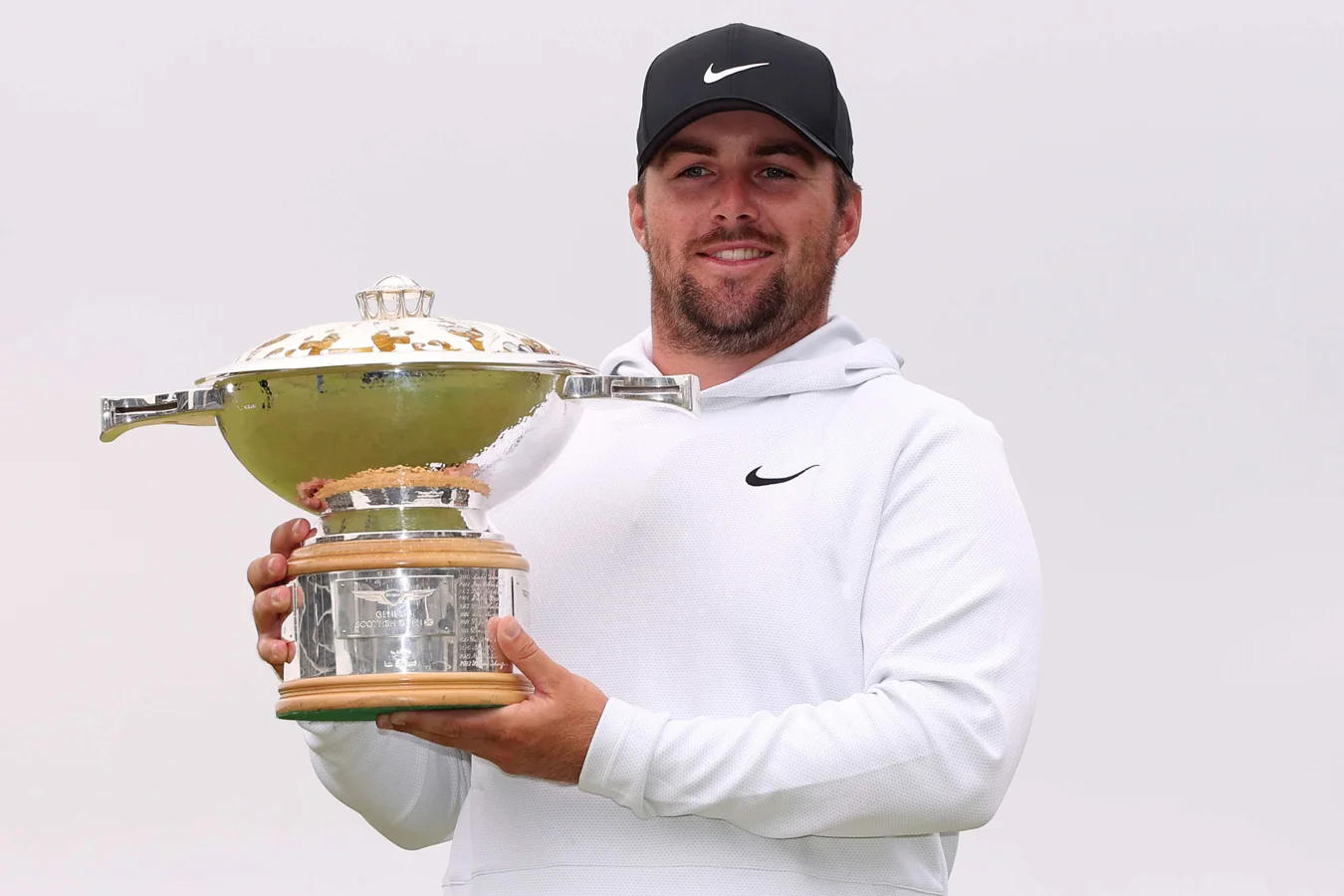
“I know what I’d be feeling, teeing it up at a PGA Tour event, and boy do I want that on camera,”
he expressed.
World No. 1 Scottie Scheffler Advocates for Horvat’s Participation
Scottie Scheffler spoke openly about his strong support for Horvat’s opportunity to play in the Barracuda Championship. During their May match, Scheffler acknowledged Horvat’s deep involvement with golf and suggested he deserved the sponsor’s invitation regardless of traditional tournament scoring credentials.
“I get it, but I also don’t get it. It’s a sponsor’s invite… You’ve done enough in the game of golf, around the game of golf to earn that spot. Just because you haven’t shot the scores in tournament golf doesn’t mean that you shouldn’t be playing in the tournament,”
Scheffler said.
He highlighted the benefits of Horvat’s presence at the opposite-field event, which needs additional exposure.
“It’s an opposite-field event that needs the exposure. There’s a reason they’re giving you the spot. Personally, I wouldn’t hesitate to take it if I were you,”
Scheffler added.
Industry Reaction and Ongoing Challenges
Following Horvat’s announcement, former touring professional Wesley Bryan, who faces his own sanctions from the PGA Tour due to participating in the LIV Duels, expressed disappointment on social media. Bryan jokingly referred to himself as Horvat’s “unemployed caddie” while criticizing the Tour’s restrictions on filming.
Bryan posted,
“My official comment on the Grant Horvat situation: I am disappointed in the TOUR’s decision to not let Grant film the Barracuda Championship. Sincerely, Grant’s unemployed caddie.”
Horvat’s case underscores ongoing tensions between traditional golf institutions and modern content creators who rely on unrestricted media access to grow their audiences. His success started with winning the PGA Tour’s Creator Classic at TPC Sawgrass, and he also participated in the inaugural LIV Duels alongside other prominent players.
Recently, Horvat competed in the Korn Ferry Tour’s BMW Charity Pro-Am, though he missed the cut, continuing to straddle the line between competitive golf and digital content creation.
Implications for Golf and Digital Media
Grant Horvat’s refusal to compete in the PGA Tour event highlights the complex relationship between evolving media landscapes and established sports organizations. As golf seeks to attract younger fans and wider audiences, restrictions on filming could hinder engagement opportunities offered by modern content creators who provide inside access and personalized storytelling.
Horvat’s stance may prompt re-evaluation of media rules across golf’s professional tours, potentially encouraging greater flexibility to accommodate emerging digital platforms. For now, Horvat remains committed to sharing his journey through alternative events and hopes for future chances to merge his passions for golf and content creation without compromise.
Our Reader’s Queries
Q. What is a PGA?
A. The Professional Golfers’ Association began during the Victorian era due to the efforts of three golfers: JH Taylor, James Braid, and Harry Vardon. They aimed to improve the reputation of golf professionals.
Q. What does PGA mean?
A. The Professional Golfers’ Association (PGA) is a US group for men in professional golf, founded in 1916. Officially called the Professional Golfers’ Association of America, it manages key golf events and hosts its own PGA Championship annually.
Q. What is PGA in medical terms?
A. Polyglandular autoimmune (PGA) syndromes, also called polyglandular failure syndromes, involve multiple hormone-producing glands not functioning properly. In research, these are often referred to as autoimmune polyendocrine syndrome (APS).
Q. How to calculate PGA for psoriasis?
A. PGA evaluated all skin lesions globally using a 0-5 scale in both studies. Zero meant clear skin, one indicated nearly clear, and five signified severe psoriasis. BSA measured the percentage of body skin affected, with 1% roughly the size of the patient’s hand.