
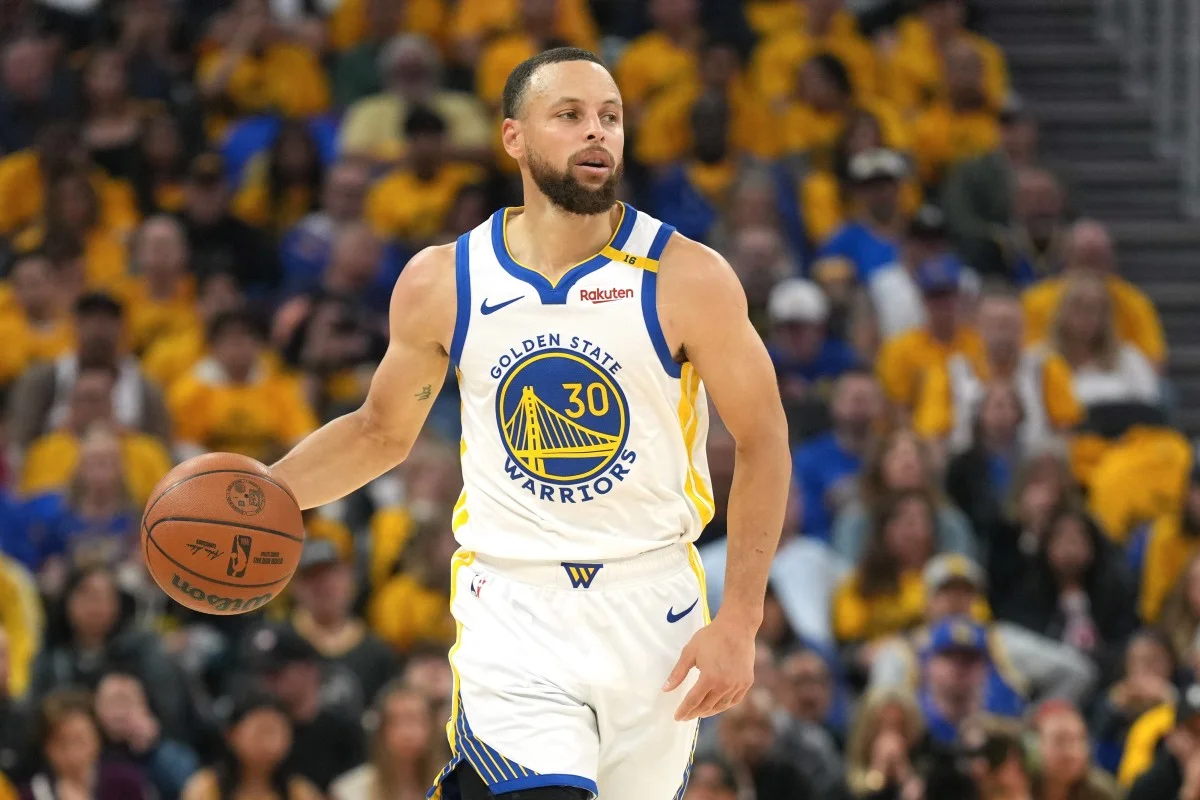

The Golden State Warriors have dominated the NBA over the past decade, but ESPN’s Zach Lowe has expressed serious concerns about the team‘s prospects after Stephen Curry eventually retires. On his podcast, Lowe warned that the Warriors post Stephen Curry era appears uncertain and troubling due to a lack of a clear successor to lead the franchise forward.
Zach Lowe Highlights Challenges in Warriors’ Transition Plan
Lowe described the current state of the Warriors as “depressing,” emphasizing that the anticipated two-timeline strategy—the simultaneous cultivation of young talent while maintaining championship contention—has not materialized as hoped. Despite careful planning and promising draft selections like Brandin Podziemski, the team’s future beyond Curry remains fragile.
“The other depressing thought about the Warriors as currently constructed,”
Lowe noted,
“is that the two timelines thing has not happened. And the post-Steph future, despite all the talk about it, all the careful planning for it, several savvy picks like [Brandin] Podziemski, looks like a good pick for where he was drafted.”
He added,
“Even a guy like [Trayce] Jackson-Davis looks like a good pick for where he was drafted. Despite all of that, the post-Steph future looks incredibly bleak.”
One of the most critical decisions looming for Golden State concerns their handling of Jonathan Kuminga, a young forward who remains a restricted free agent and is seeking a significant contract. Lowe believes that the resolution of Kuminga’s situation may represent the most important franchise-building move the team will make in the next several months.
“The Kuminga transaction, whatever it is, to me is maybe the single most important franchise-building transaction that’s coming in the next two to three to four months in the NBA,”
Lowe said. He added,
“And I just don’t see a world in which that transaction sets the Warriors up for a happier post-Steph future, because I don’t think that’s going to be, we re-sign Kuminga and he’s a breakout star for us. I think it’s going to be a sign-and-trade in which the return is slightly underwhelming.”
Warriors’ Draft Picks Have Fallen Short of Expectations
The Warriors had an unusual opportunity after their 2015, 2017, and 2018 championship runs. In the 2020 and 2021 NBA Drafts, they acquired high lottery picks—including the second overall in 2020 and the seventh and 14th picks in 2021—while maintaining core stars Stephen Curry, Klay Thompson, and Draymond Green. This unique confluence of assets enabled a potential two-timeline rebuild strategy, allowing the team to develop youthful talent without sacrificing current competitiveness.
However, this gamble has not fully paid off. James Wiseman, chosen second overall in 2020, has failed to meet expectations, hampered by injuries and inconsistency. Jonathan Kuminga and Moses Moody, drafted in 2021 with the seventh and 14th picks respectively, have yet to emerge as franchise-changing players despite flashes of potential.
With no clear young star ready to take the reins, the Warriors’ hopes for a seamless transition from their Curry-led dynasty are under threat.
Lack of a Clear Successor Puts Warriors’ Future in Question
Kuminga’s uncertain future with the team adds further instability. As a restricted free agent, he is seeking a major contract extension, and Lowe predicts that the Warriors may move forward through a sign-and-trade deal that yields only modest returns rather than securing Kuminga as a core piece of their future.
Without a definitive young star or a clear succession plan, Golden State risks a difficult rebuilding process once Stephen Curry’s era concludes. Although the team still holds promising future draft picks, replicating the success they found with Curry, Thompson, and Green will be a monumental challenge.
The Warriors’ position in the coming years appears precarious, with the specter of becoming a low-ranking team if they cannot develop or acquire new top-tier talent to carry the franchise forward after Curry.
Our Reader’s Queries
Q. Why does Stephen Curry wear 4?
A. FIBA, which manages Olympic basketball, once limited player numbers to 4-15 to simplify the officials’ job. Though FIBA removed this rule in 2014, Team USA continues the tradition in international competitions like the Paris Olympics. This is why Curry chose a number within that range.