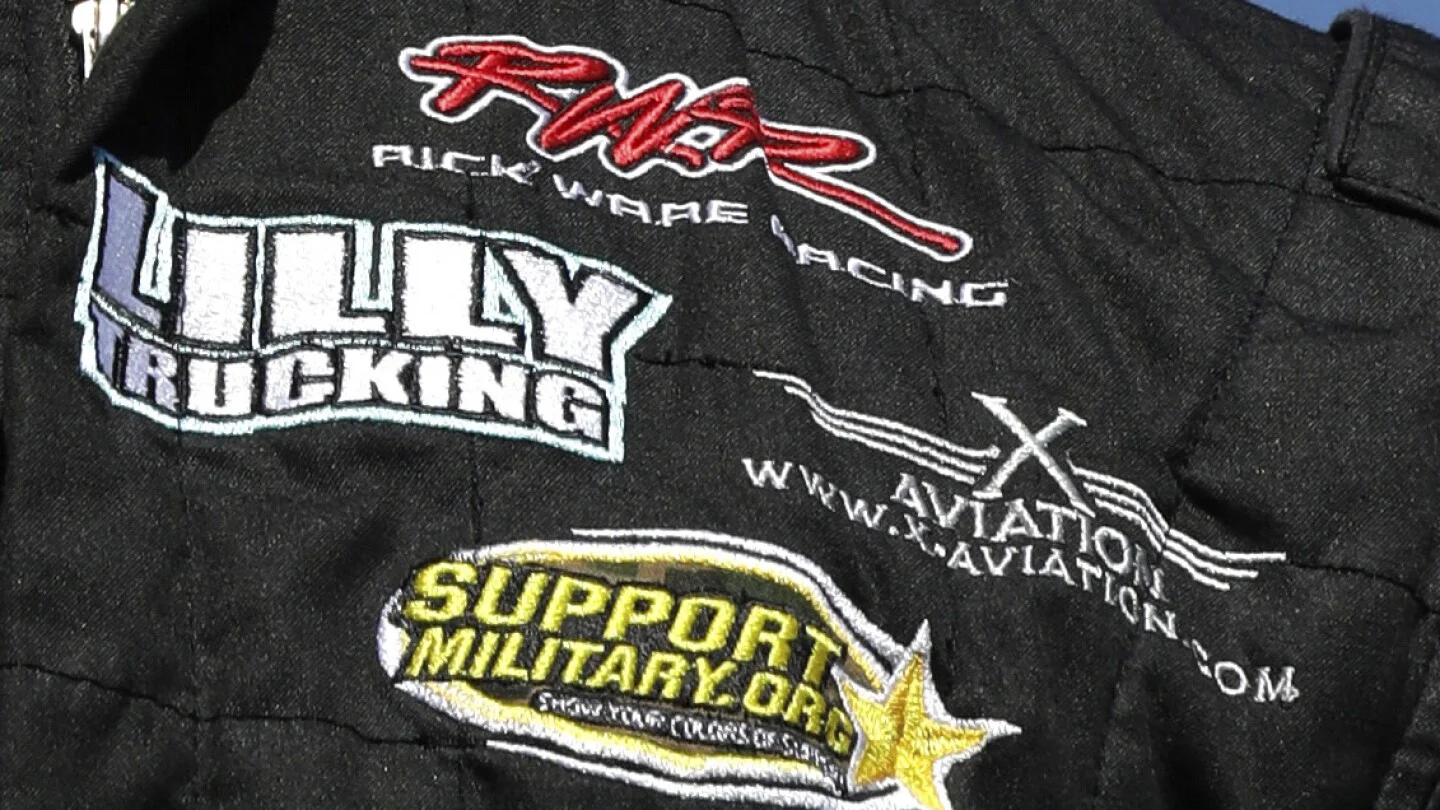
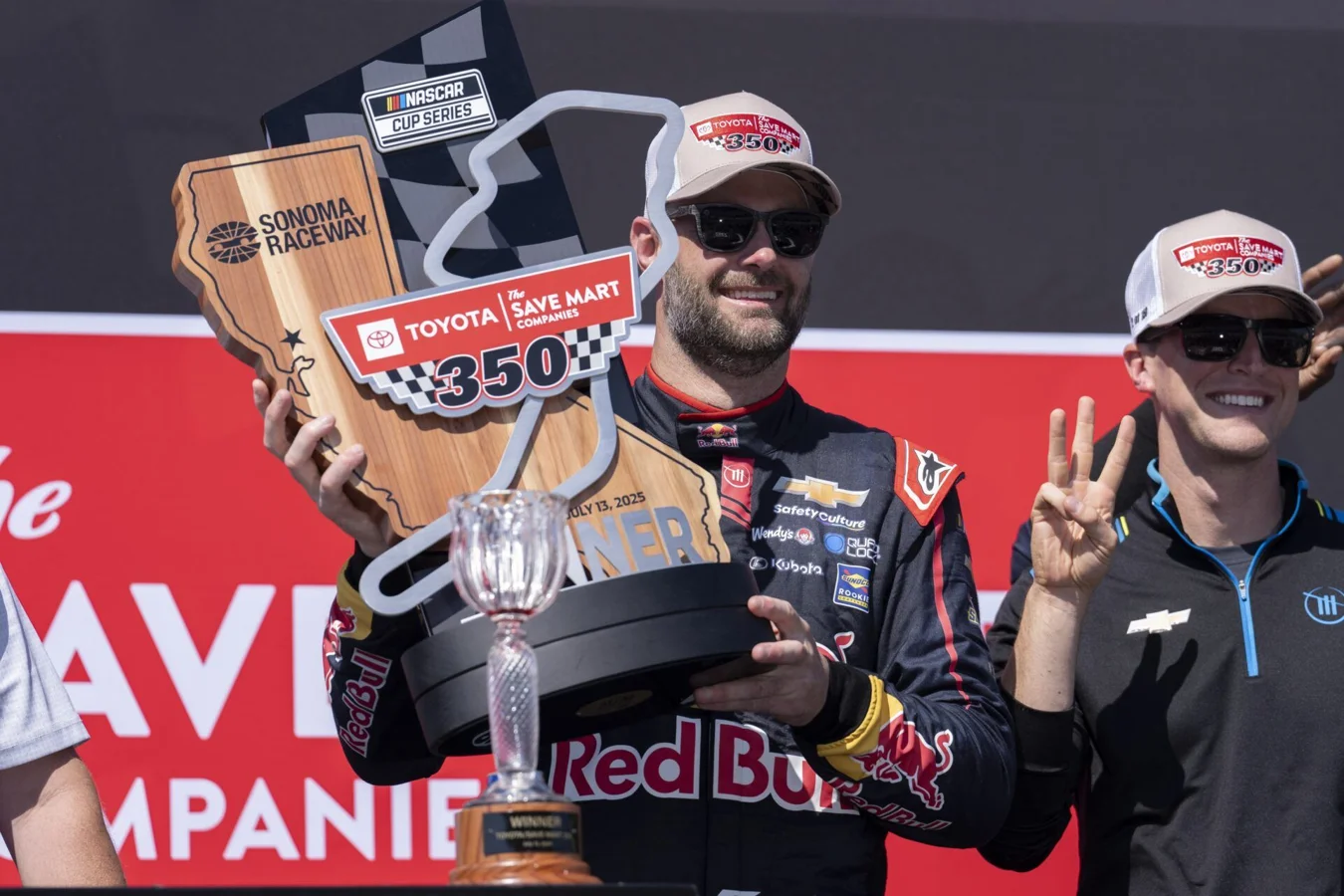
Jimmie Johnson's lawsuit against RWR over a charter deal highlights a complex battle impacting NASCAR team futures.
Jimmie Johnson’s Legacy Motor Club (LMC) faces a significant setback as it takes legal action over a failed agreement involving a $45 million NASCAR charter with Rick Ware Racing (RWR). The dispute, centered around a contract signed in early March 2025, threatens LMC’s plan to expand its team for the 2026 season. Since the deal unraveled, the situation has become increasingly complex, especially with the involvement of T.J. Puchyr, the former co-founder of Spire Motorsports, who has stepped into the fray aiming to acquire RWR’s charters.
This Jimmie Johnson RWR charter lawsuit is unfolding amidst the backdrop of NASCAR’s highly competitive landscape, where securing charters is crucial for teams’ future participation and growth.
Background and Details of the Disputed Charter Agreement
At the heart of the controversy is an agreement dated March 3, 2025, between Legacy Motor Club and Rick Ware Racing. According to LMC’s lawsuit filed in Mecklenburg County on April 1, 2025, the deal secured the purchase of a charter valued at $45 million, enabling LMC to expand its operation to three cars for the upcoming NASCAR Cup Series season. The expansion plans included signing driversJohn Hunter Nemechek and Erik Jones to LMC’s roster.
Legacy Motor Club alleges,
Image of: Jimmie Johnson
“Despite having a binding deal in place, RWR wants to back out,”
underlining their claim that RWR has refused to fulfill the contract, which LMC insists was confirmed by signatures on every page. The abrupt change by RWR has put LMC’s growth strategy in jeopardy.
Meanwhile, Rick Ware Racing disputes the timeline of the transaction. RWR asserts that the agreement was intended for the 2027 season, not 2026. This claim is based on the fact that RWR has already leased one of its two charters to RFK Racing for the 2026 season. In a countersuit filed on June 4, 2025, RWR insists that selling the charter for the 2026 season would effectively cease their ability to participate in the Cup Series, stating,
“Should RWR be forced to sell Charter No. 27 for 2026, it would have no charter under which to race and would go out of business,”
reflecting the existential threat to their team’s operations.
RWR further alleges that LMC misrepresented the terms of the deal, claiming Rick Ware signed under the impression the sale was for 2027.
The Complicating Factor: T.J. Puchyr’s Involvement Turns Dispute into Three-Party Conflict
The lawsuit has taken an unexpected turn with the emergence of T.J. Puchyr, who brokered the original RWR and LMC deal. Now, Puchyr is reportedly aiming to buy both of Rick Ware Racing’s charters, transforming the dispute into a three-way legal battle. LMC accuses Puchyr of tortious interference, claiming he is leveraging insider knowledge to disrupt their deal and redirect the charters to his own acquiring group.
Jimmie Johnson expressed the gravity of the situation, stating,
“I’m not sure there is a plan B,”
emphasizing LMC’s heavy dependence on securing the disputed charter to proceed with their expansion.
Presiding Judge Daniel A. Kuehnert has already cautioned Rick Ware Racing about potential severe consequences if they attempt to sell the charters in violation of court orders, after RWR indicated no plans to dispose of them for now.
This tangled negotiation is particularly complex given the tight regulatory environment around charter ownership in NASCAR and the high stakes attached to these assets, which are essential for teams’ eligibility to compete throughout the season.
Additional Legal Pressures as 23XI Racing and FRM Fight to Retain Charters
The turmoil within NASCAR’s charter system extends beyond the LMC-RWR battle. Other prominent teams, including 23XI Racing and FRM, are also embroiled in legal action to protect their charter statuses following a recent three-judge panel decision that reinstated an injunction unfavorable to them.
Unable to overturn this ruling, these teams have pursued a restraining order to prevent NASCAR from revoking or selling their charters, arguing that such actions would cause irreversible damage. They have submitted evidence asserting that losing their charters would bring irreparable harm to their competitive operations, with NASCAR expected to respond shortly.
Hamlin, associated with 23XI Racing, commented on the uncertainty and urgency, saying,
“We believe the status quo of us having our charters should not be disturbed until this is resolved on Dec. 1 in the courtroom. The reason being… we’re seeking for them to not be able to take and then sell our charters because if we prevail in December, how do you get that back? You can’t,”
demonstrating the significant risk teams face if charters are prematurely reassigned.
Despite the ongoing legal turmoil, 23XI Racing is maintaining that it will remain active on the track for the remainder of the season, charter or not.
Implications and Potential Outcomes in NASCAR’s Charter Controversies
The ongoing Jimmie Johnson RWR charter lawsuit, compounded by similar legal battles involving other teams, reveals the fragile nature of NASCAR’s charter system and its impact on team stability. Charters, valued in the tens of millions, are critical assets for Cup Series participation, sponsorship deals, and securing talented drivers.
The intricate legal disputes highlight the high-stakes pressure teams face to expand and sustain their presence in NASCAR. For LMC, the outcome of this lawsuit will determine whether they can successfully establish a three-car operation for 2026 with drivers like John Hunter Nemechek and Erik Jones.
The involvement of T.J. Puchyr adds another layer of uncertainty, as his plans to buy RWR’s charters could shift the competitive balance further and complicate ownership claims. NASCAR teams remain on edge as the courts work through these challenging issues, with a courtroom decision expected in December 2025.
As this legal battle unfolds, the broader NASCAR community is closely watching the ramifications on team structures, charter ownership rules, and the sport’s ongoing evolution in managing its competitive framework.