
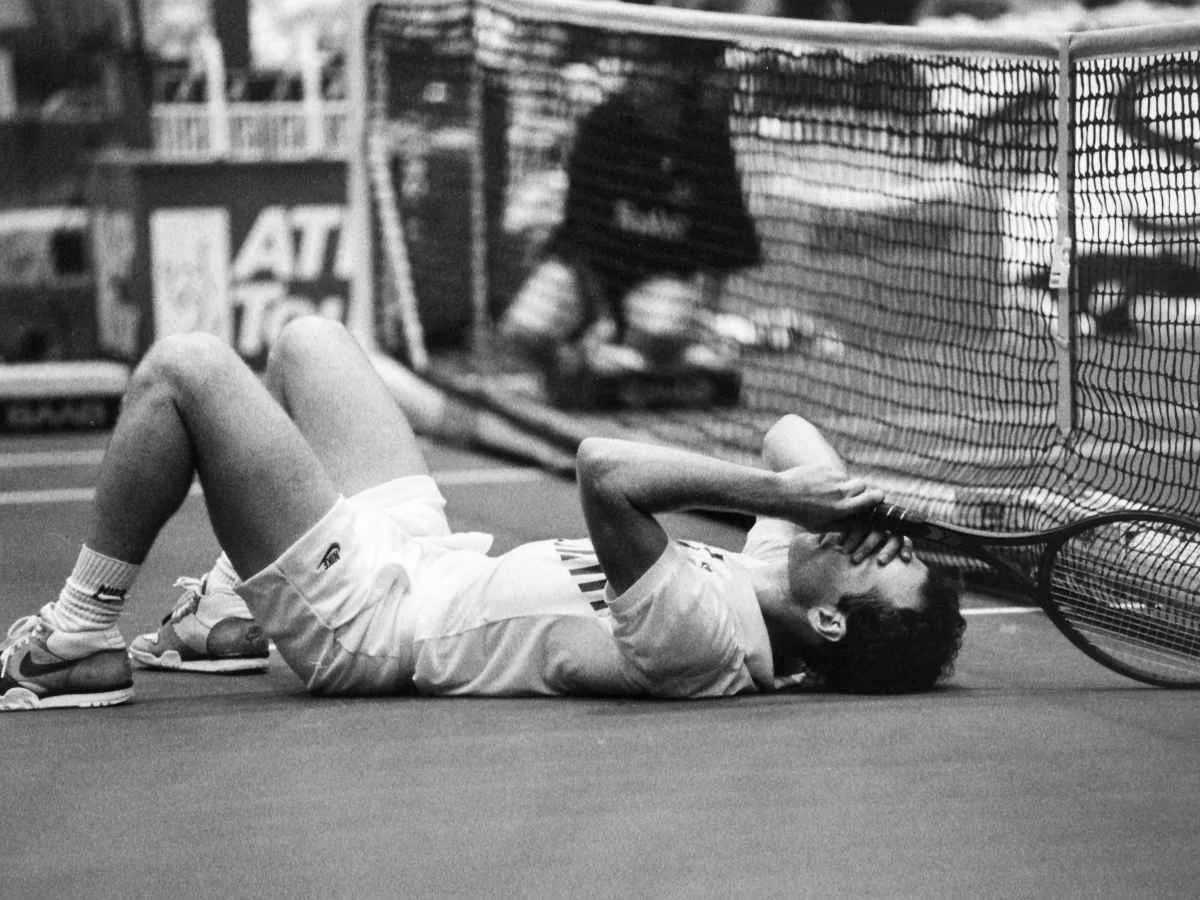

John McEnroe, a legendary American tennis player, recently revealed how ending his professional tennis career affected his sense of self, describing it as losing a vital part of his identity. The pivotal year was 1992, when McEnroe’s performance on the court began to decline, and he made the unexpected decision to retire from competitive tennis amid personal challenges, including the separation from his then-wife, Tatum O’Neal.
In an interview with Graham Bensinger, McEnroe shared the emotional weight of that period, marked by the simultaneous ends of both his marriage and playing career, which left him facing a profound sense of loss and uncertainty.
The Emotional Impact of Retirement and Separation
McEnroe explained that he initially believed stepping away from tennis might help his family situation. He said,
I [was] losing a part of my identity, which was tennis, or so I thought. It turns out I was still a lot more involved than I thought I would be at the time. What I basically thought I was stopping for in a way was so to allow my ex-wife to sort of have the opportunity to go out and do her thing. And then take care of the kids, which I thought, ‘Hey, that’s not a bad thing. They’re young and that would be a good thing.’ So then to have neither one of those things, the end of the marriage and the end of the career, that was a lot to handle. That seemed a bit overwhelming.
—John McEnroe

However, the hoped-for outcome did not materialize. His marriage ended despite his efforts, and the sudden end of his tennis career compounded the hardship. He further admitted,
I shouldn’t have been on the court. I felt like I was sort of obligated to sort of finish. I mean, I guess I didn’t have to. I guess I was lucky in a way that they—I played with my brother so, you know, I had some support systems. Patrick was with me. Davis Cup meant a lot to me around that time because I was around people that are supporting me, and my kids were there, and so I was at least getting by—by the skin of my teeth.
—John McEnroe
Life Beyond the Court: New Beginnings and Ongoing Tennis Involvement
Despite the difficult transition, McEnroe remained deeply connected to the sport he once dominated. He took on a new role as a tennis commentator, continuing to share his insights and passion for the game. Years after his divorce, McEnroe found happiness again with Patty Smyth, the American singer, to whom he is now married.
McEnroe’s influence in tennis remains strong, as he recently voiced opinions regarding the traditions and rules of major tournaments like Wimbledon.
John McEnroe Challenges Wimbledon’s Use of Headphones by Players
At the latest Wimbledon Ladies’ singles final, McEnroe criticized players Iga Swiatek and Amanda Anisimova for wearing headphones prior to their match. He expressed frustration that athletes were using music to prepare, rather than absorbing the atmosphere of the stadium, urging the All England Club to prohibit such devices.
He stated,
They [the All England Club] shouldn’t allow them to wear AirPods or headphones. You have got to get them to enjoy this [atmosphere] instead of playing some music. Come on now, ladies.
—John McEnroe
This comment sparked discussion about whether McEnroe’s view is an outdated perspective or a valid critique of modern tennis rituals.
Players Defend Their Pre-Match Music Rituals
Listening to music before matches is a widely accepted practice among tennis players aiming to focus and energize themselves. Swiatek, for instance, has openly discussed her pre-match music preferences, which include classic rock bands. She once explained,
Everybody’s asking me if I listen to that all the time. They keep buying me vinyl records and everything, and I’m like, ‘Guys, if I listen to that all the time, I wouldn’t be able to sleep.’ So it’s just pre-match, just to pump myself up. There’s some AC/DC, Guns N’ Roses, Led Zeppelin, The Rolling Stones. So yeah, rock but not too hard.
—Iga Swiatek
Given how ingrained this practice is, widespread changes at Wimbledon regarding headphone use seem unlikely.
McEnroe’s Legacy and the Changing Landscape of Tennis
John McEnroe’s candid reflections highlight the emotional challenges athletes face when their careers come to an end and the shifting dynamics within professional sports. His experience underscores how intertwined an athlete’s identity can become with their sport, making retirement a profoundly difficult adjustment.
As McEnroe continues to influence tennis through commentary and advocacy for rule changes, his story serves as a reminder of the personal toll hidden behind the public spectacle of professional tennis. Observers and fans alike await how his calls for traditionalism, like the headphone ban, will be received in a sport evolving with new generations of players and their own rituals.