
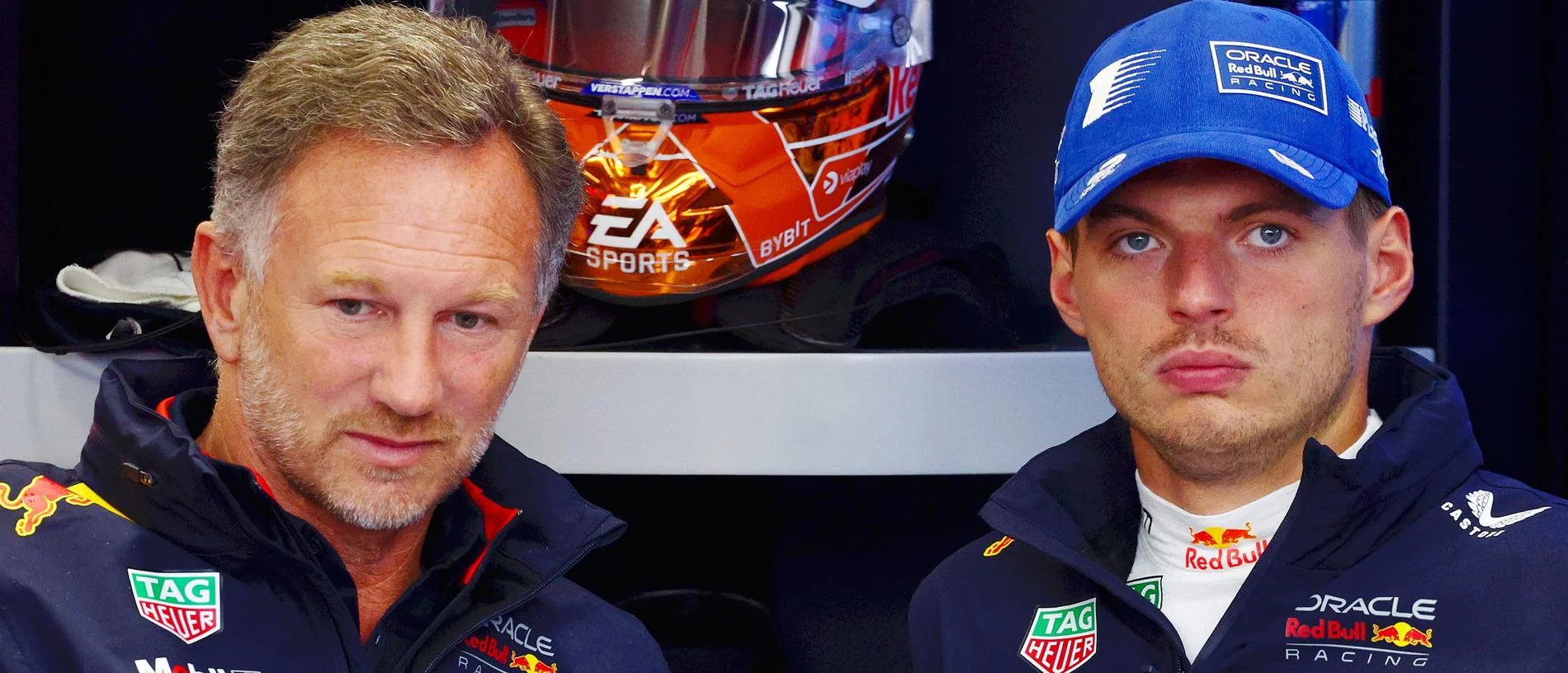

In December 2023, Red Bull Racing completed an almost flawless Formula 1 season, securing victory in 21 out of 22 races with a combination of technical excellence, driver skill, and strategic mastery. Yet, just eighteen months later, this dominant Red Bull F1 team downfall unfolded dramatically as key figures departed or were dismissed, leaving the squad fractured and its future uncertain.
The departure of Adrian Newey, the revered chief designer who joined Aston Martin, the firing of Christian Horner who had steered the team to decades of success, and the likely exit of star driver Max Verstappen have all raised urgent questions about what caused such a rapid unraveling of a top-tier racing outfit.
The Elements That Created Red Bull’s Formidable Strength
The Red Bull team of 2023 was often described as the epitome of a well-oiled F1 operation. Central to this was an exceptional aerodynamic unit masterminded by Adrian Newey, Pierre Wache, and Enrico Balbo, alongside Honda’s reliable power unit. Max Verstappen’s outstanding driving paired with one of the sport’s sharpest operational teams—executing flawless pit stops and in-race strategies—further cemented Red Bull’s dominance.
Christian Horner’s leadership provided a strategic backbone that helped align all these components into a near-perfect formula. The 2023 RB19 car was undoubtedly a technological marvel, but it was the integration of skills across driving, engineering, strategy, and management that defined the team’s overwhelmingly successful year.
Red Bull’s ability to clinch wins wasn’t just about car speed—it was often about winning critical tactical battles during races, whether through impeccable pit stop timing, clever strategy calls, or Verstappen’s on-track brilliance.
Building the Foundation for Red Bull’s Triumph
Every success in F1 is deliberate rather than accidental, and Red Bull’s excellence came after years of measured strategy and unwavering principles that ultimately forged their peak performance in 2023.
Endurance Through Challenges and Leadership Stability
The origins of Red Bull’s dominance can be traced back to struggles beginning in 2014. Christian Horner’s initial underestimation of how the new regulations would impact performance, particularly concerning reliance on the Renault power unit, led to a sharp decline following earlier successes. Despite a slump that saw only three wins that year and near-collapse, Horner retained key personnel, fending off offers from rivals like Ferrari for Adrian Newey, and maintaining team cohesion through a turbulent period.
While talent such as Peter Prodromou left for other teams like McLaren, Horner’s commitment to rebuilding set the stage for steady progress. This patient approach eventually narrowed the gap to Mercedes, the then-benchmark team, paving the way for future dominance.
Integrating Exceptional Young Talent Behind the Wheel
Throughout its history, Red Bull has consistently nurtured young, promising drivers. Sebastian Vettel’s four consecutive titles with the team showcased this approach, and as Vettel moved on, Max Verstappen stepped in to extract maximum performance even during rebuilding phases, underscoring the team’s emphasis on elite driving talent aligning with long-term growth.
Christian Horner: The Pillar of Team Leadership
Christian Horner’s leadership was central to Red Bull’s direction. Trusted by key figures like Helmut Marko and Dietrich Mateschitz, Horner’s ability to secure and retain talents like Adrian Newey, despite past clashes Newey had with other teams, was critical. His fortitude in standing firm against larger, more established rivals further demonstrated the strength of his leadership, underpinning Red Bull’s sustained success over two decades.
Minimizing Internal Conflict to Foster Unity
Red Bull’s internal culture was characterized by clearly defined roles with minimal politics. Horner, Marko, drivers, and engineers worked cohesively, supporting one another especially during difficult moments. An example is evident in 2021 when Verstappen was under media scrutiny, and the team’s leadership publicly defended him in unison, showcasing a commitment to unity and protecting team morale.
Independent Operations Away from Boardroom Control
Dietrich Mateschitz’s approach as an investor was hands-off, entrusting day-to-day operations to Helmut Marko and Christian Horner without interference. His role was primarily financial, stepping in only during critical periods requiring advocacy–such as voicing concerns about Renault’s performance as a power unit supplier. This allowed the team to function autonomously and focus on long-term development unburdened by corporate micromanagement.
The Unraveling Begins: How Did Things Go Wrong?
Despite the picture of harmony and success, several pivotal shifts occurred leading to the team‘s breakdown. The passing of Dietrich Mateschitz disrupted the balance of power and opened the door for increased involvement by the corporate board, which introduced new dynamics and pressures.
Boardroom Influence Alters Team Dynamics
With Mateschitz’s absence, control shifted toward a more traditional board structure, notably with Oliver Mintzlaff emerging as a key figure. Unlike Mateschitz’s hands-off style, the board emphasized short-term results and sought greater control, clashing with the nature of Formula 1 where meaningful changes require long lead times to yield results.
This shift to board-driven decision-making mirrored difficulties experienced by other F1 teams like Ferrari and Alpine, where board dominance has hampered success. The board’s dissatisfaction with Christian Horner’s previously broad leadership clout set off the initial cracks in the team’s leadership stability, signaling a change of course.
Factional Rivalries and Internal Discord Intensify
Heightening the turmoil was the scandal surrounding Christian Horner in 2024, investigated for alleged inappropriate conduct. However, many insiders believe the subsequent dismissal was less about the incident and more about emerging alliances within the team, particularly between Max Verstappen’s father, Jos Verstappen, and Helmut Marko, which opposed Horner’s position.
This factionalism sparked a breakdown in team cohesion. Jos Verstappen’s vocal opposition and media engagements turned into an ongoing campaign against Horner, fracturing the once unified culture. An unprecedented increase in media leaks and internal disputes tarnished the team’s reputation and disrupted its historically private and harmonious environment.
Loss of Key Personnel and Stability
The unstable atmosphere coincided with an exodus of critical team members. Following Rob Marshall’s departure, chief designer Adrian Newey also left for Aston Martin, joined later by Jonathan Wheatley. The removal of Horner removed yet another pillar of the team’s core fabric, raising fears that further departures—potentially including Horner’s remaining loyalists and even Max Verstappen—could follow.
The Fallout from a Costly Strategic Error
After an unparalleled 2023, Red Bull’s design team pursued a significant development path in 2024 that proved misguided, delaying recognition of the mistake until late in the season. This forced an abrupt correction in their car’s design philosophy, but by then, teams like McLaren had established commanding control over the regulations.
The recovery required was beyond realistic expectations for one season, and despite Verstappen securing the championship, the pressure mounted for immediate results. The board’s impatience ran counter to Formula 1’s demanding development timelines and contributed to the dismissal of Horner.
Public speculation about Verstappen’s potential transfer to Mercedes further evidenced internal strife and the fracturing of trust across the squad, highlighting a team torn apart by conflicting interests and unrealistic demands.
The Loss of Red Bull’s Core Identity
Red Bull’s hallmark throughout its two decades in Formula 1 was its absence of backroom politicking, a unified internal culture free from media leaks, and an investor who maintained a respectful distance from operational decision-making. These pillars have now vanished, coinciding with the team‘s rapid disintegration.
Uncertain Prospects for Red Bull’s Tomorrow
The future of Red Bull Racing is shrouded in uncertainty. Formula 1 success depends heavily on having a deeply invested backer who trusts the team to operate independently, a blueprint that yielded 14 world championships for Red Bull over 20 years. Currently, with full board control replacing Mateschitz’s stewardship, the structure diverges markedly from past formulas for success.
Teams such as Ferrari and Alpine, which also have significant boardroom involvement, have struggled to reclaim championship glory in recent years. Red Bull now faces a similar crossroads where long-term vision may be sacrificed for immediate results.
At present, Red Bull exists as a fundamentally transformed entity—with a new management style and an altered approach to racing, the team will have to rebuild not just on the track but in regaining its lost identity and cohesion.
Our Reader’s Queries
Q. Is number 13 banned in F1?
A. Yes, the number 13 is permitted. When Formula 1 introduced permanent numbers in 2014, Pastor Maldonado chose #13. Although some cultures view it as unlucky, drivers in F1 can decide their own numbers.
Q. Which F1 driver has ADHD?
A. Lewis Hamilton, born in 1985, is a British Formula One driver for Mercedes and previously drove for McLaren. He openly talks about living with ADHD and shares his wide-ranging interests and hobbies.
Q. Why is 17 banned in F1?
A. The number 17 is the only racing number in Formula 1 that has been officially retired. This was done to honor the memory of Jules Bianchi, a French driver who was wearing #17 during a tragic accident at the 2014 Japanese Grand Prix.
Q. Which F1 drivers have ADHD?
A. Lewis Hamilton is a British race car driver born in 1985. He competes in Formula One for Mercedes and previously raced for McLaren. Hamilton openly talks about his experiences with ADHD and shares his various hobbies and interests.