
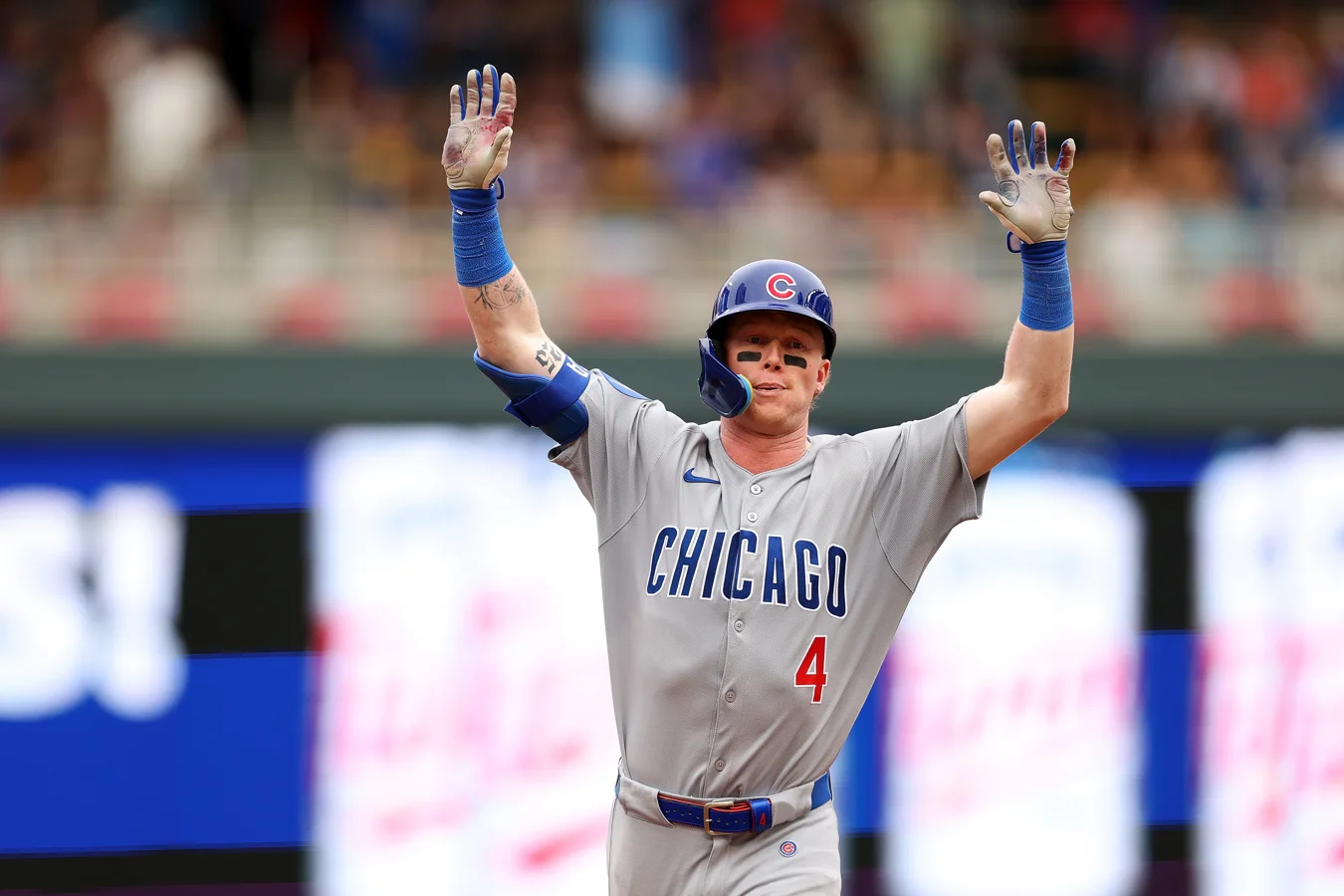

ATLANTA — The National League Most Valuable Player race appears to have a clear frontrunner, with Shohei Ohtani dominating the odds for the award, according to DraftKings. His star status and unique two-way talent have many assuming the contest is effectively settled well before the season’s conclusion. Yet some voices suggest the narrative may be premature, advocating for a closer look at other contenders like Pete Crow-Armstrong.
Current Betting Odds and Public Perception
DraftKings odds currently list Ohtani as the overwhelming favorite at -1100, with Pete Crow-Armstrong a distant second at +700. Others like Juan Soto and Kyle Tucker trail even further behind at +2000 and +5000 respectively. These figures imply that Ohtani’s lead is insurmountable, reflecting widespread confidence that he will claim the NL MVP title again.
Examining Ohtani’s Value Beyond the Numbers
Ohtani’s credentials are impressive: he won last year’s MVP solely as a designated hitter before adding pitching duties this season. While he leads the league in runs, home runs, slugging, and OPS, his pitching contribution in 2025 has been limited—just nine innings pitched with a 1.00 ERA and 0.4 WAR added. This raises the question of how much of an impact those few innings carry across a 97-game Dodgers season.
Comparing Two-Way Contributions Versus Position Players
Last season, Ohtani’s MVP case was bolstered by significant contributions on both offense and the mound. This year, his pitching role is minimal, essentially framing him as an elite designated hitter with added but minor pitching stats. The debate then shifts to whether that pitching value justifies the growing gap in other facets of the game, particularly defense and baserunning—areas where Pete Crow-Armstrong excels.
The Defensive and Baserunning Edge of Pete Crow-Armstrong
Pete Crow-Armstrong stands out as a premier defender and baserunner. He covers extensive territory in the Chicago Cubs’ outfield, showcasing exceptional range and the ability to catch balls in gaps that others might miss. Additionally, Crow-Armstrong has swiped 27 bases this season, more than doubling Ohtani’s 12 steals. His defensive presence and baserunning skills add a dimension absent from Ohtani’s contributions outside of those limited pitching innings.
Offensive Comparison: Ohtani vs. Crow-Armstrong
When it comes to hitting, Shohei Ohtani holds the advantage. His line stands at .276/.382/.605 with a 174 OPS+, including 12 doubles, 7 triples, 32 home runs, and 60 RBIs. Meanwhile, Crow-Armstrong offers a respectable slash of .265/.302/.544 and 140 OPS+, with 21 doubles, 4 triples, 25 home runs, and 71 RBIs. Although Ohtani’s offensive numbers are superior, the gap in hitting skill might not be wide enough to fully compensate for Crow-Armstrong’s added value in defense and baserunning.
WAR Metrics Highlight the Close Battle
Wins Above Replacement (WAR) offers a way to aggregate a player’s overall contributions. Despite its limitations and the debates it sparks among analysts, WAR provides insight into the current MVP race. FanGraphs data assigns Crow-Armstrong a 4.9 WAR compared to Ohtani’s 4.3, while Baseball Reference gives Crow-Armstrong an even higher 5.2 WAR against Ohtani’s consistent 4.3. The discrepancy largely stems from defensive metrics used; regardless, both systems suggest Crow-Armstrong’s all-around impact is at least on par with, if not greater than, Ohtani’s.
Evaluating the Narrative: Is the Race Truly Settled?
Ohtani’s reputation as an elite hitter and rare two-way player has shaped public perception that the NL MVP is his to lose. However, the evidence indicates this assumption overlooks Crow-Armstrong’s exceptional defense, baserunning, and solid offensive performance. The blend of these elements means the award race remains competitive and far from a foregone conclusion.
The Stakes Moving Forward in the NL MVP Contest
The NL MVP race deserves sustained attention as Crow-Armstrong’s all-around skills and consistency pose a serious challenge to Ohtani’s star power and offensive dominance. Evaluators must weigh the value of limited pitching innings alongside defensive excellence and baserunning prowess, rather than focusing on hitting and reputation alone. Until the season’s end, it remains a close contest to watch.
Our Reader’s Queries
Q. Is Shohei Ohtani the only 50/50?
A. Shohei Ohtani is the sole person in the 50/50 club.