
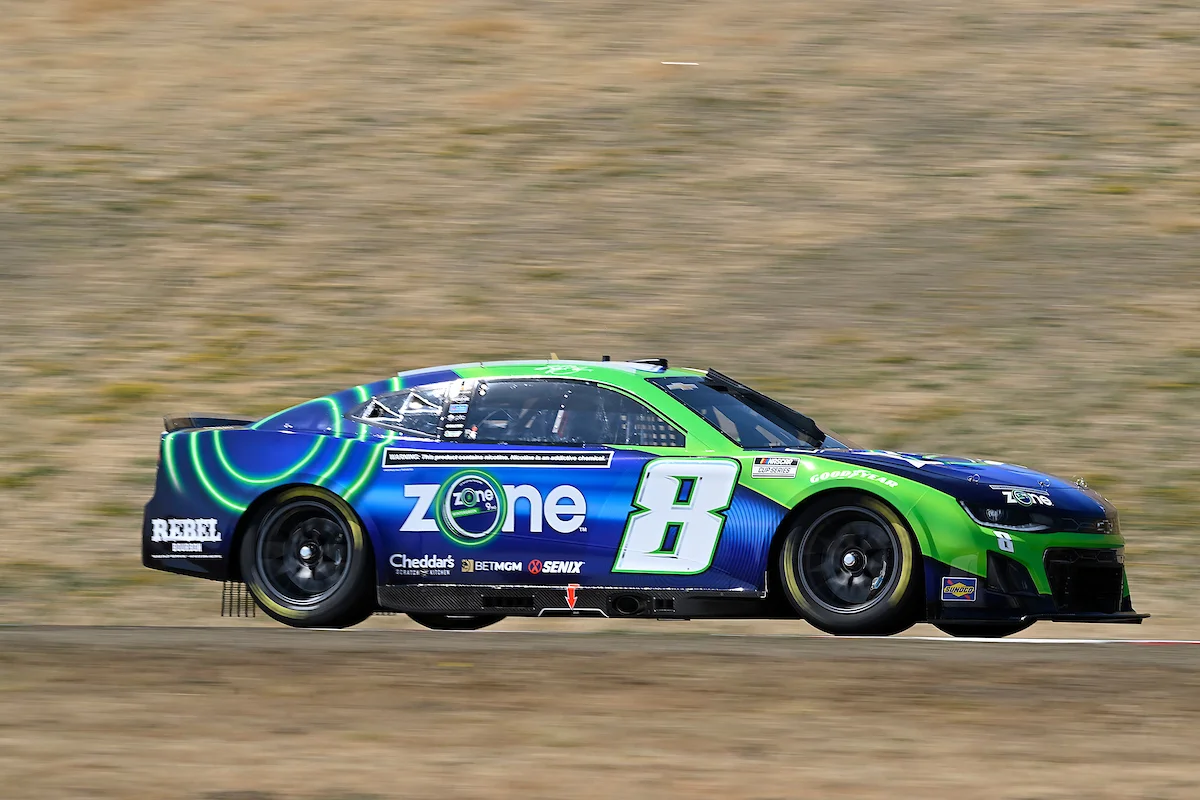

NASCAR will compete this Sunday at Dover Motor Speedway, marking the 107th Cup Series race held at the venue since 1969. Known as the ‘Monster Mile,’ the track was repaved with concrete before the 1995 season, replacing asphalt to improve durability. This concrete surface has remained largely unchanged for almost thirty years, presenting unique challenges for drivers and teams during the event.
Austin Dillon Explains the Distinct Tire Behavior on Concrete Tracks
Austin Dillon, who drives the No. 3 Chevrolet for Richard Childress Racing, discussed the notable differences between racing on concrete compared to asphalt. He explained the impact on tire grip as rubber accumulates in the concrete’s crevices:
When the rubber starts to fill those crevices in the concrete, the best way I could explain it is your front tires feel very greasy, like they just kind of slide across the top of the track and you don’t really feel them ever take a good bite.
—Austin Dillon, NASCAR driver
Dillon also highlighted the sensation drivers experience when handling the car, particularly the balance shift between sliding and regaining traction:
You’re sliding up, and when it’s ready to go back left, you pick up the gas and try to get back going. On asphalt tracks, you always have that edge. You can feel the right front. At Dover Motor Speedway and Bristol Motor Speedway, you’re a little bit on top of the track as it rubbers up.
—Austin Dillon, NASCAR driver
Practice Sessions Are Crucial Due to Track Evolution and Banking Changes
Dover’s layout features turns banked up to 24 degrees, transitioning down to nine degrees on the straightaways. This variation makes Saturday’s practice sessions essential for crews and drivers in finding the right car setup. However, as the race progresses and the surface conditions change with rubber buildup, the balance achieved in practice may shift unexpectedly.
Pit crews play a vital role in adjusting strategies throughout the race to respond to lap time fluctuations caused by evolving track conditions. Dillon reflected on the unpredictability of driving on concrete at Dover:
As a driver, I’ve got to know that it’s not going to drive perfect at all times,
he said.
You look forward to when the rubber gets laid down, because you’re going to have a better car at that point in the race.
—Austin Dillon, NASCAR driver
Historical Context and Competitive Outlook for Dover’s Upcoming Race
Qualifying at Dover has become sporadic, occurring only seven times in the last 15 races and twice in the past six. Despite the track’s demanding nature, Kyle Busch has secured three wins here—in 2008, 2010, and 2017—showing his ability to master the ‘Monster Mile.’ With his strong history, Busch remains a top contender to regain victory in the upcoming Cup Series event.