
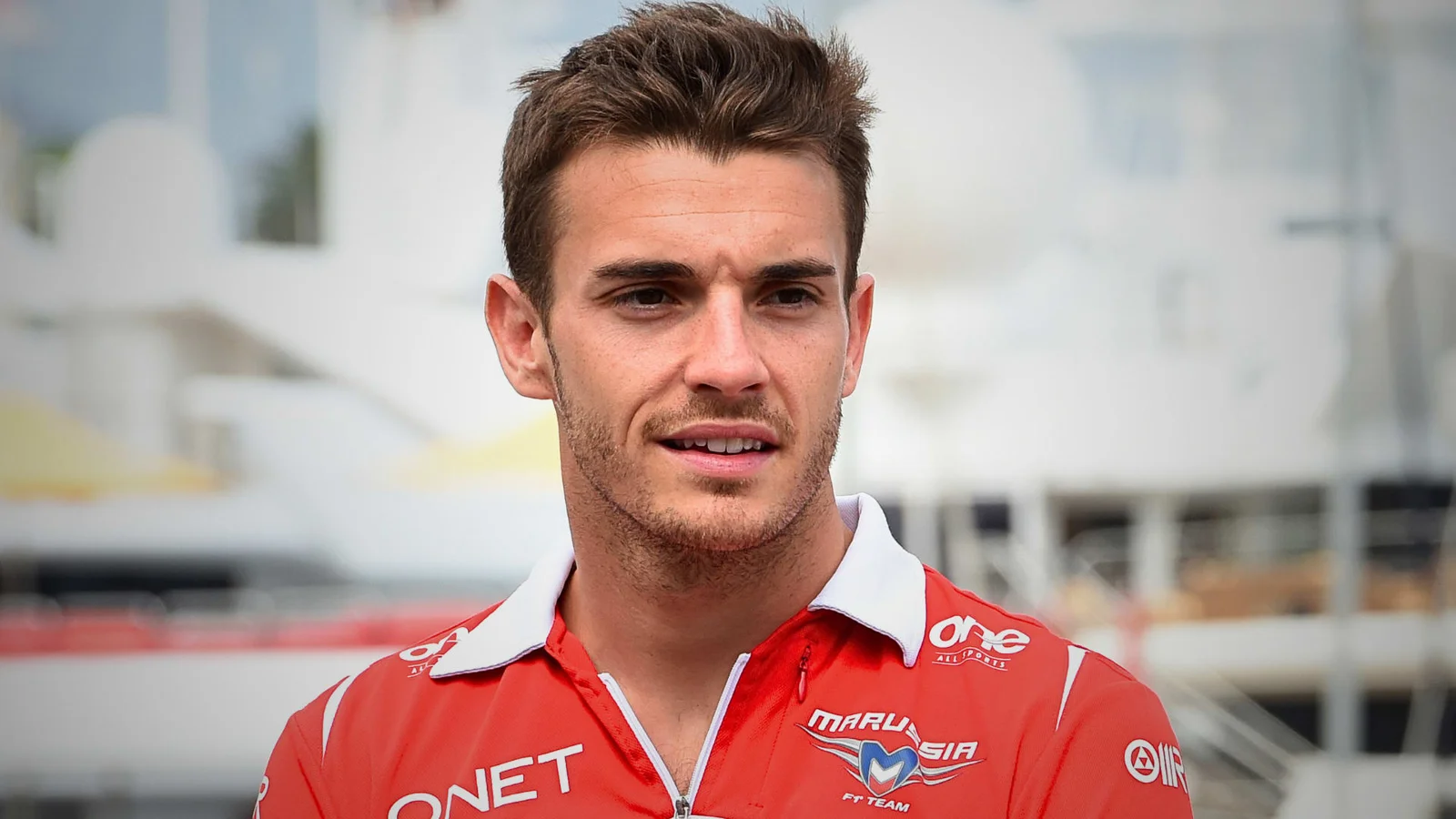

Jules Bianchi’s journey to a standout rookie year in Formula 1 traces back to his roots in the south of France. Born in Nice and raised across several towns in the Provence region—including Gap and Brignoles—he developed his early racing passion in an environment marked by coastal beauty and alpine surroundings. Although officially residing in Switzerland, Bianchi frequently returns to Marseille, a city steeped in maritime history and gritty charm, that he affectionately considers a second home. This blend of diverse locales shaped his outlook both on and off the track, providing a rich cultural backdrop to his motorsport journey.
Growing up amidst the rugged streets and busy ports of Marseille and Provence, Bianchi experienced city life that many outsiders might label as dangerous, yet his perspective reveals a more nuanced reality. He acknowledges the presence of risky areas, but also the everyday normalcy and calm that define much of the city. This grounded view speaks to a driver who balances respect for his environment with a steady composure, traits that would emerge prominently in his racing career.
“I think it’s like anywhere, any big city. There are risky places where you don’t want to go. But if you were to go to London… I don’t know where, but there must be some areas there you wouldn’t want to visit. You hear about things that happen here, but I’ve never actually seen anything violent or shocking. Maybe I’ve just been lucky but, for the moment, I haven’t seen anything like that…”
—Jules Bianchi, Marussia
The Junior Formulae: Promise and Early Challenges for the Aspiring Racer
Bianchi’s early career showed undeniable promise. After success in karting—run by his father—he graduated to single-seaters and quickly made a name for himself by winning the Formula 3 Euro Series in 2009, an achievement that earned him a spot in the prestigious Ferrari Driver Academy. Many anticipated a swift rise through the ranks, possibly culminating in a seat at Ferrari in the near future. However, the path was less straightforward than expected.
Transitioning to GP2, the immediate step below F1, Bianchi displayed raw speed but was also prone to costly mistakes and crashes. His aggressive style led to a reputation for occasionally neglecting his mirrors, and a significant accident during the 2010 Hungarian GP weekend nearly ended his racing aspirations. Despite breaking a vertebra and sustaining other injuries, Bianchi’s determination saw him return to the track within weeks and finish third overall in his rookie GP2 season.
“Jules is quick, but he doesn’t look in his mirrors.”
—GP2 Insider
Bianchi likened that crash to a hurdle that ultimately had no lasting negative effect on his performance or health. His resilience was clear as he continued to compete fiercely. However, he was eclipsed by other promising talents like Pastor Maldonado and Sergio Perez, both of whom secured Formula 1 seats ahead of him. This forced Bianchi into a second year in GP2, where, despite maintaining a third-place championship finish, his season was inconsistent, marked by more retirements and fewer podiums.
Adapting for Consistency: Mental Recalibration and Growth
Recognizing that his previous approach was unsustainable, Bianchi undertook a critical shift in mindset. Moving away from reckless pursuit of outright wins, he emphasized consistency and collecting points, learning to race with maturity rather than impatience. This change was supported by work with Ferrari on the psychological dimension of racing, helping him develop the mental fortitude necessary for higher competition levels.
“Yeah, for sure I have improved. There is always room for improvement. That first year in GP2, I had just won in Formula 3 the previous year and I wanted to win again. And actually it’s not as easy as that. I was just too focused on getting the victory. I was quick over a single lap, quick in the races all the time, but I was making mistakes and crashing. The second year, I started in the same way and it was wrong. I made mistakes and crashed again. At one point I was P15 in the championship. It was my second year of racing in GP2, so it was pretty bad. After that, I completely changed my mind and my way of driving in races. I thought much more about points and less about victory – even though I’d always want to win, of course. I did a lot of work with Ferrari on the psychological side and that was useful. It got a lot better. I had a good end to the season and finished third in the championship. And I had a good year in World Series [by Renault] in 2012. Maybe some people still think I’m not sure in the races, but I’ve changed. I’ve shown I can be consistent and score points. It’s not an issue anymore; I’ve grown up.”
—Jules Bianchi, Marussia
This mature phase of Bianchi’s career involved stepping into the World Series by Renault in 2012 to solidify his credentials, a vital move given that lingering too long in GP2 without a Formula 1 breakthrough often signals the end to top-level hopes for drivers lacking significant sponsorship backing. His performance earned him nine Formula 1 practice sessions as Force India’s third driver, a critical opportunity to gain valuable experience with F1 machinery and team operations.
Preparing for the Big Stage: Simulator Work and Testing with Ferrari
Behind the scenes, Bianchi’s close ties with Ferrari played a key role in his preparation. Starting from late 2009, he engaged extensively in simulator training and testing, crucial during a period marked by tight on-track testing restrictions. These experiences provided hands-on knowledge of the intricacies of Formula 1 car handling, something that cannot be fully replicated in junior series.
“I started with Ferrari at the end of 2009, after winning my title in Formula 3, but it was 2010 when we really started to work together. I was able to do a lot of testing in the two-year-old car, and that has been really valuable because of the testing restrictions. It’s really difficult for a young driver to get the experience, to learn how to drive a Formula 1 car. Even if you’re doing GP2 or World Series, it’s not the same. So it was a great help for me to have this opportunity. I’ve worked a lot on the simulator, too, and done mental and physical training with them. It’s a big work together, yeah.”
—Jules Bianchi, Marussia
Even as Force India’s third driver, Bianchi juggled commitments with Ferrari’s simulator program, prioritizing his development there despite reduced simulator time due to his emerging responsibilities at Marussia. He appreciated that working directly with the team at the factory and on setups was vital for improving race performance and cohesion within the team.
“I used to go a lot more. Last year, when I was the third driver for Force India, I couldn’t go to their factory and use their simulator because I was doing the Ferrari simulator. And this year I’m doing less because of my involvement with Marussia, which is the focus of most of my time. It’s important to work with the team.”
—Jules Bianchi, Marussia
Racing Seat Challenges and Marussia’s Opportunity
Despite his relentless efforts, Bianchi’s progression into a full-time Formula 1 race seat was not guaranteed. In early 2013, he faced a tense moment as Force India, under financial and competitive pressure, had to choose between him and the more experienced Adrian Sutil for the race lineup. Ultimately, the team opted for Sutil, leaving Bianchi without a direct race role.
“We were waiting for an answer from them, and it came really late – and it was the wrong answer for us! It was a difficult moment.”
—Jules Bianchi, Marussia
With little time to contemplate his next move, Ferrari called on Bianchi to take part in testing with another team, opening a door at Marussia. Recognizing this chance as critical, Bianchi embraced the opportunity with resolve, understanding that without it, his Formula 1 career might have come to an early end.
“Honestly, even though I’m still young, when you’ve been the third driver with one team, and then they say no to you for a race seat, and you don’t even have the opportunity to be the third driver again, it’s not really useful. I truly believe Formula 1 would have been finished for me. I’m really lucky to have been given this opportunity with Marussia.”
—Jules Bianchi, Marussia
Establishing Himself at Marussia: Consistency over Flashy Results
With Marussia, a smaller, underfunded team, Bianchi’s performance took on new dimensions. While podium finishes were out of reach, his ability to reliably finish races and extract maximum performance from comparatively limited machinery attracted attention. By late 2013, he had retired only twice, both due to mechanical failures rather than driver mistakes, strong evidence of a refined and composed racecraft.
Bianchi set realistic goals aligned with the team‘s resources, focusing on beating direct rivals and pushing for consistent points whenever possible. His pragmatic approach reflected a mature understanding of the sport’s competitive hierarchy and the importance of incremental progress for a team like Marussia.
“It’s a different way to approach a race. I know I won’t be going for a podium or maybe not even Q2 – we managed it in Spa but that’s because the conditions were special, you know? So I have different targets now. We want to beat Caterham and at the moment that’s looking like a realistic objective. It’s a victory when we’re ahead of them.”
—Jules Bianchi, Marussia
“It’s very important, not just because of the money [that comes from a higher placing in the constructors’ championship], but also to show a clear improvement, for the people at the factory who have been working so hard. We have to push to improve our performance. We need to be in Q2 more often and lead more in the race.”
—Jules Bianchi, Marussia
Marussia’s technical partnership with Ferrari, set to deepen with the introduction of Maranello engines in 2014, raised the stakes, increasing expectations around Bianchi’s role in helping develop the car and improve results. This relationship represented a potential turning point for both driver and team, amplifying the significance of consistent performance under pressure.
Future Prospects amidst Competitive Dynamics and F1 Politics
Jules Bianchi’s ambitions to join Ferrari’s race roster faced obstacles, particularly following Kimi Räikkönen’s unexpected return to the Scuderia squad on a short-term contract. Although this temporary arrangement may open doors in the future, Bianchi chose a cautious and steady mindset concerning his career trajectory, focusing on progression with Marussia rather than rushing into uncertain moves.
“I don’t feel any pressure. This is my first year in Formula 1 and I want to stay as long as possible, so I don’t want to put too much pressure on myself. I have time. I’m young. And I can improve. I want to take things step by step, I’m happy at Marussia and I want to do the best for them. I don’t see why I should leave.”
—Jules Bianchi, Marussia
Bianchi’s tempered confidence reflects a mature driver who, after overcoming setbacks and nearly career-ending challenges, is now focused on carving out a lasting presence in Formula 1. His breakthrough F1 rookie season stands as a testament to resilience, the value of steady growth, and the importance of aligning personal ambition with realistic team goals.
As Bianchi continues to solidify his place within the Formula 1 paddock, his journey exemplifies the pressures and complexities faced by emerging talent, especially when navigating the sport’s financial, technical, and political landscapes. His story suggests that success in Formula 1 is not solely about raw speed, but also about strategic adaptation and seizing opportunities when they arise.
Our Reader’s Queries
Q. Is number 13 banned in F1?
A. Yes, the number 13 is permitted. Pastor Maldonado actually chose it when the fixed numbering system started in 2014. Although some cultures view 13 as unlucky, F1 lets drivers select their own numbers.
Q. Which F1 driver has ADHD?
A. Lewis Hamilton, a British Formula One racer born in 1985, now drives for Mercedes and previously raced with McLaren. He openly shares his experiences with ADHD and explores his wide range of interests.
Q. Is 69 allowed in F1?
A. Drivers can pick their own permanent numbers ranging from 0 to 99, but not number 1. Only the World Drivers’ Champion can use number 1 if they want to, but it is not mandatory.
Q. Which F1 drivers have ADHD?
A. Lewis Hamilton is a British race car driver born in 1985. He competes in Formula One with the Mercedes team and previously raced for McLaren. Hamilton openly shares his experiences living with ADHD and talks about his wide range of hobbies and interests.