
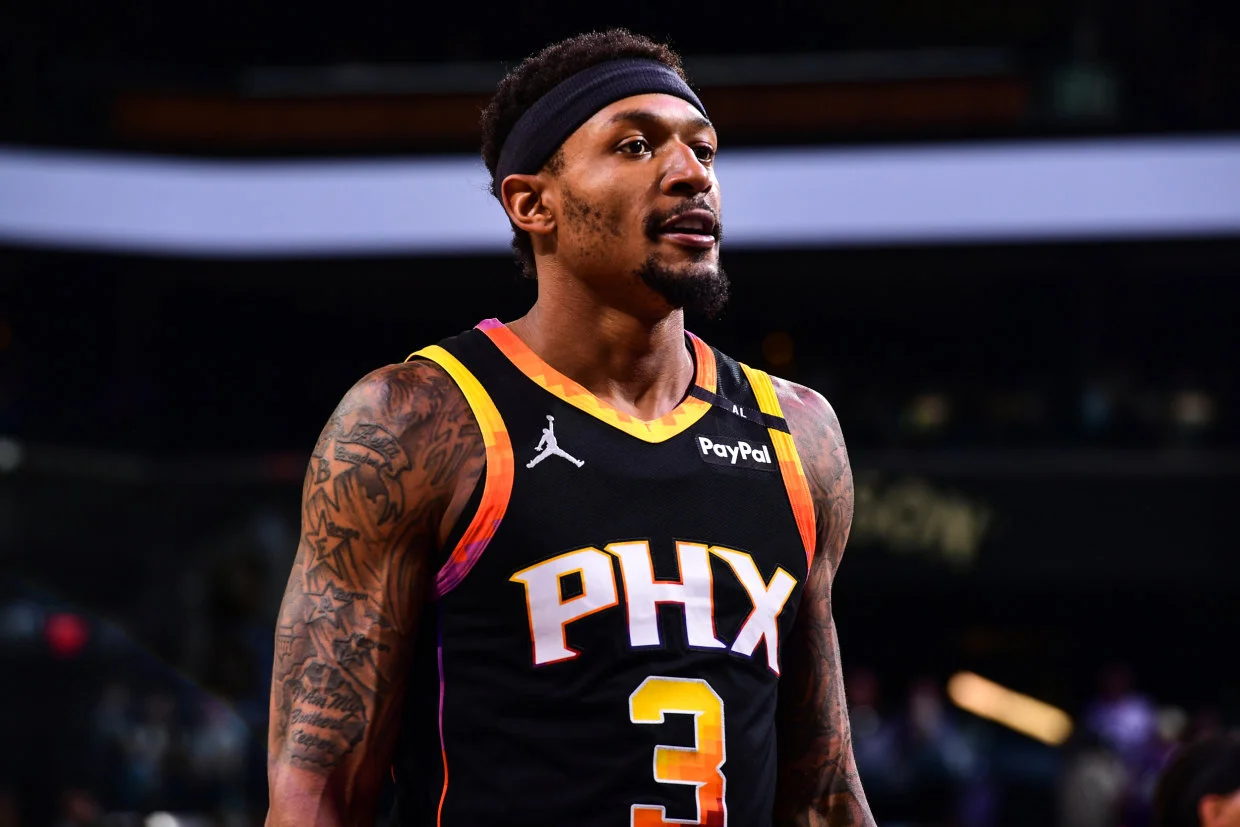

The Phoenix Suns have officially agreed to a $96.9 million buyout with Bradley Beal, stretching the payment over five years and gaining valuable roster flexibility. This decision, finalized in 2025, allows the Suns to save significant cap space this season but saddles them with a $19.4 million dead cap hit annually through 2030.
Though costly in the long run, the buyout clears Beal from the active roster, enabling the Suns to reconfigure their squad and maneuver in free agency and trades. The decision is a response to an irreparable breakdown between the team and the player, despite Beal’s proven skills and leadership potential.
Relationship breakdown behind the move to buy out Beal
While fans see contract figures and salary caps, the Suns’ management had to wrestle with deeper issues involving fractured personal dynamics. The tension between Bradley Beal and the organization reportedly reached a point where continuation was no longer viable.
They do NOT want him back. But he is untradable and if he does not agree to a buyout they may be stuck with him. One of the questions they asked candidates during the coaching cycle was what you would do with Beal. They 100% don’t want him and are looking at how to get out. — John Gambadoro, NBA insider
Similar to prior clashes within the franchise — such as those involving Mike Budenholzer and Jusuf Nurkic — the Suns appear to be facing recurring problems managing player relationships. This pattern has led to significant disruptions, undermining both team chemistry and organizational stability.
While having Beal serve as a mentor or locker room leader could have been valuable if the relationship endured, the depth of the divide made separation the only option. The buyout reflects not just financial considerations but the Cold reality of severed trust and mutual dissatisfaction.
Immediate cap relief and new roster flexibility
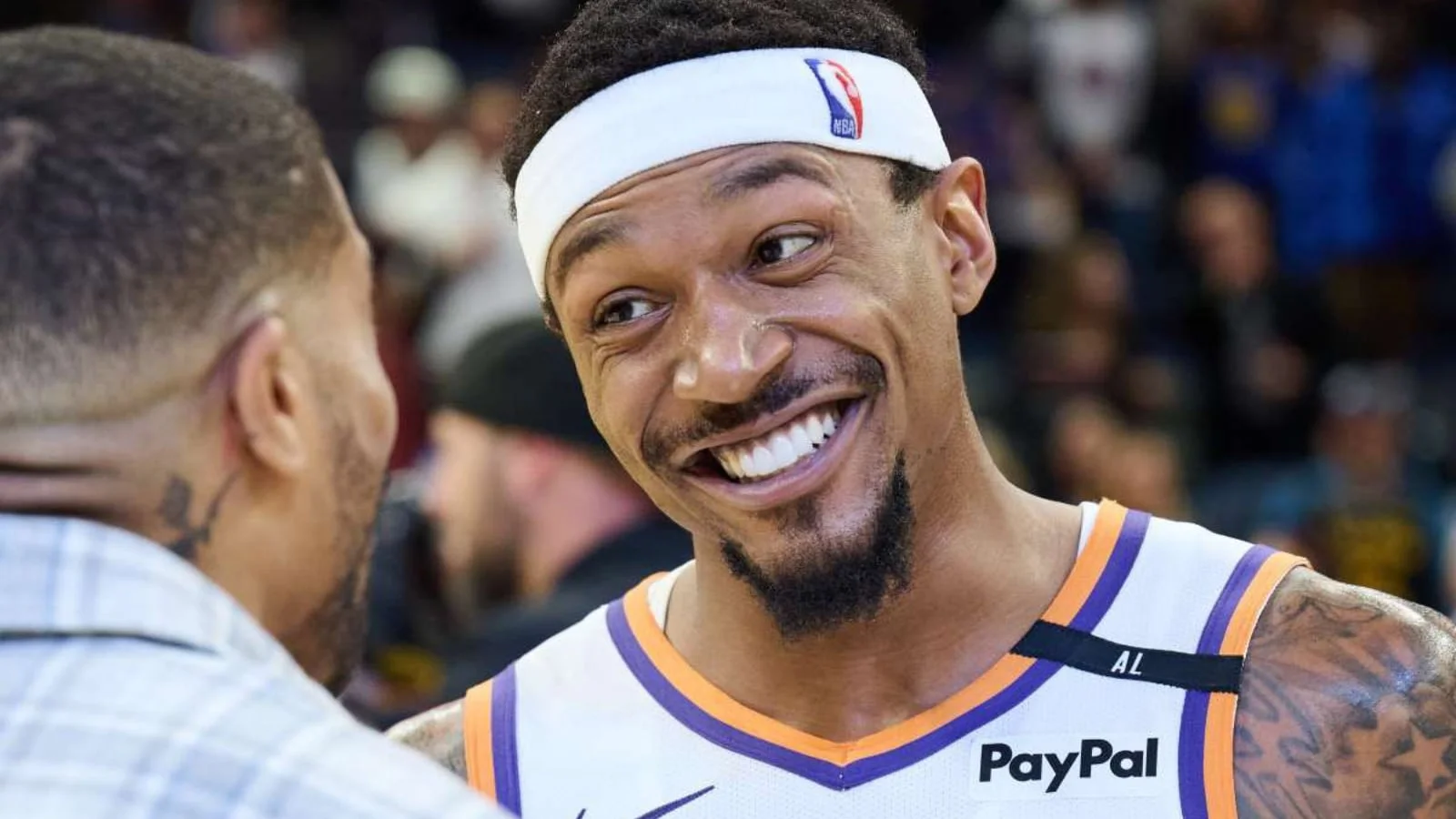
Though the buyout spreads the financial cost over five years, it dramatically improves the Suns’ short-term salary cap situation. Beal’s contract, originally set to pay him $53.7 million this season, now results in only $19.4 million counting against the cap annually, saving Phoenix $34.3 million in 2025 alone.
This adjustment causes the Suns’ total cap figure to drop from about $219.5 million to $185.2 million, putting them below the hard salary apron at $195.9 million. This newfound room provides opportunities for adding players and making trades that were previously impossible under the restrictive cap.
When Beal is bought out and stretched, the Suns can add a player up to $5.7M without triggering the hard cap.They’ll also regain flexibility to: Aggregate salaries, Use the MLE, Do sign-and-trades, Take back more $$ in trades, Send cash in deals — John Voita, III, NBA salary analyst
With an additional roster spot open and reduced financial pressure this year, Phoenix is positioned to take advantage of the mid-level exception and engage in trade negotiations that could help rebuild the team.
Cap space outlook improves significantly by 2026 and beyond
Looking to the 2026 offseason, the Suns’ financial situation brightens even more, having saved $37.8 million in cap space that would have gone toward Beal’s salary under the original contract. This freeing of salary commitments creates realistic chances to target valuable free agents in a deep 2026 class. Notable upcoming unrestricted free agents observed include Kristaps Porzingis, Aaron Gordon, De’Aaron Fox, Mikal Bridges, Coby White, and Collin Sexton.
Notable 2026 NBA Free Agents (UFA) LBJ PorzingisA. GordonD. FoxMikal BridgesC. WhiteC. SextonWhen the Suns buyout & stretch Beal, they’ll set themselves up to go fishing next offseason. Stacked FA class—and stretching this summer saves them at least $37.8M next year — John Voita, III, NBA salary analyst
Core players like Devin Booker and Jalen Green have salaries locked in, but the remaining contracts are flexible enough to be moved or used strategically to acquire assets or free up more future cap space. The financial breathing room marks a key shift, ending a period where Phoenix operated under extreme salary restrictions due to the “Big Three” contract entanglements.
The costly long-term effects of Beal’s dead money
The buyout comes with a significant downside: $19.4 million in yearly dead cap charges through 2030. This sum rivals the salary of contributing players like Collin Sexton, Harrison Barnes, Malik Monk, and Alex Caruso, making the financial impact of carrying Beal’s contract without his on-court presence a heavy burden.
Nonetheless, the financial weight will diminish over time as the NBA salary cap continues to increase. Assuming a conservative annual cap rise of 7%, Beal’s salary will account for a steady decrease in cap percentage each year, dropping from 12.5% in 2025 to about 9.5% by 2030.
If Beal is bought out for $96.7M, and that is stretched, here is the percentage of the cap it will be for the next 5 years, knowing the cap goes up: 12.5% 11.7% 10.6% 9.7% 8.8% For reference, 8.8% of this year’s cap is $13.6M — John Voita, III, NBA salary analyst
This decline further lessens the burden, making Beal’s dead money comparable to a role player’s salary by the end of the deal. Should the NBA salary cap increase more sharply due to new television contracts or other revenue booms, the relative cost could shrink even further.
While the move is painful now, the Suns might find the long-term damage more manageable than it appears today.
NBA’s evolving trend of dead money and contract stretching
The Suns’ predicament highlights a growing pattern in the NBA, where teams stretch unhealthy contracts to gain cap relief, navigating stringent salary rules that make roster flexibility challenging. Phoenix’s experience isn’t unique, as other franchises like Milwaukee have taken similar approaches to absorb dead salaries in exchange for immediate flexibility to pursue new players.
I can’t do this much more, folks! Now everyone is an expert on the new CBA and the dead money rules IT WILL BE THE NORM really soon across the league. It’s really not that serious, SMH… DEAD MONEY is the newest member of the Phoenix Suns and he has no NTC too. C’mon man — FLEX From Jersey, NBA commentator
This emerging norm underscores how front offices must accept paying players without them being active roster members as a costly but sometimes necessary trade-off amid the restrictive collective bargaining agreement.
Limited options forced Suns to choose the buyout path
The Suns were constrained by a no-trade clause in Beal’s contract and an exorbitant salary that reduced trade desirability. Retaining him was untenable due to the broken relationship and roster implications, yet absorbing the contract all at once would have been a financial disaster with no draft capital to offset losses.
The five-year buyout stretch, while far from perfect, offers a practical compromise that provides salary cap relief and a clearer path forward.
With a new front office led by Brian Gregory, the Suns now face a critical test of their acumen in roster construction, asset management, and player development. They have begun shifting focus to younger talent: sending multiple rookies and sophomores to the Summer League signals a commitment to growth and restructuring.
This transition period is painful, but also a necessary step toward building a more competitive team with strategic cap flexibility and improved chemistry.
A cautious step toward restoring Phoenix’s competitiveness
Although the buyout is a costly misstep in the franchise’s history, it may ultimately serve as a foundation for future rebuilding. The Suns have sacrificed immediate cost certainty for the chance to create roster options and bolster long-term competitiveness through free agency and trades.
This new era requires careful decision-making to maximize the value of the regained flexibility and avoid repeating past mistakes that have compromised stability and growth.
The Bradley Beal Phoenix Suns buyout represents both an end to a fractured chapter and a tentative beginning for Phoenix’s next phase, dependent on how the team capitalizes on this difficult financial and organizational reset.
Our Reader’s Queries
Q. Can Bradley Beal be waived?
A. The Suns can’t spread Beal’s contract over time because it would exceed the allowed salary limit. For this to be legal, Beal would need to give up about $13.9 million from his entire contract.
Q. Only two players in the NBA have a no-trade clause. Do you know which players? That’s right! It’s LeBron James and Bradley Beal.
A. Which NBA player has a no-trade clause?