
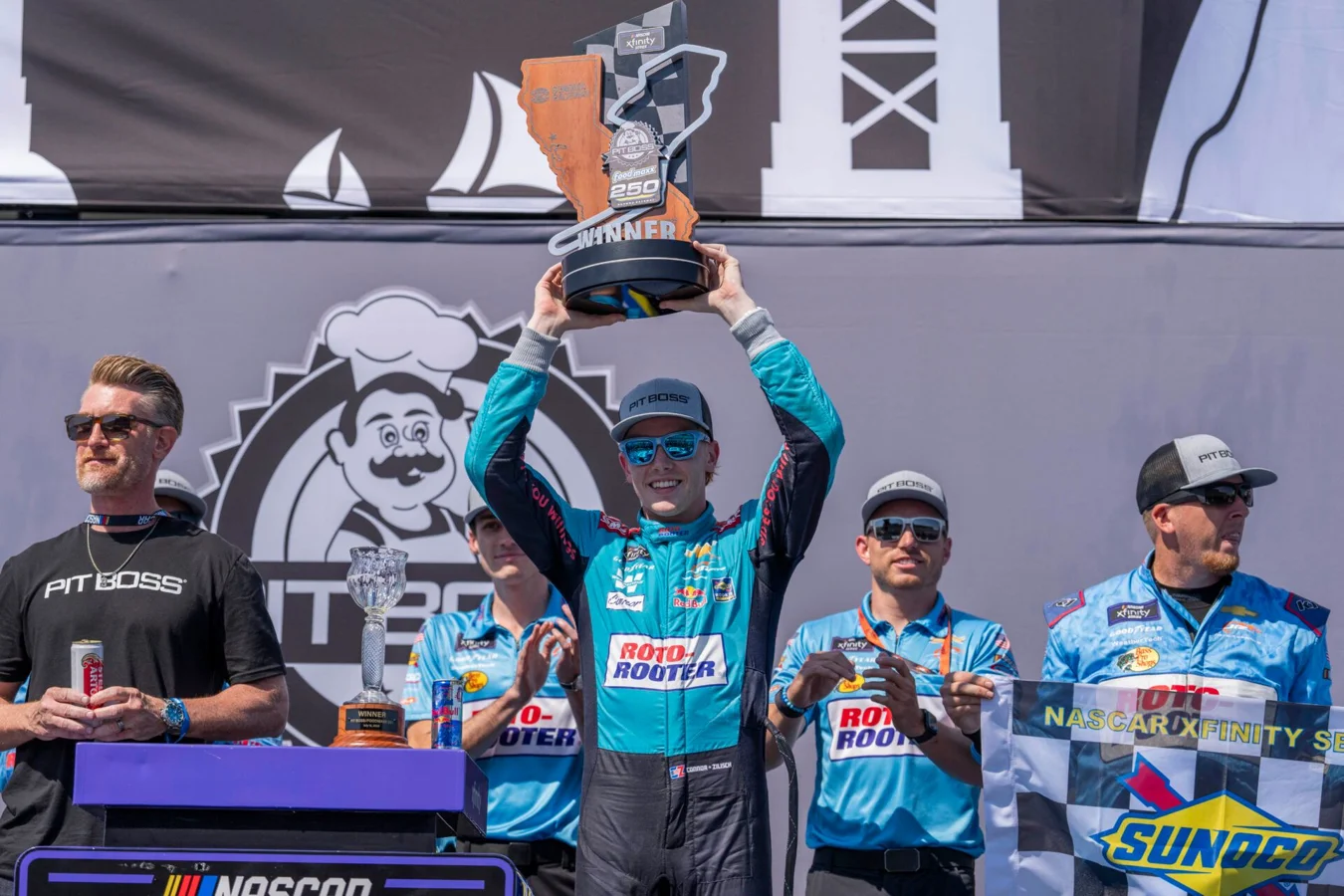

Connor Zilisch has responded to fellow NASCAR driver Carson Hocevar after Hocevar’s recent statement about having no friends in the Cup Series garage went viral. The conversation has drawn attention amid NASCAR’s changing garage culture, where personality often stands alongside performance in importance.
Hocevar, 22, caused a stir during an appearance on the Dale Jr. Download podcast when he bluntly admitted he prefers not to develop friendships with others in the sport. This unusual stance has sparked debate among fans and drivers, as Hocevar emphasized his disinterest in socializing within the Cup Series environment. Zilisch, another up-and-coming driver, offered a different viewpoint with a more positive outlook.
Examining the ‘Tough Guy’ Image: Zilisch’s Take on Hocevar’s Persona
During an interview on the Stacking Pennies podcast hosted by Corey LaJoie, Connor Zilisch was asked about his own social approach and his perspective on Hocevar’s apparent “tough guy” persona. Zilisch suggested that Hocevar’s attitude may not be entirely sincere.
Zilisch stated,
We’re going to be here most of our, like we’re going to be in this sport for 20 years. Like, why be miserable? And why don’t you want to like, you’re going to see these guys every week for the next 20 years of your life.
He emphasized the importance of enjoying the atmosphere and relationships within the sport rather than adopting a miserable or distant attitude.

Further commenting on Hocevar’s behavior, Zilisch shared,
Like part of me, I hate saying this, but like every time I walk past him in the garage, like we say hi. It’s not like he’s, I feel like he (Hocevar) was playing a little bit of the tough guy on the Download.
This suggests Zilisch views Hocevar’s harsh public statements as somewhat performative rather than a true reflection of his character.
Personality Behind the Public Statements: How Hocevar Acts On and Off the Track
Zilisch acknowledged that Hocevar may avoid socializing outside of racing events but said he appears more approachable at the racetrack than his broadcast remarks might imply. He observed,
Yes, he might not hang out with people away from the racetrack, but I feel like he’s a pretty personable guy at the racetrack. I think he was playing it a little tough,
highlighting a contrast between Hocevar’s public words and his in-person demeanor.
Reflecting on his own mindset toward friendships in NASCAR, Zilisch explained,
But yeah, I mean for me, I don’t know. I want to enjoy my life. I want to be able to enjoy my time with the people I’m going to be around the most. And if that’s the people at the racetrack, then yeah, I mean, I want to be friends.
This shows Zilisch’s preference for camaraderie and positive relationships within the racing community, emphasizing the value he places on connection rather than isolation.
Implications for NASCAR’s Evolving Garage Culture
The exchange between Zilisch and Hocevar highlights differing attitudes toward social interactions in NASCAR’s increasingly competitive and personality-driven environment. While Hocevar’s blunt dismissal of friendships underscores a solitary approach, Zilisch advocates for enjoying relationships with peers during a long and demanding career.
As both drivers continue to grow in the sport, their contrasting views may influence garage atmosphere and fan perceptions. For many in NASCAR, the balance between competitiveness and personal connection remains an important but delicate dynamic moving forward.