
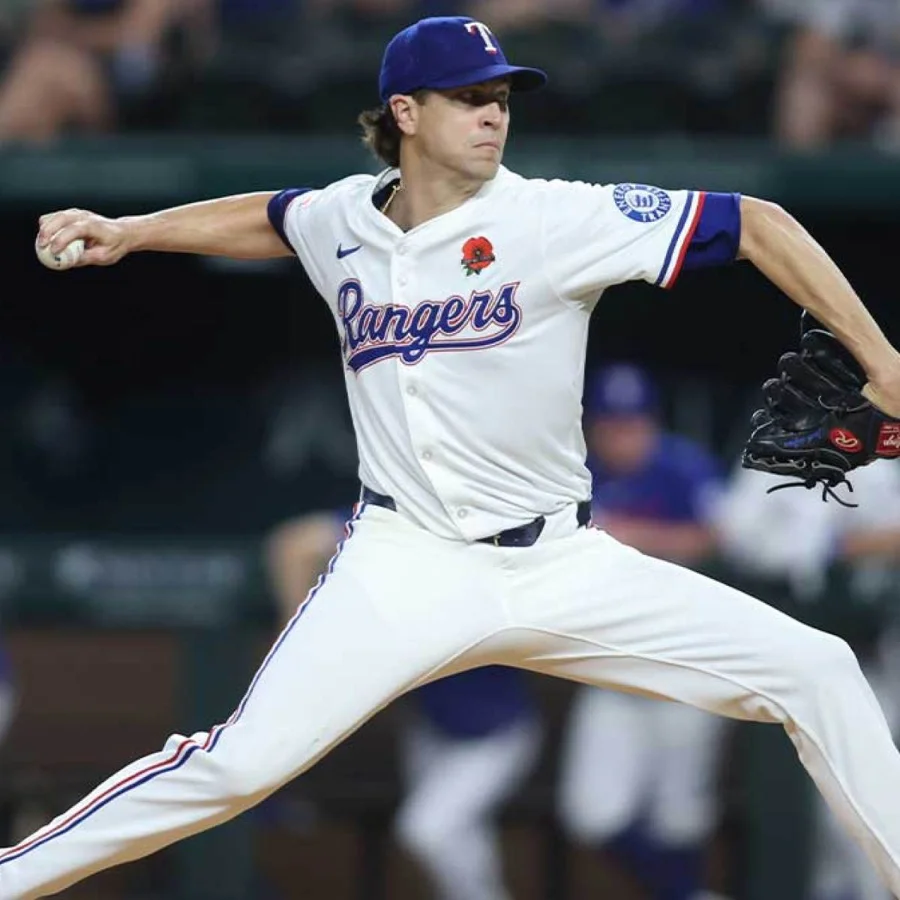

The second half of the MLB season has begun, and with it comes the intense push toward fantasy baseball championships, where every strategic decision grows more critical. One major concern for fantasy managers this stretch is the potential for Jacob deGrom innings limit, which could significantly impact the Austin Rangers’ ace and alter playoff outcomes.
Jacob deGrom’s Workload and Stakes with the Texas Rangers
Jacob deGrom stands out among pitchers who may face innings restrictions this season due to his recent workload and comeback from injury. Heading into the 2025 season, deGrom’s career innings totals reflect a cautious progression: 112⅓ innings in 2025, 21⅓ innings in 2024, 30⅓ innings in 2023, 83 innings in 2022, and 95 innings in 2021. Despite these numbers, deGrom has pitched more innings this season than most expected, making his future availability a focal point for both the Rangers and fantasy owners.
The Rangers and deGrom have approached his comeback carefully, with the pitcher expressing his intent to
“
make as many starts as [he] can
”
—Jacob deGrom, Pitcher. This consistent statement, repeated during spring training interviews, signals deGrom’s desire to contribute fully, yet the Rangers have not imposed an official innings limit. He started the season behind the rotation’s front line and has rarely crossed the 100-pitch mark per game, maintaining a fastball velocity around 97 mph, his lowest since 2019.
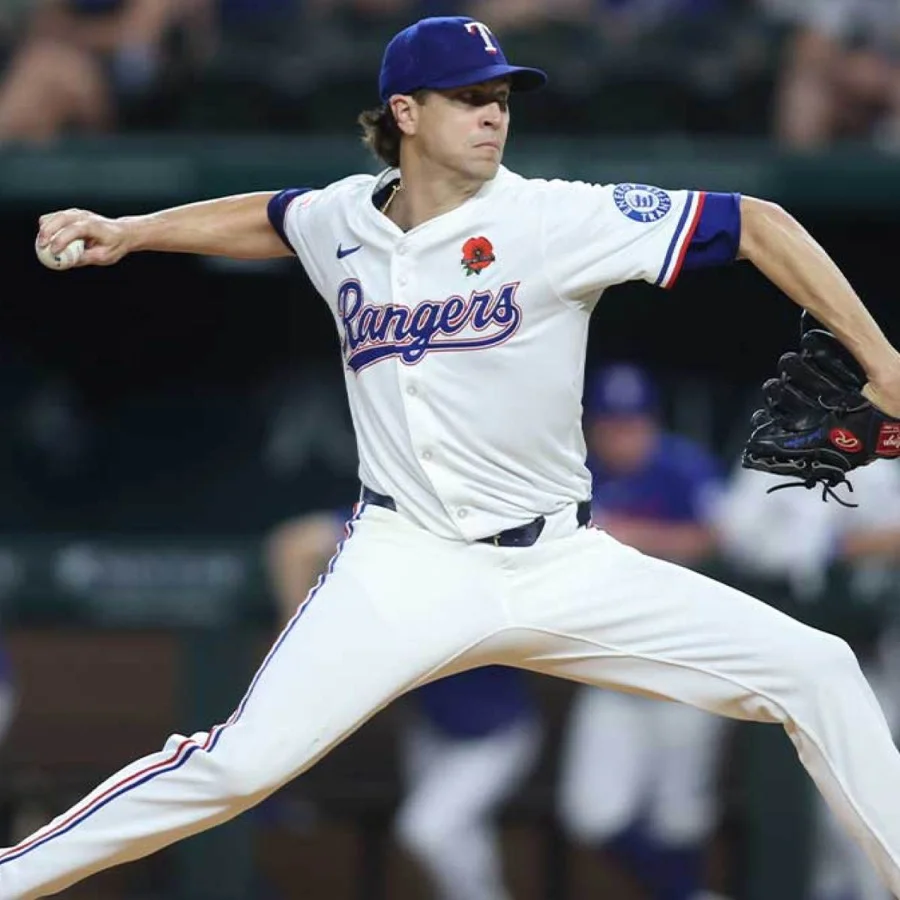
However, the team’s tight standing complicates matters. Currently a game below .500 and trailing by three and a half games for the last American League Wild Card spot, the Rangers’ playoff chances hinge on several factors. Their roster, which features much of the same championship-winning talent from two years ago, carries significant financial investment. Contractually, deGrom has two years and $75 million remaining with the Rangers, plus a club option for 2028 when he will be 40 years old.
Given this context, there is a strong possibility that if the Rangers’ playoff hopes dim, deGrom could be shut down in the latter season stages to prioritize his long-term health over immediate gains. Balancing a competitive push this year with ensuring a cornerstone pitcher’s durability for coming seasons will be a difficult call. Even if curtailed near the end, a season total near 140 innings would represent tremendous value in fantasy leagues, though it would also mean missing him for the crucial home stretch once again.
Other Pitchers at Risk of Being Limited as the Season Progresses
Jacob Misiorowski Holds a Spot in Milwaukee’s Rotation
Jacob Misiorowski’s innings log over recent years shows a tentative build-up: 89 innings in 2025, 97⅓ in 2024, 71⅓ in 2023, and 77⅔ in 2022. Not yet proven over a full season, the Milwaukee Brewers may exercise caution with his workload given he has never surpassed 100 innings in a single year either in college or the majors. If he maintains an average of five innings per start with roughly thirteen remaining starts, his cumulative workload including all levels could hit 154 innings before postseason play.
The Brewers find themselves just a game behind the Cubs in a tight division race and trailing the Dodgers for the National League’s top seed. Their sights appear firmly on a deep playoff run, making it likely they will manage Misiorowski’s innings carefully. This may mean controlling pitch counts per start, possibly capping them between 50 and 60 pitches instead of the 75 to 90 he has thrown to date, preserving the pitcher for critical later games.
Milwaukee’s pitching depth provides the luxury to do so, with Triple-A call-ups like Chad Patrick and Tobias Myers available, as well as Logan Henderson, who impressed early with a 1.71 ERA and a 35.8% strikeout rate, and Nestor Cortes on rehab assignment. This security may allow the Brewers to limit Misiorowski without sacrificing team performance, ensuring his availability when it matters most.
Strider’s Workload in Atlanta Faces Scrutiny After Surgery
Spencer Strider’s innings trajectory is notable, with 75⅓ innings logged in 2025 so far, a mere nine innings in early 2024, but a workload of 199⅓ innings in 2023. Despite no explicit public discussions about an innings limit, it is expected the Atlanta Braves will restrain his usage given he underwent an internal brace procedure last year. The Braves find themselves out of the playoff race and are reportedly considering moderate selling at the trade deadline.
Strider’s declining pitch effectiveness, including a fastball velocity drop of nearly two miles per hour and a decrease in vertical break, has resulted in a significant reduction in strikeout rate and an increased number of hits allowed. His previous 199⅓ innings from 2023 now appear unsustainable under his physical profile, which features a smaller frame and high-intensity pitching mechanics. This season’s performance suggests a realistic ceiling near 120 innings, after which a shutdown seems likely during September.
Eury Pérez’s Progression and Limited Marlins Outlook
Eury Pérez has shown encouragement in recovery from Tommy John surgery. Earlier struggles with a 6.19 ERA and shortened outings have given way to three recent strong starts, showcasing 21 strikeouts against just one walk and a single run allowed over 18 innings. At only 22 years old, Pérez’s progression excites the Marlins, though the team‘s weak standing limits playoff ambitions.
Activated in June and facing a schedule of roughly 67 remaining games, Pérez could potentially reach around 75 more innings assuming steady rotation placement. The Marlins will likely balance his usage carefully, with a threshold between 100 and 128 innings for the season potentially setting a cap that could result in limited starts or a shutdown by season’s end.
Kodai Senga’s Injury-Plagued Past Influences Mets’ Pitching Plans
Kodai Senga has wrestled with injuries since last year, starting with a shoulder capsule strain and followed by a significant calf strain during his returning game. Despite participating in the Mets’ playoff run, his health issues remain a backdrop to this season. After slowly ramping up this year, a hamstring strain in June sidelined him for nearly a month.
Ironically, this injury-induced break may have reduced the need for innings restrictions later, as the Mets consider shifting to a six-man rotation to mitigate fatigue. This strategy could distribute the load more evenly and help preserve Senga and the other starters for the stretch run.
Shane Baz’s Effectiveness Raises Questions About Overuse
Shane Baz, recovering from Tommy John surgery performed in September 2022, has encountered effectiveness challenges rather than health problems so far this season. Though nearly three years post-surgery, he has thrown only one full season since the operation. His fastball velocity this year is consistent with pre-surgery levels, but command inconsistencies have hampered his performance.
Baz’s workload is likely to be managed carefully as the Rays vie for a playoff position. Rather than a full shutdown, Baz might work in tandem with relievers like Joe Boyle to deliver bulk innings incrementally, similar to the approach used with teammate Drew Rasmussen recently, ensuring sustained use without overtaxing his arm.
Kris Bubic’s Resurgence Amid Royals’ Playoff Fading
Kris Bubic has been a standout this summer, returning from Tommy John surgery to take both relief and starting roles effectively, securing his first All-Star selection. His strong early-season showing has made him the 23rd highest-ranked pitcher on FanGraphs, rewarding those who acquired him inexpensively. Yet, as the Royals slip four-and-a-half games behind the final Wild Card spot, the likelihood of a late-season innings limit increases.
While Bubic has handled substantial workloads pre-injury, the Royals’ front office may reevaluate as the season closes. The team’s past handling of pitchers like Cole Ragans, who pitched deeply into last postseason before an injury, may inform decisions surrounding Bubic’s availability.
Grant Holmes Confronts Atlanta’s Declining Playoff Prospects
Grant Holmes has been a solid performer during a tough season for the Braves, who appear far from postseason contention and are considering trades at the deadline. Holmes logged around 110 innings last season, making his future workload tenuous as management balances his use against team strategy and player health priorities for the coming years.
Clay Holmes’ Role Shifts Amid Mets’ Rotation Injuries
Clay Holmes has skillfully transitioned from bullpen duties to rotation starter with a 3.31 ERA over 103⅓ innings, stabilizing the injury-riddled Mets staff. However, recent limits are clear: after multiple starts with six or more innings before June, Holmes has been capped around 90 pitches per outing with no starts going deeper than five innings since early June. Manager Carlos Mendoza has indicated this pitch count restriction is intentional, reflecting concerns over workload buildup.
This constraint may dampen Holmes’ fantasy ceiling, though he remains a valuable asset as a reliable rotation member.
Landen Roupp Offers Giants Consistency in a Tight Wild Card Race
Landen Roupp quietly posts a respectable 3.27 ERA, holding a back-end rotation spot for the San Francisco Giants. Despite mixed underlying metrics predicting regression, Roupp is on track to exceed his previous professional career-high innings total. His past physical setbacks include back and elbow injuries, yet he has remained active this season.
The Giants are a half–game out of the National League Wild Card race and may limit Roupp only if they fall out of contention or acquire additional starters at the trade deadline. They have options like Joey Lucchesi, Tristan Beck, and prospect Carson Whisenhunt to provide flexibility, though the team’s current focus on winning makes an innings limit less likely.
Drew Rasmussen’s Pitch Counts Curtail His Usual Stamina
Drew Rasmussen has already seen reductions in workload, beginning the year throwing between 70 to 90 pitches per game but lately pitching fewer, with outings limited to as few as 32 pitches. After his third arm surgery, it remains uncertain if his workload will rebound to previous levels, though manager Kevin Cash anticipates a steady five-inning target post-All-Star break.
This constrained usage restricts Rasmussen’s fantasy appeal primarily to deeper leagues. The situation remains fluid, with close attention required on updates from the Tampa Bay Rays organization.
Sandy Alcantara’s Struggles Threaten His Season and Team Outlook
Marlins manager Clayton McCullough surprised many in spring training by assuring that Sandy Alcantara would not face innings restrictions. Unfortunately, Alcantara’s performance has been far below expectations, posting a 7.22 ERA, the worst among pitchers with at least 80 innings this season.
With trade rumors swirling amid his struggles, the Marlins might opt to shut down Alcantara at any time, given his diminishing impact. This scenario presents a bleak outlook for fantasy managers relying on his contributions and signals a difficult remainder of the season ahead.
The Implications of Innings Limits for Fantasy Baseball Playoffs
As the fantasy baseball postseason approaches, innings limits for starting pitchers like Jacob deGrom loom large, reshaping roster strategies and player valuations. The delicate balance teams face between pursuing immediate success and safeguarding pitchers’ longevity will dictate late-season availability and influence fantasy outcomes deeply.
For deGrom and others on this list, monitoring team standings, injury reports, and managerial comments becomes crucial. An innings cap can mean the difference between a fantasy league champion and a later-round playoff exit, underscoring how vital these health-conscious decisions are in shaping the final months.
Our Reader’s Queries
Q. How fast can Jacob deGrom throw?
A. Jacob deGrom has maintained a 1.99 ERA across 81 starts since 2018, pitching 524 innings. During these games, the Mets’ record is 38 wins and 43 losses. This evening, deGrom has thrown seven of the 25 fastest pitches of his career. His fastball is averaging 100 mph, with a peak speed of 102 mph.
Q. How fast does Jacob DeGrom throw?
A. After surgery, Jacob deGrom has a 2.33 ERA over 10 games with the Texas Rangers. His fastball now averages 97 mph, slightly down from his earlier 98.9 mph average.