
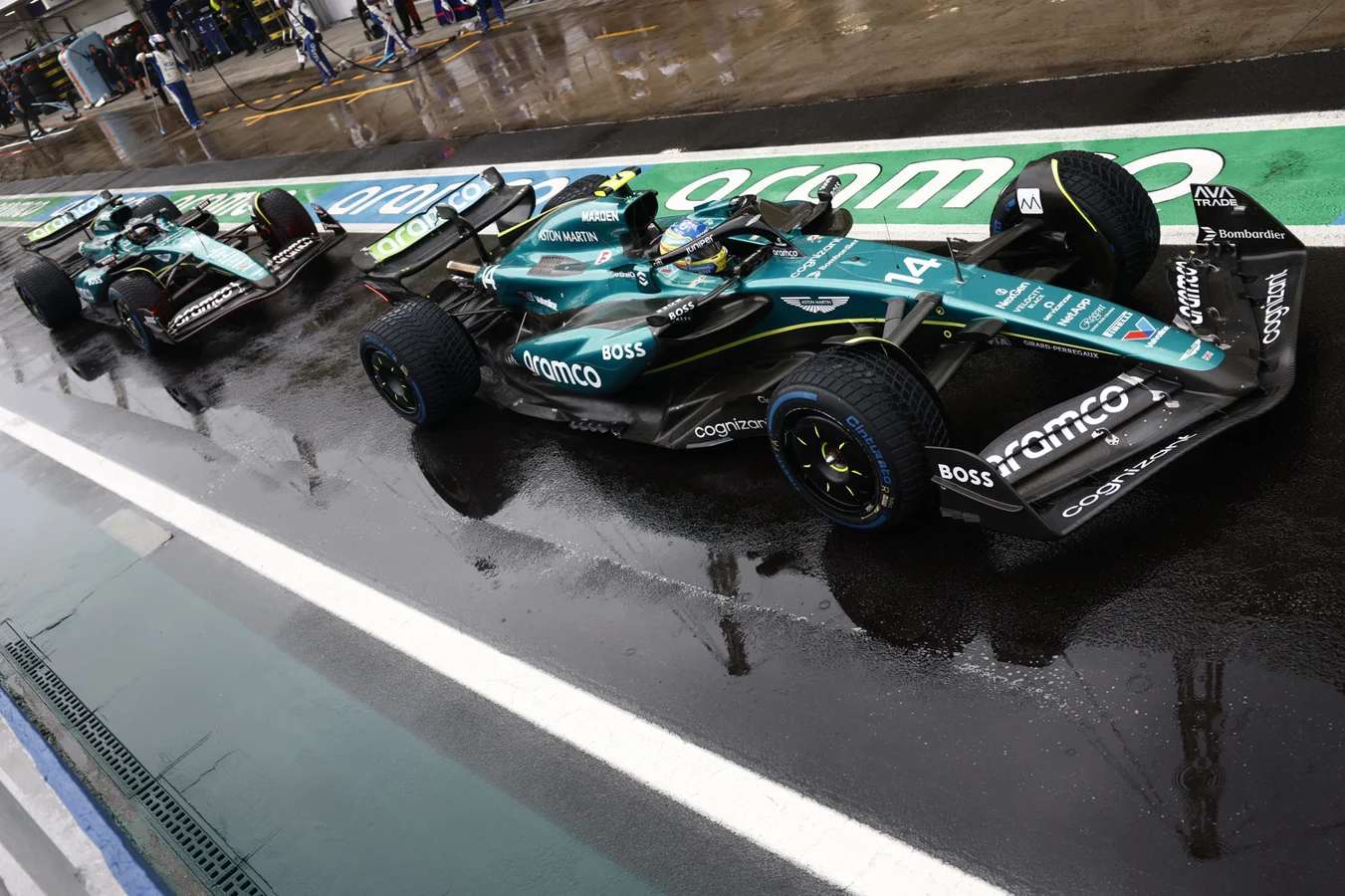

Since March, Adrian Newey has been fully absorbed in the development of Aston Martin’s 2026 Formula 1 car, dedicating almost all his attention to this crucial task despite starting later than many rival teams. As the Managing Technical Partner, Newey is in what he describes as a “design trance,” aiming to create a competitive edge amid a highly challenging field shaped by new technical regulations.
Challenges and Pressures in the Race for 2026 Compliance
Newey acknowledges the intense pressures faced today in F1 are even greater than those he experienced in 1997, highlighting the complex requirements that the latest rules impose on teams. Although the regulations impose tough constraints, he notes a degree of flexibility that Aston Martin hopes to exploit. However, concerns remain about the late start to their 2026 car development and the effectiveness of their simulation tools, which may impact preparations ahead of the next season.
Focus on Unchangeable Design Elements and Driver Insights
Key areas of Newey’s work focus on features such as suspension systems and fuel tank size, components that cannot be modified once the season begins. Feedback from lead driver Fernando Alonso confirms that Newey’s priority lies squarely with the 2026 project, meaning current season car advancements are receiving less attention. This strategic choice reflects the team’s determination to prioritize long-term competitiveness over immediate performance gains.
Innovation and Strategic Direction for Future Success
Aston Martin is relying heavily on Newey’s design expertise as it navigates the evolving regulatory landscape. The team expects to see a variety of design approaches from competitors under the new rules, making innovation within those limits critical. Newey’s deep focus signals a strategic shift toward harnessing creativity and technical precision to transform Aston Martin’s future on the grid.
Looking Ahead: What This Means for Aston Martin’s F1 Ambitions
Newey’s intensive efforts represent a pivotal moment for Aston Martin’s F1 program, one that could reshape the team’s trajectory in the highly competitive environment of Formula 1. By committing to cutting-edge solutions early and addressing fundamental design challenges, the team aims to build a solid foundation for success starting in 2026. The coming months will reveal how effectively this approach translates into on-track performance against their rivals.
Our Reader’s Queries
Q. Is number 13 banned in F1?
A. Sure, the number 13 is permitted. Actually, Pastor Maldonado chose #13 when the permanent numbering system started in 2014. While some cultures view 13 as unlucky, Formula 1 lets drivers decide their numbers.
Q. Which F1 driver has ADHD?
A. Lewis Hamilton, born in 1985, is a British Formula One driver who currently races for Mercedes and has previously raced for McLaren. He openly talks about his life with ADHD and shares his various interests and passions.
Q. Is 69 allowed in F1?
A. Drivers can pick their own permanent numbers between 0 and 99, except for 1. Only the World Drivers’ Champion has the option to use number 1, but it’s not mandatory for them.
Q. Which F1 drivers have ADHD?
A. Lewis Hamilton is a British Formula One driver, born in 1985. He races for Mercedes and has previously raced for McLaren. Hamilton openly talks about his experiences with ADHD and explores his various interests and hobbies.