
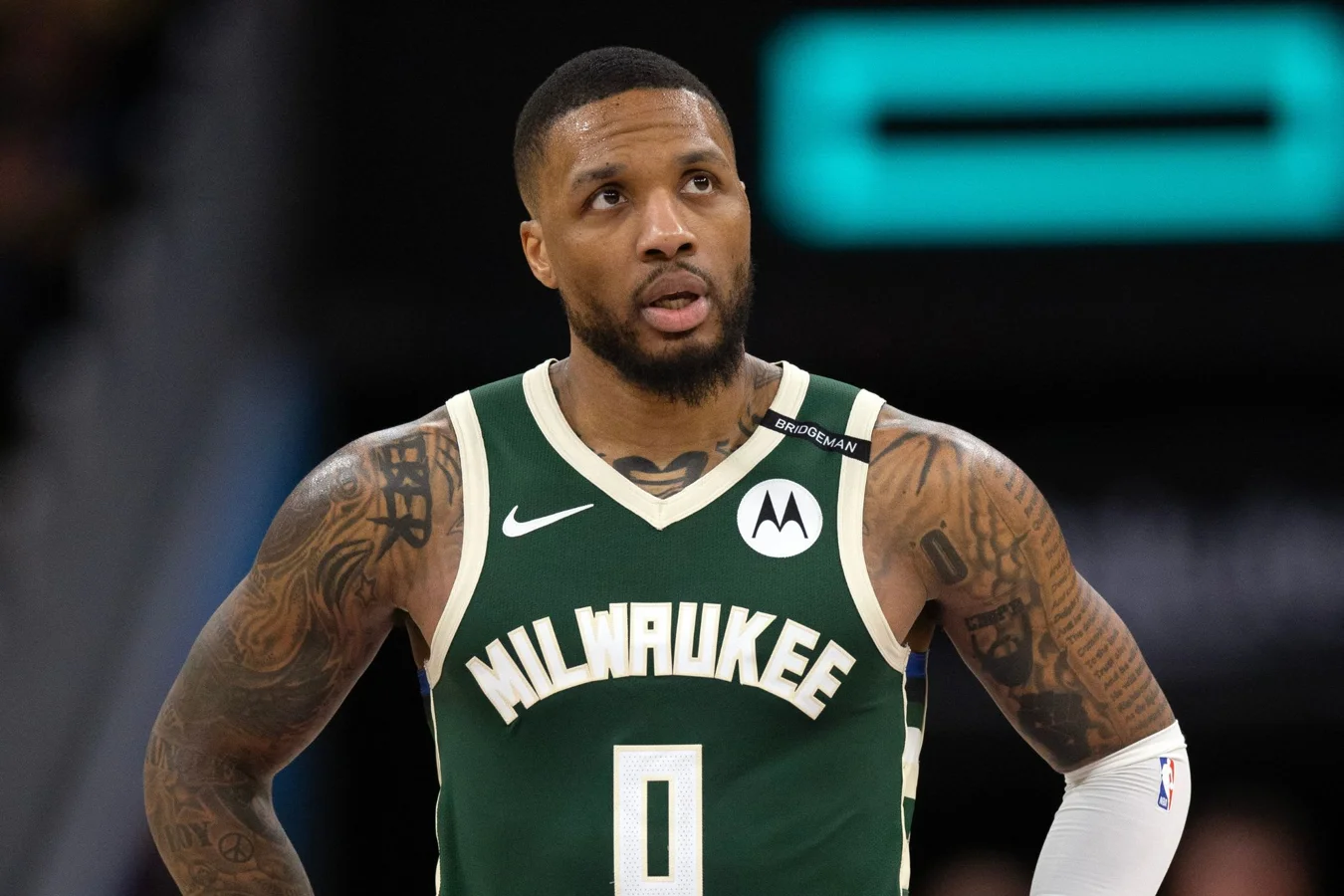

Damian Lillard’s 2024-25 season with the Milwaukee Bucks was expected to be a defining chapter in his career, aimed at re-establishing the team’s championship ambitions. However, a torn left Achilles tendon sustained during Game 4 of the first playoff round abruptly halted his progress and ended his postseason run. This injury not only robbed Lillard of vital momentum but also significantly undermined the Bucks’ title hopes. Amid the setback, Lillard remains financially secured with a combined $141 million contract covering his remaining Bucks salary alongside a new deal with the Portland Trail Blazers, blending stability with a return to his original <a href=”https://www.buzzineintl.com/category/basketball/nba/”>NBA home.
His $141 million earnings over the next two seasons include $70 million planned for the upcoming year dedicated largely to rehabilitation. These figures, though reflecting immense financial security, also highlight how his career trajectory has been influenced by unforeseen challenges. The Bucks’ decision to release him financially freed Portland to bring back their franchise icon, creating a rare scenario where both player and organization find value beyond just on-court contributions.
On The Hoop Collective, Brian Windhorst captured Lillard’s predicament, stating,
He could not say no to this. Um, and I’m sure he’s happy to say yes, but he also could not say no.
Tim Bontemps added personal insight, emphasizing the emotional toll the past years have taken.
His family was back in the Pacific Northwest. He was in Milwaukee. He’s talked at times about how tough a situation that was for him.
The physical injury paired with distance from his support system deepened his challenges, fueling his desire for the return to Portland. This move represents more than a fresh start—it reconnects him with something Milwaukee never fully offered.
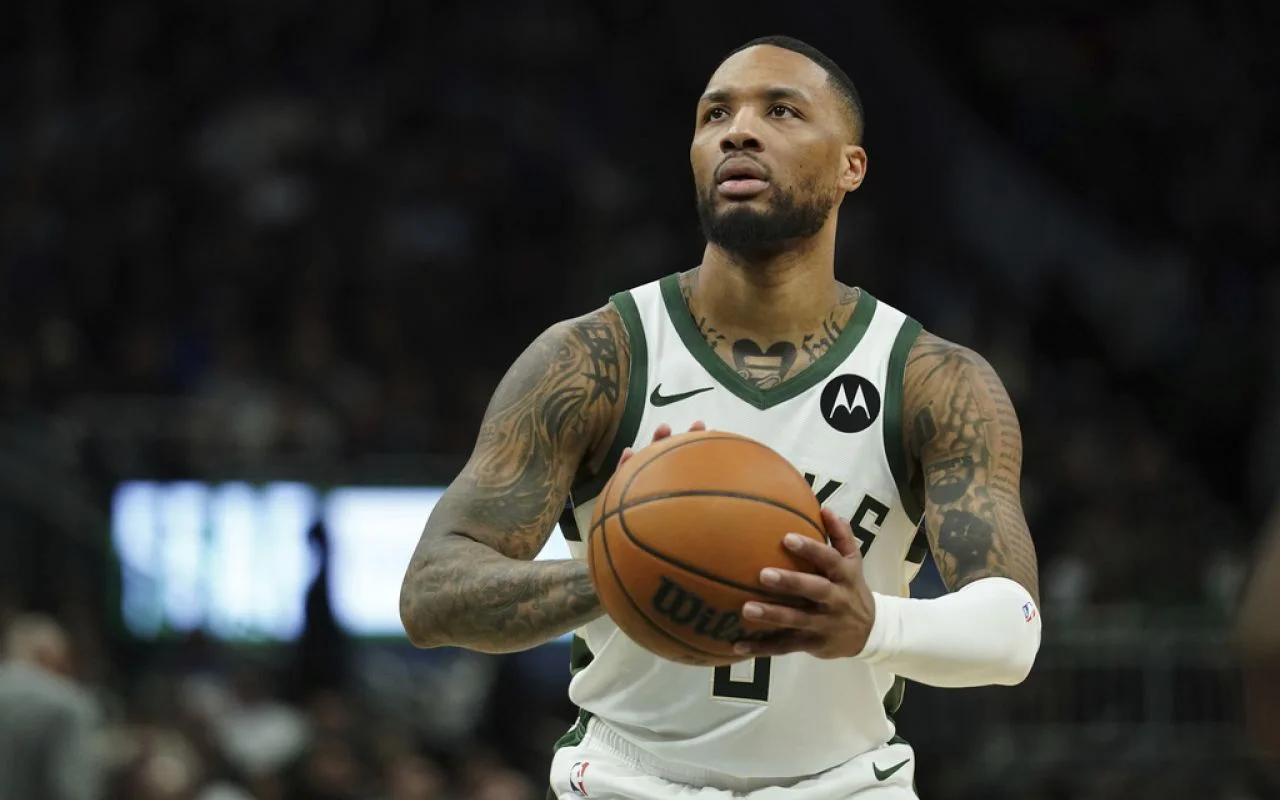
The reunion also promises developmental benefits for Portland’s young talent. Bontemps pointed out the mentorship impact on emerging stars such as Scoot Henderson, remarking,
You got Jrew Holiday and Dame Lillard mentoring them,
highlighting the potential for a strong locker room influence. Echoing this, Windhorst said,
Their locker room will be spectacular. I don’t know how they’ll be on the floor, but their locker room is going to be spectacular.
Windhorst further acknowledged the Bucks’ role, noting,
Dame owes a valentine to the Milwaukee Bucks organization…them cutting him when they did opened this up.
This sequence suggests that the injury-induced transition may not mark the end of Lillard’s prime but instead a redirected path leading back to where his career flourished.
Complexities surround Lillard’s homecoming and Portland’s evolving strategy
Although Damian Lillard’s return to Portland carries a sentimental appeal, the implications for the Trail Blazers organization remain ambiguous. Brian Windhorst clarified the terms of Lillard’s deal on The Hoop Collective, explaining that it is a three-year contract—two guaranteed with an additional player option—valued at approximately $42 million at the mid-level exception. Despite some initial confusion over the contract’s structure, the financial reality and emotional significance are unquestionable.
Tim Bontemps recounted his reaction to the announcement from Lisbon:
I walked out of the room, and a few minutes later, I got a tweet from Shams announcing that this Dame thing was happening. And the first thing I thought was, ‘This is an awesome story.’
Indeed, the storyline of a franchise legend returning to his roots echoes like a cinematic plot. However, the broader ambitions of the Trail Blazers for the upcoming seasons are not yet clear, especially after various offseason roster moves that hint at an unclear direction.
One notable component of the contract is the inclusion of a no-trade clause, which Bontemps views as a significant strategic or personal safeguard.
Gets a no trade clause, which I think is extremely smart by Aaron Goodwin and Dame’s management team to make sure that he has some control over his future.
In an NBA climate where players can be moved abruptly, this provision ensures Lillard retains control after years of uncertainty, paralleling precedents set by players like Bradley Beal.
The Bucks’ standpoint is more complicated, with $40 million in dead cap space for the 2025-26 season, a difficult situation for any organization to manage financially. Bontemps highlighted this challenge:
Now has $40 million essentially in dead money on their books for the 25-26 season. That is a very hard thing to square,
underscoring the financial strain the team faces following Lillard’s departure. Conversely, Portland’s decision to bring back Lillard during a rebuilding phase feels conflicted, raising questions about whether this is an attempt at a playoff run, a farewell celebration for their star, or merely buying time.
Bontemps summarized the mixed emotions and strategic uncertainty:
The Dame thing in a vacuum, honestly, totally makes sense… I just don’t really get what Portland’s trying to do in general.
Fans may appreciate the sentimental reunion and benefit from veteran leadership, but the Trail Blazers’ overall vision remains unsettled, with their plan resembling a puzzle yet to be assembled.
The broader impact of Lillard’s move on the NBA landscape
Damian Lillard’s forced hiatus due to injury and the subsequent financial arrangements have led to an unexpected career pivot that could influence not only his legacy but also the teams involved. Returning to Portland offers him the chance to repair both his physical form and his connection with the city where he rose to prominence, possibly reigniting his best basketball years.
For Portland, Lillard’s presence could stabilize their locker room and provide invaluable mentorship to younger players like Scoot Henderson, potentially accelerating the team‘s development. Meanwhile, the Bucks’ decision to release him despite the financial repercussions shows the complexities NBA teams face between salary commitments and roster strategy.
This episode sheds light on how an elite player’s career can be shaped by personal factors, injuries, and organizational decisions, reinforcing the delicate balance between on-court performance and off-court realities. Fans and analysts alike will watch closely to see if Lillard’s return to Portland signals a renaissance or simply a transitional phase in his distinguished career.