
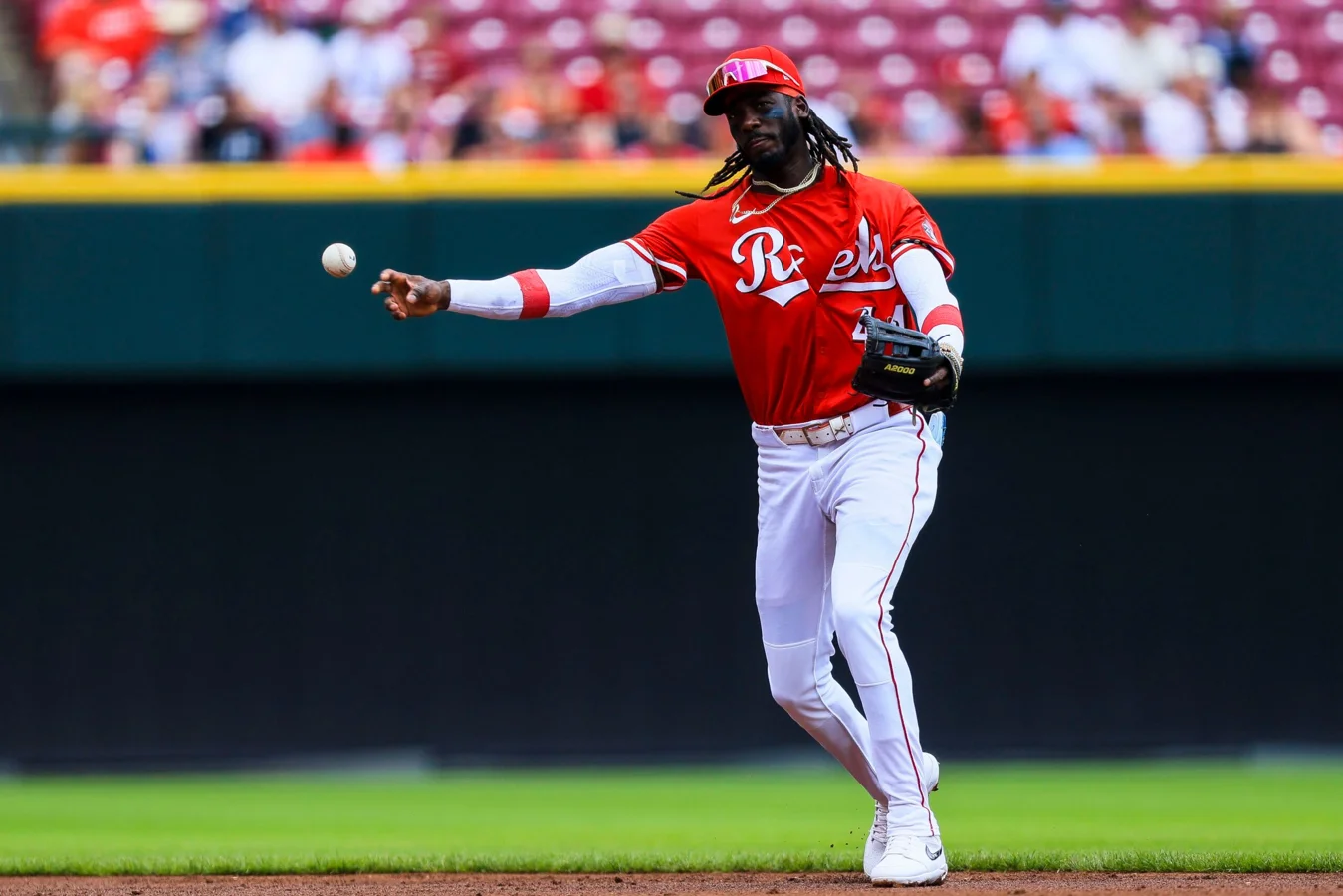

Cincinnati Reds shortstop Elly De La Cruz, known for his electrifying combination of speed and power, has become one of the most frequently traded players in fantasy baseball this month, appearing in 52 transactions with owners trading him away in 41 of those, according to the PFSN MLB Trade Analyzer. His continuing difficulties against left-handed pitchers have caused growing concern among fantasy managers seeking reliable production.
De La Cruz’s performance against southpaws has been notably weak, posting a .661 OPS against left-handed pitching last season and a similar .665 this year. This stark contrast compared to his success against right-handed pitchers exposes a weakness that opponents are targeting carefully. The consistency of his struggles in this area over two seasons suggests the problem is more than a temporary slump or a small-sample anomaly.
In modern Major League Baseball, where teams frequently deploy left-handed relievers in critical late-game situations, De La Cruz’s vulnerability gains even greater significance. These moments, which often offer crucial fantasy opportunities like stolen bases or key RBIs, frequently force fantasy owners to substitute him out, reducing his overall value. Additionally, opposing teams have adjusted their pitching rotations strategically to increase left-handed matchups against Cincinnati’s lineup, amplifying his exposure to difficult pitching and further suppressing his fantasy production on a weekly basis.
Impact of Aggressive First-Pitch Approach
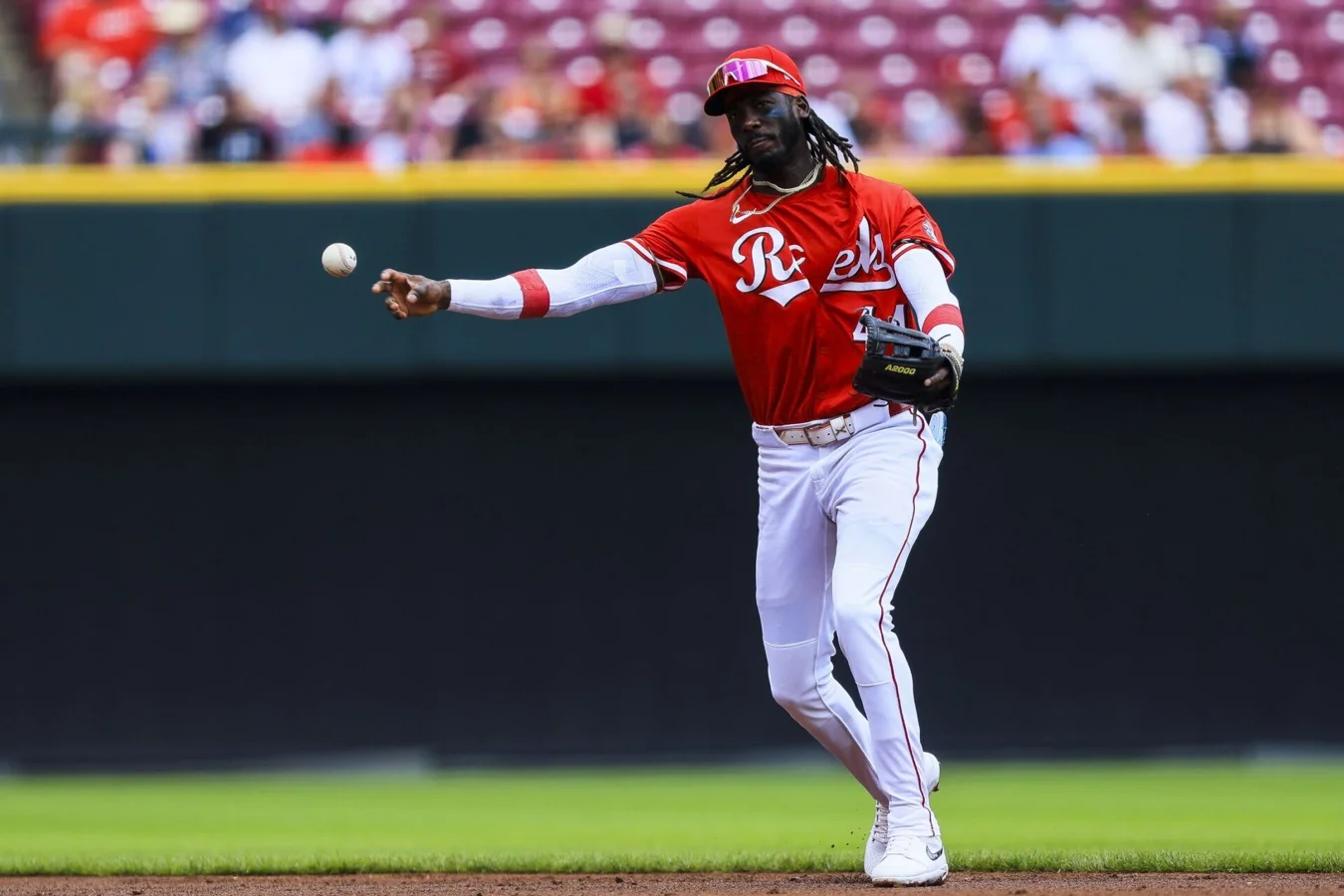
Another factor complicating De La Cruz’s productivity is his aggressive stance on the first pitch. He boasts an impressive .415 batting average when swinging at the first pitch, showcasing the explosive upside that attracted attention. However, this strength is counterbalanced by a steep decline to a .262 batting average when he stays patient and works deeper into the count. This contrast reveals a tactical vulnerability.
His tendency to jump on the first pitch makes him predictable, and pitchers have adapted by throwing more balls early in the at-bat to disrupt his rhythm. This strategy often leads De La Cruz into disadvantageous counts where his offensive output drops significantly. The challenge for him—and fantasy managers—is whether he can adjust to this growing trend where pitchers aggressively attack the strike zone early against him.
This early-count pressure generally takes players a full season to counter effectively. As a result, De La Cruz’s current inability to handle this adjustment poses a risk to his long-term fantasy outlook. Without improvements in plate discipline, his at-bats may remain short and inconsistent, limiting his ability to generate counting stats reliably.
Evaluating Fantasy Implications and Market Response
The trading behaviors displayed by fantasy users on PFSN reveal a collective recognition of De La Cruz’s underlying issues, despite his appealing raw talent. While his speed and power remain elite, the combination of platoon splits and count-specific hitting struggles have led to unpredictable week-to-week performance, creating tension among managers who prioritize consistency.
Many fantasy managers are concluding that De La Cruz’s current trade value could represent the peak of his market worth, as doubts about his ability to overcome these mechanical and situational flaws mount. Fantasy owners who value stable production are wary, given how these weaknesses can significantly diminish his scoring opportunities when it matters most during key matchups or late-game scenarios.
For De La Cruz to regain and sustain his fantasy appeal, significant adjustments in handling left-handed pitching and developing plate discipline are essential. Such changes generally require time to develop, meaning that until those improvements occur, his fantasy value is likely to remain unpredictable and volatile, carrying a level of risk that many managers find difficult to accept.
Our Reader’s Queries
Q. How many errors does Elly De La Cruz have in 2025?
A. Elly De La Cruz made a throw that reached 98.3 mph to home plate on June 14, 2025, while playing for the Cincinnati Reds.
Q. Elly unleashes 98.3 mph(!) throw for an out … and it isn’t even his fastest. DETROIT — In a game that featured four home runs by the Reds and an 11-1 rout of a Tigers club with baseball’s best record, how did shortstop Elly De La Cruz still manage to stand out the most at Comerica Park on Saturday?
A. How fast can Elly De La Cruz throw?
Q. Who is faster, Billy Hamilton or Elly De La Cruz?
A. The Cincinnati Reds have a new rookie infielder named Elly De La Cruz who is very fast. He is considered one of the most thrilling young players in baseball today. De La Cruz is recognized for his remarkable mix of hitting strength, strong arm, and incredible speed. Statistics support the similarities between De La Cruz and Hamilton.
Q. Who is faster, Elly De La Cruz or Billy Hamilton?
A. Elly De La Cruz, a Cincinnati Reds rookie, is quicker than Billy Hamilton. He’s a very promising baseball player right now. De La Cruz has impressive power, a strong arm, and swift speed, making him a well-rounded athlete.