
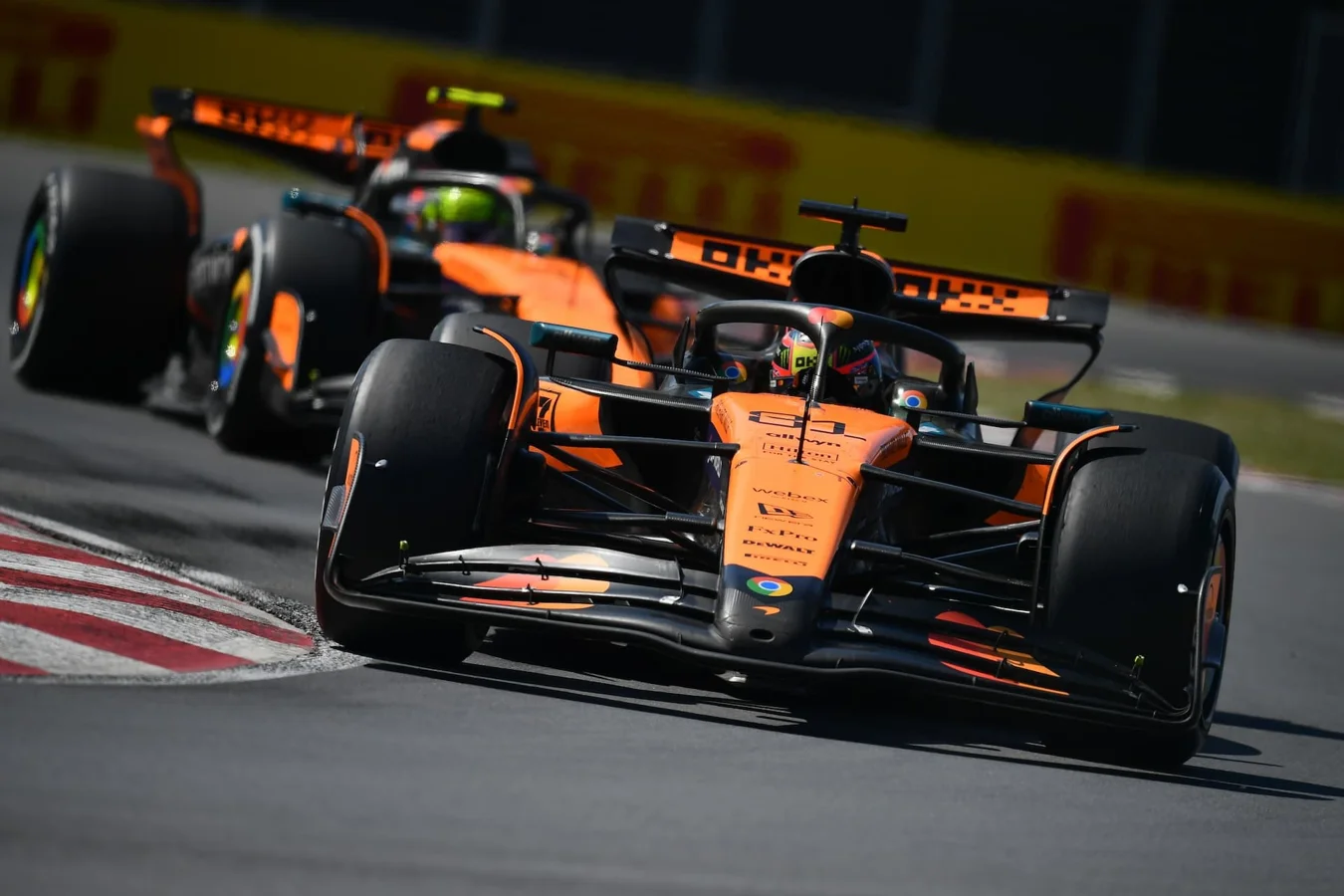

During the week of the British Grand Prix, Formula 1 demonstrated its growing commercial power by engaging fans far beyond the racetrack, with events like McLaren’s takeover of Trafalgar Square and LEGO trophies featured on the Silverstone podium. This surge in activity highlights the sport’s expanding appeal and strategic fan engagement, signaling a robust $2 billion commercial boom backed by new partners, including Louis Vuitton, Moët, Mickey Mouse, and Glenmorangie.
Emily Prazer, a key figure in F1’s commercial operations, noted that the sport outperformed other major events like Wimbledon, emphasizing the increasing enthusiasm for interactive fan experiences disconnected from traditional race weekends.
F1’s Strategic Partnerships and Broadening Presence in Major Cities
Formula 1’s ability to attract diverse high-profile sponsors reflects its commercial strength and the teams’ roles as critical marketing platforms. With McLaren’s presence in Trafalgar Square and other teams such as Williams and Aston Martin activating public spaces and social media in unprecedented ways, F1’s visibility in London reached new heights.
Prazer highlighted that collaborations with partners like LEGO and LVMH are pushing the boundaries of fan engagement, making every race weekend feel like a worldwide spectacle akin to the Super Bowl. She emphasized the importance of continual innovation within the sport’s ecosystem to sustain this momentum.

“I think we can stand behind what Chase [Carey, former Liberty Media CEO] wanted us to do five years ago, which was to turn every race weekend into a Super Bowl,” —Emily Prazer, F1 Commercial Executive
“We have to keep innovating and pushing the boundaries, but we all have leaders above us and amazing teams below us to help us get there. So I’m very excited about what’s to come.” —Emily Prazer, F1 Commercial Executive
Looking Ahead: Sustaining Fan Interest and Navigating Future Growth
The Global F1 Fan Survey, a joint initiative by Formula 1 and Motorsport Network, revealed an encouraging 94% of fans expect to continue following the sport over the next five years. Prazer described this figure as surpassing expectations and underlined the need to tailor marketing efforts to keep future decision-makers actively engaged.
“I think it was higher than all of us expected it to be,” —Emily Prazer, F1 Commercial Executive
“It means that we have to adjust our global marketing proposition to make sure that the future decision makers, who are all of those people, continue to remain engaged and excited.” —Emily Prazer, F1 Commercial Executive
F1’s growing fan base coincides with the successful release of F1: The Movie, starring Brad Pitt, which has drawn new audiences worldwide. Prazer praised the film’s impact on boosting fan engagement and its potential to support understanding of upcoming changes, like the major 2026 regulations.
“I think it’s incredibly special. I think it takes the sport to the next level,” —Emily Prazer, F1 Commercial Executive
She also stressed the importance of educating fans about technical updates with accessible content and indicated that the sport’s exciting current racing will help maintain fan enthusiasm through these transitions.
Preparing for the Future: New Campaigns and Upcoming Events
F1’s commercial strategy includes building excitement around the 2026 season and its regulatory overhaul, with Prazer eagerly anticipating the Las Vegas Grand Prix as a key moment to showcase new initiatives.
“The 2026 campaign is super exciting. We’ve got to get through this year and get to Las Vegas, which I am very excited. We’ve got tonnes of big surprises, as you’d expect. And continue signing sponsors that really do appeal to that generation.” —Emily Prazer, F1 Commercial Executive
With strong leadership and dynamic teams fueling this growth, Formula 1’s blend of thrilling races, innovative partnerships, and dedicated fan engagement positions it well for continued expansion, though maintaining this trajectory requires relentless innovation and attentiveness to evolving audience expectations.
Our Reader’s Queries
Q. Is number 13 banned in F1?
A. Yes, 13 is permitted. Pastor Maldonado chose #13 when the permanent number system started in 2014. While some see 13 as unlucky, Formula 1 lets drivers decide their numbers.
Q. Which F1 driver has ADHD?
A. Born in 1985, he is a British racing driver in Formula One. He currently drives for Mercedes and has previously driven for McLaren. Lewis Hamilton openly talks about his experience with ADHD and explores his various interests and hobbies.
Q. Is 69 allowed in F1?
A. Drivers can pick their own permanent numbers from 0 to 99, excluding 1. Only the World Drivers’ Champion has the option to use number 1, but it’s not mandatory.
Q. Which F1 drivers have ADHD?
A. Lewis Hamilton. Sir Lewis Carl Davidson Hamilton, born in 1985, is a British Formula One driver. He currently races for Mercedes and previously drove for McLaren. Hamilton openly talks about his experience with ADHD and shares his wide range of interests and hobbies.