
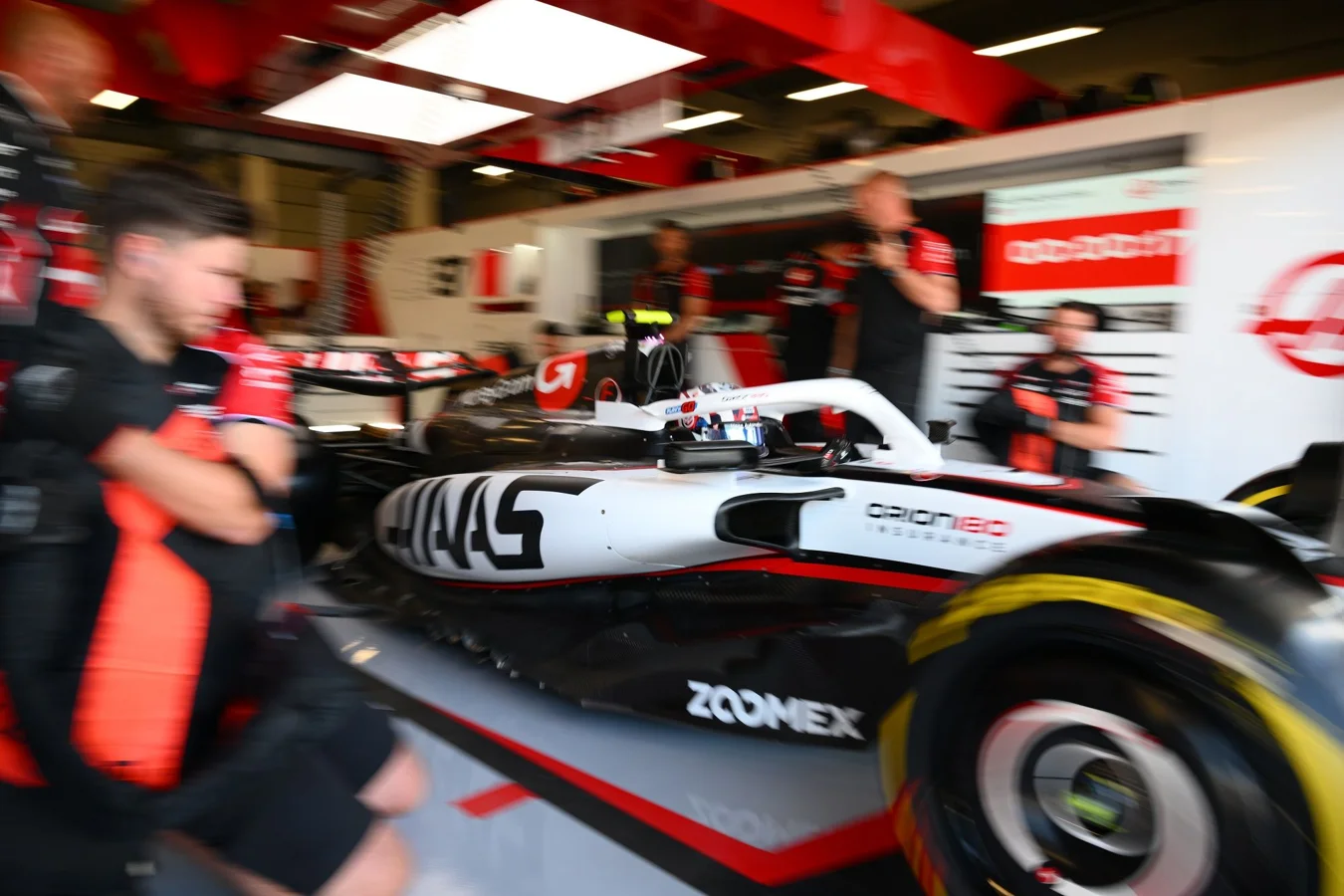

Just before the 2024 United States Grand Prix, Haas F1 revealed a significant technical partnership with Toyota, marking a turning point in the team‘s Formula 1 journey. This Haas F1 Toyota partnership boost is designed to enhance the American outfit’s competitiveness by leveraging Toyota’s expertise and resources.
The Role of Toyota Gazoo Racing in Elevating Haas F1’s Capabilities
On the 2025 Formula 1 grid, Haas remains one of the smallest teams, operating with roughly 250 employees compared to the more than 1,000 staff found at top teams like Mercedes. Haas founder and CEO Gene Haas focuses on using Formula 1 primarily as a platform to promote his CNC machining business rather than pushing technical innovation to the limits. This sets Haas apart from manufacturers like Mercedes, which use F1 to develop cutting-edge technologies that influence their consumer vehicles.
However, the new technical demands of the ground effect era in Formula 1 have created challenges for smaller teams like Haas that lack extensive resources. To address these challenges, Haas has partnered with Toyota Gazoo Racing, the motorsport division of Toyota, which brings a deep reservoir of engineering knowledge drawn from disciplines like the World Endurance Championship and World Rally Championship. This collaboration aims to bridge Haas’ resource gaps and elevate their on-track performance.
Details of the Haas F1 and Toyota Gazoo Racing Collaboration
Despite finishing as high as fifth in the World Constructors’ Standings previously, Haas has felt the increasing pressure of competing in an era where technological and operational demands are escalating. Toyota’s global automotive scale and motorsport expertise make it a valuable ally for Haas, especially as the team seeks to improve its technical capabilities.
Ayao Komatsu, Haas F1 team principal, acknowledged that the team has
“lacking certain resources and hardware capabilities to understand certain things,”
a limitation that Toyota can help overcome. Toyota’s engineering headquarters in Cologne, Germany, along with decades of racing experience, offers Haas access to cutting-edge technology and support that would otherwise be beyond their reach.
They are looking for the latest F1 know-how and skillset, which we have, but we don’t have their facilities, the number of people and their resource,
Komatsu said at the time of the partnership announcement.
So, that’s how we are tapping into each other’s expertise.
One of the first tangible outcomes of this partnership is Haas’ entry into Formula 1’s Testing of Previous Cars (TPC) program with support from Toyota. The TPC program regulates the use of older F1 machines for testing and research, a program Haas had not previously been able to utilize due to the extensive costs and personnel needed to organize private test sessions.
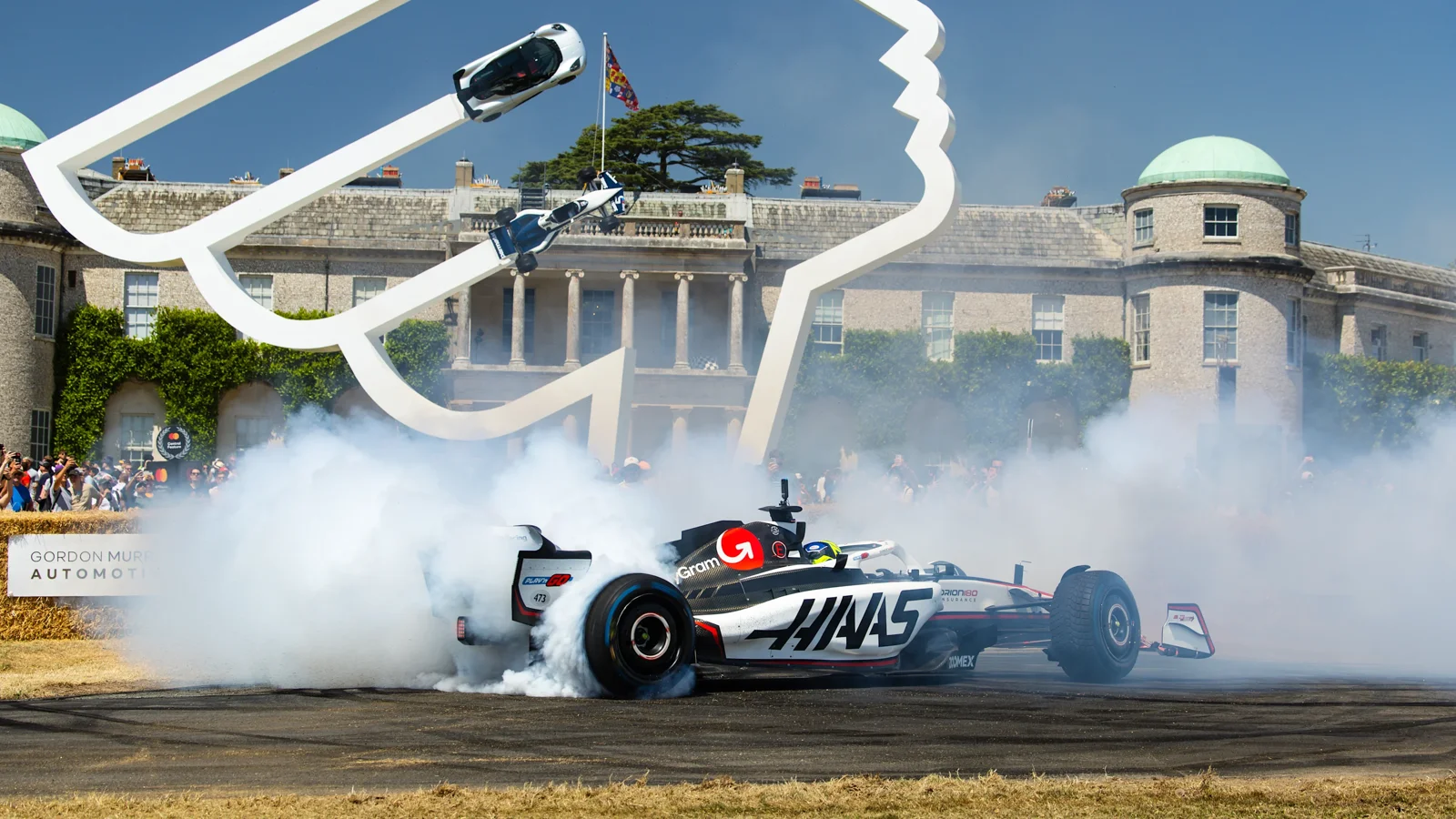
Toyota is enabling Haas to run a TPC test at the Fuji Speedway, using Haas’ 2023 VF-23 car. The team’s reserve driver Ryo Hirakawa and Sho Tsuboi, the reigning Super Formula champion and a Super GT titleholder, will pilot the car, showcasing Toyota’s involvement in driver selection and overall development strategy.
Focus Areas for Development and Team Growth
The partnership focuses on strengthening three main elements of the Haas team: people, operations, and product. Masaya Kaji, director of Toyota Gazoo Racing Global Motorsport, emphasized the human resource development aspect of the upcoming Fuji test.
In addition, mechanics and engineers from Toyota Motor Corporation will be present, making this an invaluable opportunity for them as well. Experiencing first-hand the technologies and skills required on the world’s highest stage, F1, will certainly be an important experience for their growth.
—Masaya Kaji, Director of TGR Global Motorsport
This close collaboration extends beyond drivers to include the team’s engineering staff, fostering knowledge transfer and skill enhancement through hands-on involvement with F1 machinery and operational processes.
Andrea de Zordo, Haas’ technical director, explained during the Austrian Grand Prix weekend that the relationship with Toyota presently centers on TPC testing and the development of a much-needed racing simulator.
The relationship with Toyota currently focuses mainly on TPC testing and the development of our own simulator,
de Zordo said.
We don’t have one at the moment, and it will be important for us in preparing for the races.
Arriving with good preparation on the simulator would allow us to start the weekends better and get better use of the driver.
—Andrea de Zordo, Haas Technical Director
Simulators and TPC programs have traditionally been tools available primarily to larger F1 teams such as Red Bull, Ferrari, and Mercedes. With Toyota opening those doors, Haas is making strides toward closing the resource gap and becoming a more competitive force on the grid.
Implications and Future Prospects for Haas F1
The partnership with Toyota Gazoo Racing represents a crucial step in Haas’ ambition to improve its standing in Formula 1. Not only does it provide access to advanced testing programs and simulator technology, but it also fosters deeper operational and technical collaboration that could help Haas meet the heightened standards of modern F1 competition.
As Haas prepares for upcoming races with enhanced capabilities, the team could gradually move from a resource-limited challenger to a more consistent points scorer or even a mid-field contender. Toyota’s vast expertise and investment suggest that this partnership is not a short-term arrangement, but a long-term strategy to develop Haas as a serious competitor.
In the evolving landscape of Formula 1, where technology and teamwork are paramount, the Haas F1 Toyota partnership boost holds the potential to change the trajectory of an American team that has often operated on the fringes. The collaboration may pave the way for greater successes and influence Haas’ participation in the sport for years to come.
Our Reader’s Queries
Q. Is number 13 banned in F1?
A. Yes, the number 13 is allowed. Pastor Maldonado chose #13 when the permanent numbering system started in 2014. While some people view 13 as unlucky, F1 lets drivers decide their own numbers.
Q. Which F1 driver has ADHD?
A. Lewis Hamilton, born in 1985, is a British Formula One driver who races for Mercedes. He has also raced for McLaren in the past. Hamilton openly talks about his experiences with ADHD and shares his wide range of interests and hobbies.
Q. Is 69 allowed in F1?
A. Right now, drivers can choose any number for their career from 0, 2 to 99. Only the World Champion can use number 1.
This number won’t be available for others unless the original driver has not competed for two seasons, except for the number 1.
Q. Which F1 drivers have ADHD?
A. Lewis Hamilton, born in 1985, is a British racing driver in Formula One. He currently races for Mercedes and previously drove for McLaren. Besides racing, Hamilton openly talks about living with ADHD and explores his various interests and hobbies.