
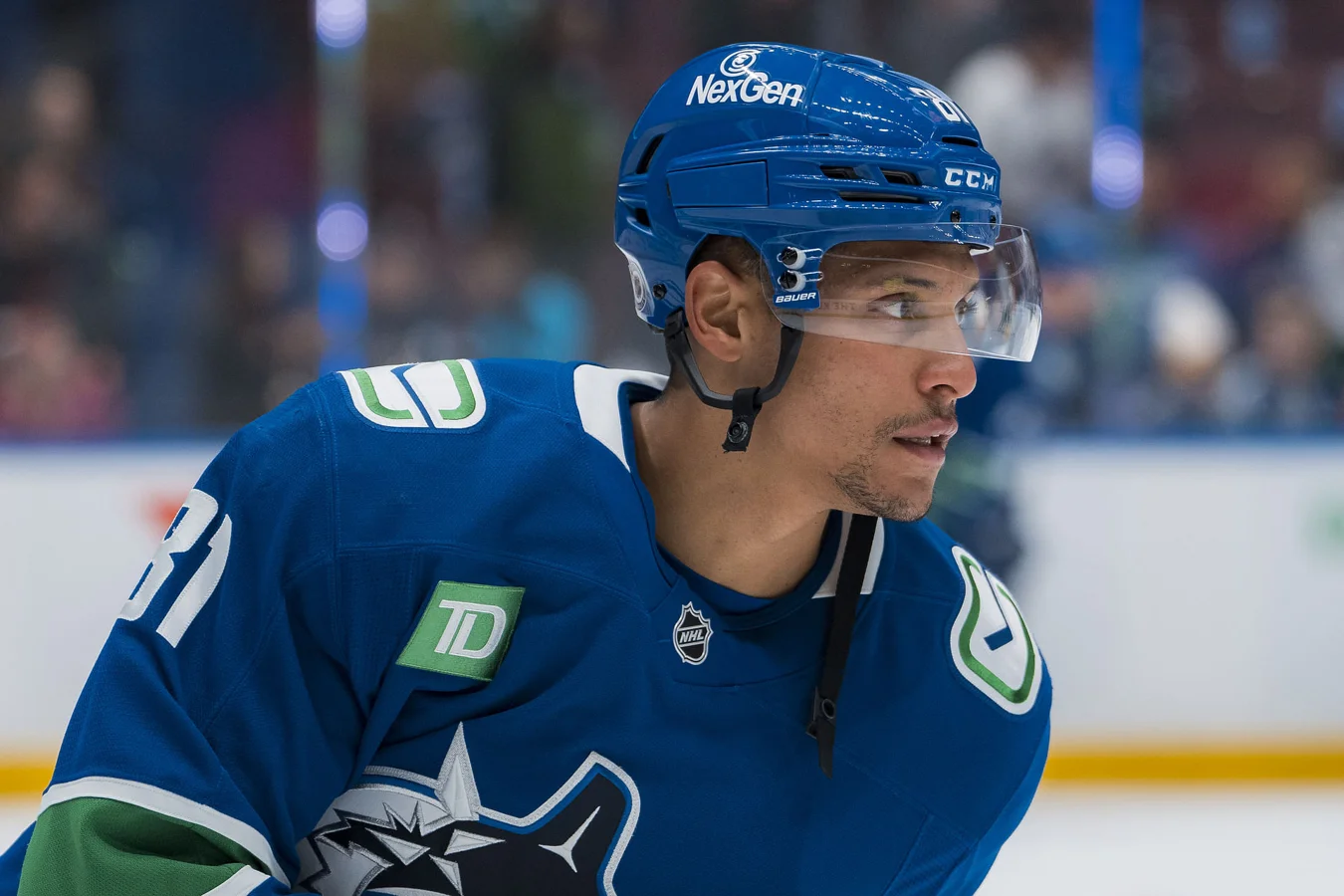

The Toronto Maple Leafs acquired defenseman Dakota Joshua from the Vancouver Canucks on Thursday in exchange for a 2028 fourth-round pick, aiming to address gaps left in their powerplay following Mitch Marner’s departure. This move comes as the Leafs look to strengthen both their defense and special teams ahead of the upcoming NHL season.
Joshua, who tallied 69 points over the last three seasons, brings resilience and two-way skill to Toronto’s roster. He missed last year’s training camp while undergoing treatment for testicular cancer but has shown determination returning to full form. With the arrival of Joshua alongside forwards Nicolas Roy and Mattias Macelli, the Leafs are expanding their depth and seeking to develop Joshua into an effective, two-way contributor.
Joshua’s Role in Reinventing Toronto’s Powerplay Strategy
Toronto’s powerplay faces a significant void after losing Mitch Marner, who accumulated 33 powerplay points last season before moving to the Vegas Golden Knights. The Leafs will need to find new chemistry and leadership on the man advantage, potentially turning to their defensemen for puck-moving skills. Dakota Joshua’s defensive awareness and puck-handling might prove vital in this transition.
TSN’s Overdrive panel, featuring analysts Bryan Hayes, Frankie Corrado, and Jason Strudwick, discussed Joshua’s potential influence. Bryan Hayes suggested that with Marner gone, the Leafs might return to a more traditional “four-and-one” powerplay formation, possibly giving defenseman Morgan Rielly increased responsibilities.

“I think with Marner gone, they’re going to go back to a conventional four-and-one,” Hayes said (03:00). “Maybe Rielly gets another opportunity there. I think that would benefit him—again, trying to get some cookies on the power play and feel like you’re contributing a little bit more in areas where you’re comfortable.”
—Bryan Hayes, TSN Analyst
“But that’s why I think it’s an unfinished product. Maybe we’re looking at the forwards, and it could possibly be Treliving trying to find a puck-moving defenseman or two.”
—Bryan Hayes, TSN Analyst
With Leafs General Manager Kyle Dubas replaced by Brad Treliving, this trade appears to be part of a broader effort to reshape Toronto’s powerplay dynamics by finding more reliable puck movers on the backend.
Canucks Praise Joshua’s Strength and Wish Him Well
Vancouver Canucks president Patrik Allvin expressed strong support for Dakota Joshua, highlighting the player’s professionalism and determination during difficult personal challenges last season. Joshua’s battle with cancer required time away from the ice, but once healthy, he committed fully to helping his team.
“Dakota went through a lot last season before the year even started and we were very impressed in how he handled such a difficult off-ice situation,” Allvin said on Thursday, via NHL.com. “Once healthy, he tried hard to help the team in many ways, and we want to wish him the best moving forward in Toronto.”
—Patrik Allvin, Vancouver Canucks President
This trade offers Joshua a fresh opportunity to make an impact with the Maple Leafs, where he reunites with head coach Craig Berube, who previously coached him during their time with the San Jose Sharks. Toronto hopes Joshua’s resilient nature and skill set will help stabilize its defense and reinvigorate its special teams after a pivotal offseason adjustment.
Our Reader’s Queries
Q. Why is Mitch Marner so good?
A. Marner uses his calmness, awareness, vision, and creativity to help his teammates move inside quickly and with room, putting opponents on the defensive.
Q. Did Mitch Marner play AAA?
A. At six, Mitchell returned to Clarington and auditioned for the Novice AAA team. Although he led in scoring during tryouts, the Clarington coach and executives felt he wasn’t mentally prepared. Instead, Mitch joined the Lindsay Wolves and played on their Novice AAA team at the same age.