
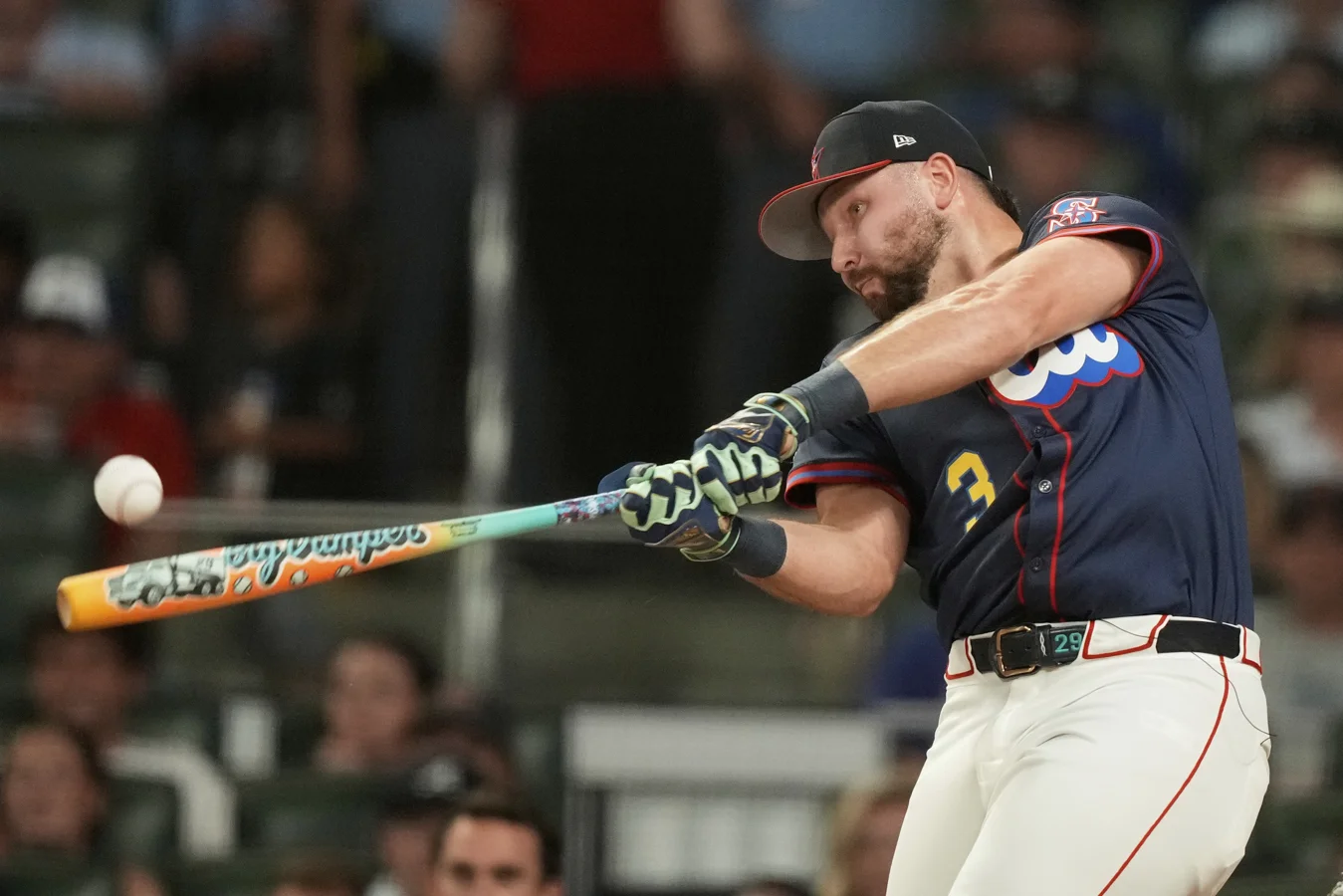

The second half of the <a href=”https://www.buzzineintl.com/category/baseball/mlb/”>MLB season is now underway, and there remains ample opportunity to improve your standing in fantasy baseball leagues. For those who have faced challenges like injuries or inconsistent play, this period still offers a chance to revamp rosters and capitalize on emerging talents—particularly with a focus on Oneil Cruz‘s potential second-half breakout. Cruz and several other players have begun laying the foundation for significantly enhanced performances after the All-Star break, signaling crucial opportunities for fantasy owners.
Key Position Players Poised for Second-Half Improvement
Among the players primed for better production in the coming months are veteran shortstops Oneil Cruz and Corey Seager, both of whom have shown flashes of promise but have yet to consistently meet expectations.
Oneil Cruz of the Pittsburgh Pirates started the season with strong numbers, amassing 16 home runs and 29 stolen bases. Yet since May 1st, his performance has faltered with a .192 batting average, a on-base percentage below .300, and a .356 slugging percentage across 57 games, accompanied by a high strikeout rate hovering near 35%. This downturn can weigh heavily in batting average-focused leagues. However, several advanced metrics suggest Cruz remains a threat. He has maintained a 21.4% barrel rate and averages 96 mph exit velocity, indicators that his contact quality and power have not diminished. His 40% pull rate and nearly 33% flyball rate align with earlier trends, showing he has not drastically altered his hitting profile. Furthermore, starting May 12th, Cruz’s Process+ score—a composite stat measuring decision-making, contact ability, and power—has registered at 104, which surpasses league average. If Cruz can translate his raw power and speed into a batting average closer to .240 in the second half, he could emerge as a game-changing fantasy asset.
Corey Seager, the Texas Rangers’ shortstop, also offers upside despite a modest first half. Since June 1st, Seager is hitting .248/.404/.465, with seven home runs and 18 RBIs over 36 games. His 16.5% barrel rate and an impressive 125 Process+ score highlight his quality of contact and effective plate approach. Seager has shown signs of turning his season around in July, but fantasy managers who can acquire him at a discount before his value spikes may reap substantial rewards. Continued production in power, counting stats, and an improved batting average near .280 would certainly boost his appeal.
Otto Lopez of the Miami Marlins has been a pleasant surprise as a middle infielder, delivering a .250/.320/.392 slash line with 10 steals and 10 home runs—unexpected power given his 88 mph average exit velocity. His expected slugging percentage (xSLG) of .481 surpasses his actual, indicating room for growth. A career-best 7.9% barrel rate and a 113 Process+ score since mid-May bolster the argument that Lopez could soon start outperforming his current statistics, possibly reaching a second-half batting average near .291 as his expected batting average (xBA) suggests.
Dominic Canzone, outfielder for the Seattle Mariners, has established himself as a strong hitter since being called up. In 30 games, he’s slashing .319/.340/.564 with six home runs and ten RBIs, backed by a 15.8% barrel rate. Rather than a mere hot streak, these numbers reflect sustainable contact improvements, including over a 10% increase in pull rate from the previous year. Adjustments to his stance and approach, such as closing his stance and attacking pitches earlier, have contributed to faster bat speed and more damaging contact. Those still with Canzone available on waivers should consider adding him for a potentially impactful second half.
Colt Keith, a first and second baseman for the Detroit Tigers, has also turned heads recently. He is hitting an impressive .358/.417/.585 across his last 15 games, with two home runs, 11 runs scored, and six RBIs. Keith boasts a high Process+ score of 120 since May 12th, reflecting notable improvements in decision-making and contact quality, suggesting he could continue to provide meaningful contributions through the remainder of the season.
Jac Caglianone of the Kansas City Royals deserves attention as a potential buy-low candidate. Despite struggling early with a low .140 batting average and .264 slugging percentage, Caglianone’s underlying metrics tell a different story. His modest 21.7% strikeout rate, 11.1% barrel rate, and 89.1 mph average exit velocity indicate solid contact ability. His Process+ score over 102 since mid-May confirms he is holding his own at the major league level, while his expected batting average (.259) and slugging percentage (.462) indicate that better performance is likely ahead.
Max Muncy of the Oakland Athletics represents a somewhat riskier pick. He lacks standout expected metrics or Process+ scores but has shown improvement in approach adjustments. Over his past 14 games, Muncy is hitting .288/.339/.577 with four home runs and a 16.2% barrel rate. Statcast data reveal a surge in his Ideal Attack Angle percentage in July, rising to nearly 60%. This change suggests that he is altering contact timing and stance width, possibly boosting his power potential. While uncertain, Muncy’s recent trends provide hope for a breakout stretch.
Will Benson from the Cincinnati Reds is another intriguing candidate. Although inconsistent in previous seasons, Benson shows positive indicators such as a .282 expected batting average and a .538 expected slugging, both exceeding his actual numbers. His Process+ score of 117 since mid-May reflects improved plate discipline and contact quality, though his 16% swinging strike rate remains a caution. His increased swing rate has modestly reduced strikeouts, making him a possible sleeper pickup in deeper leagues.
Jesus Sanchez, Miami Marlins outfielder, is a platoon player who struggles against left-handed pitching but otherwise delivers reliable results. He holds a .259 batting average with seven home runs, alongside an encouraging 112 Process+ score since mid-May. Averaging 92 mph exit velocity with an 11.7% barrel rate, Sanchez is generating solid contact, while improved chase discipline and a career-best 76% contact rate hint at the potential for a second-half power surge.
Nick Gonzales of the Pittsburgh Pirates, while lacking speed and playing in a middling offense, shows promise as a batting average contributor. His .289 expected batting average and 110 Process+ score hint at an ability to consistently make quality contact. In July, Gonzales has changed his hitting approach, shifting to an opposite-field focus with contact occurring further back in the strike zone. This has increased his Ideal Attack Angle percentage, likely reducing power but potentially increasing line drives and base hits.
Daylen Lile of the Washington Nationals, although less prominent than other young Nationals hitters, exhibits encouraging under-the-surface traits. With a .306 expected batting average outperforming his .234 actual, and strikeout and swinging strike percentages of 14% and 5.7% respectively during his brief MLB tenure, Lile makes smart swing decisions as reflected in a 103 Process+ score. His minor league track record for stolen bases suggests that if he can reach base more often, he may become a source of speed alongside batting contributions. He represents a worthwhile gamble in deep leagues.
Veteran first baseman Josh Bell of the Nationals has picked up his performance since mid-June. Since June 10th, Bell slashed .296/.369/.429 with two home runs, 10 runs scored, and 13 RBIs, rising on a 117 Process+ score. Although no longer the 25-30 home run power threat, Bell may still provide 8 to 10 home runs with a solid batting average and counting stats. A trade to a contender could further enhance his fantasy value.
Starting Pitchers with Potential for Second-Half Turnarounds
Several starting pitchers stand out as buy-low options due to underlying metrics suggesting improvement is imminent despite elevated ERAs.
Dylan Cease of the San Diego Padres is the clearest candidate for a rebound. Known for streaky performances, Cease has posted a 16.6% swinging strike rate and a 20.7% strikeout-minus-walk rate (K-BB%) over 56.1 innings since May 15th. His SIERA of 3.36 is much lower than his 5.11 ERA, indicating better pitching quality than results suggest. While many managers expect Cease to recover, acquiring shares on him remains worthwhile if possible.
Cleveland Guardians’ Tanner Bibee has shown signs of improving his craft. Though less likely to provide a dramatic rebound, his combination of three fastball types is gaining effectiveness. Bibee’s 11.4% swinging strike rate and 17.3% K-BB% across 64 innings since mid-May have yielded a promising 3.65 SIERA, better than his 4.64 ERA. While strikeouts may be somewhat limited, his pitch mix offers hope for a modest step forward.
Zebby Matthews of the Minnesota Twins continues to impress behind the scenes. After posting a 12.1% swinging strike rate and 20.5% K-BB% over 19 innings since May 15th, Matthews’s SIERA clocks in at 3.39 versus a less flattering 5.21 ERA. His recent Triple-A rehab appearance was electric, suggesting he should be stashed now for a potential top-25 finish among starting pitchers.
Boston Red Sox’s Richard Fitts has drawn significant attention following his offseason velocity gains and expanded pitch repertoire. Since returning from the injured list, his fastball velocity sits near 97 mph, paired with more reliable secondary pitches. Fitts has recorded a 13.2% swinging strike rate across 16.2 innings with a 3.84 SIERA, much better than his 5.40 ERA. His premature return from the IL may have hindered him, but his role in the rotation appears secure for the season’s remainder.
New York Mets’ Frankie Montas holds his rotation spot, though he is perhaps more suitable as a deep-league asset. Despite a 5.03 ERA over 19.2 innings, his 12.3% swinging strike rate, 16% K-BB%, and 3.92 SIERA show better underlying skills. Montas benefits from pitching in a favorable park and team context, which might sustain his value for fantasy owners willing to take a chance.
Washington Nationals’ Michael Soroka looks positioned for improvement after tweaking his delivery and pitch selection. Although his 10.1% swinging strike rate since May 15th is modest, he features a 19.5% K-BB% and a 3.45 SIERA that implies better performance than his current ERA reflects. His transition to a new arm slot and increased curveball usage could lead to meaningful second-half progress.
Brandon Walter of the Houston Astros has demonstrated promising results relying on command and deception rather than overpowering velocity. His 11.9% swinging strike rate combined with a 23% K-BB% and a 2.98 SIERA over 40.2 innings show strong underlying performance. While riskier than some peers due to his pitching style, Walter’s rotation spot looks secure, and he could serve as a streamer in 12-team leagues or a core starter in deeper formats.
Joey Cantillo from the Cleveland Guardians has solidified a rotation role amid teammate Luis L. Ortiz’s investigation. Since becoming a starter, Cantillo posted a 14.9% swinging strike rate and 20.7% K-BB% in 12.2 innings with a 3.33 SIERA. His changeup is considered a dominant pitch, and his fastball features exceptional extension, making him a promising right-handed option with high upside moving forward.
Second Half Outlook and Fantasy Impact
The second half of the MLB season promises to be a critical stretch for fantasy owners seeking to turn their teams around or solidify playoff positions. Players like Oneil Cruz, whose blend of power, speed, and improving plate discipline offer the chance to significantly boost a fantasy lineup, can be game changers. Cruz’s potential to improve his batting average while maintaining his dynamic power-speed combo makes him a particularly compelling figure this season.
Likewise, targeting underperforming veterans and emerging talents with strong underlying metrics—such as Corey Seager, Otto Lopez, and Dominic Canzone—can yield significant dividends. On the pitching side, acquiring starters whose underlying skills outpace their current ERAs, including Dylan Cease, Zebby Matthews, and Richard Fitts, may provide crucial contributions during this pivotal period.
As fantasy managers evaluate trades, waiver wire pickups, and lineup adjustments, closely watching and betting on these players’ second-half surges could make the difference between championship success and disappointment. The blend of hopeful optimism with careful analysis of advanced data and player adaptation offers a roadmap for those determined to improve their standing in the coming months.
Our Reader’s Queries
Q. What surgery did Oneil Cruz have?
A. Greg Altman and Dr. Darren Frank treated Cruz’s broken fibula in his left leg and fixed a nearby ligament injury. Manager Derek Shelton was somewhat relieved that the injury only affected his ankle and didn’t extend to other parts of the leg.
Q. How did Oneil Cruz get hurt?
A. After the game, Kelly mentioned that Cruz experienced a sensation in his hip flexor. This happened when he tried to catch a home run in the seventh inning.