
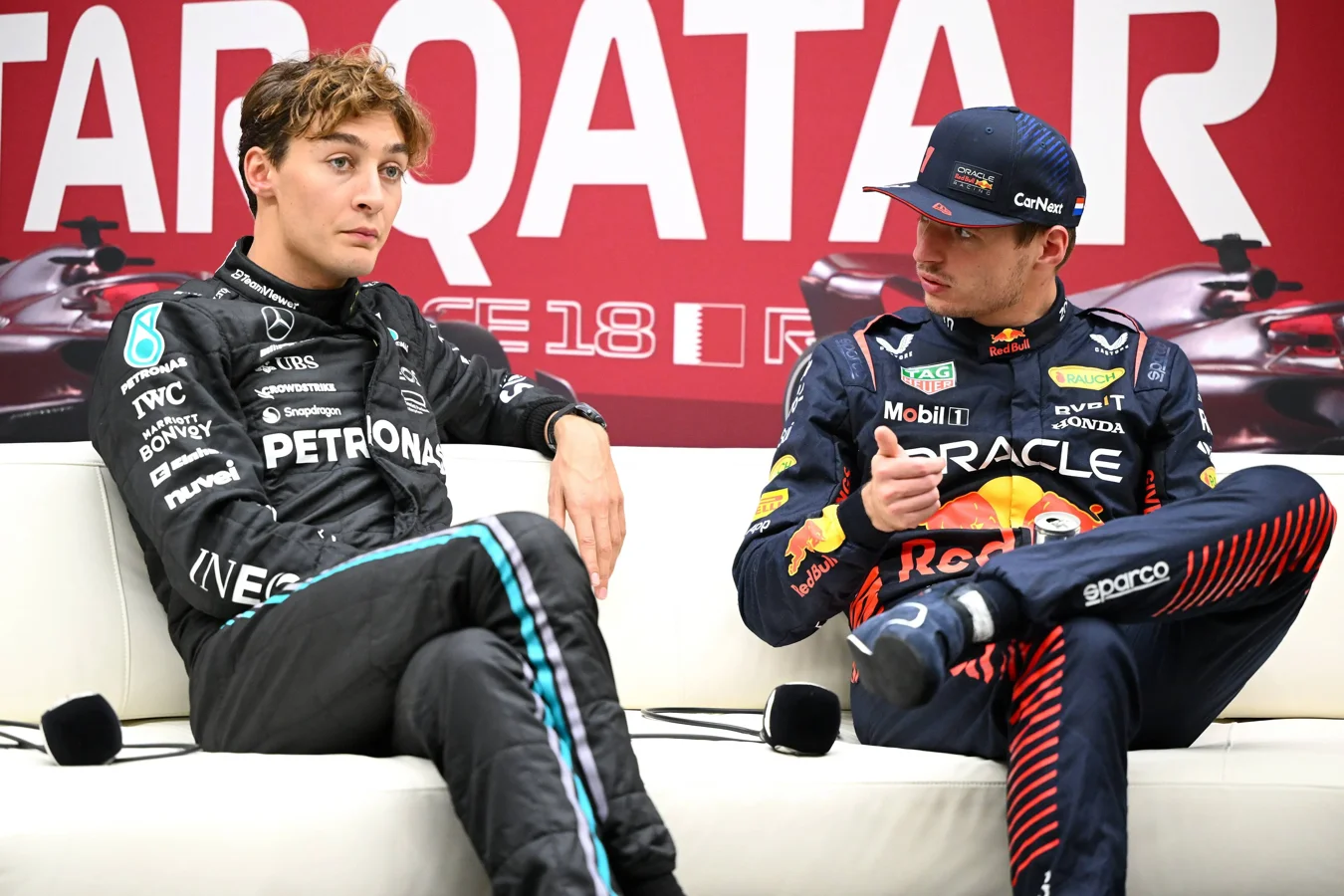

Red Bull Racing’s sudden decision to dismiss Christian Horner as CEO and team principal immediately after the 2025 British Grand Prix has fueled intense speculation about Max Verstappen’s 2027 future plans. This development raises questions about whether the team is trying to secure Verstappen’s commitment for the 2026 season amid the sport’s upcoming regulatory shake-up.
The changes come amid rumors linking Verstappen to vacant seats at Mercedes for 2026, against a backdrop of reported tensions between Verstappen’s camp—including his father Jos Verstappen—and Red Bull’s leadership under Horner.
Ted Kravitz outlines a possible hidden motive behind Horner’s sacking
Sky Sports presenter Ted Kravitz shared an intriguing theory on The F1 Show, suggesting that Red Bull’s removal of Horner might be part of a strategic move to keep Verstappen onboard for the 2026 season. Speaking after Red Bull’s announcement, Kravitz recalled a private conversation with Horner during the British Grand Prix weekend. Horner hinted that the current uncertainty surrounding the 2026 competitive landscape could justify Verstappen waiting before making definitive future decisions.
Kravitz reflected on Horner’s words, saying,
“I think 2027 is really interesting, isn’t it?”
—Ted Kravitz, Sky Sports Pundit
He explained how Horner seemed to signal that while it’s impossible to guarantee Red Bull’s dominance given the significant regulation changes for both chassis and power units, Verstappen’s next step should depend on how the upcoming season unfolds. Thus, Horner may have been communicating a message to the Verstappen camp: delay any decisions about switching teams or contracts until after 2026’s pecking order becomes clearer.
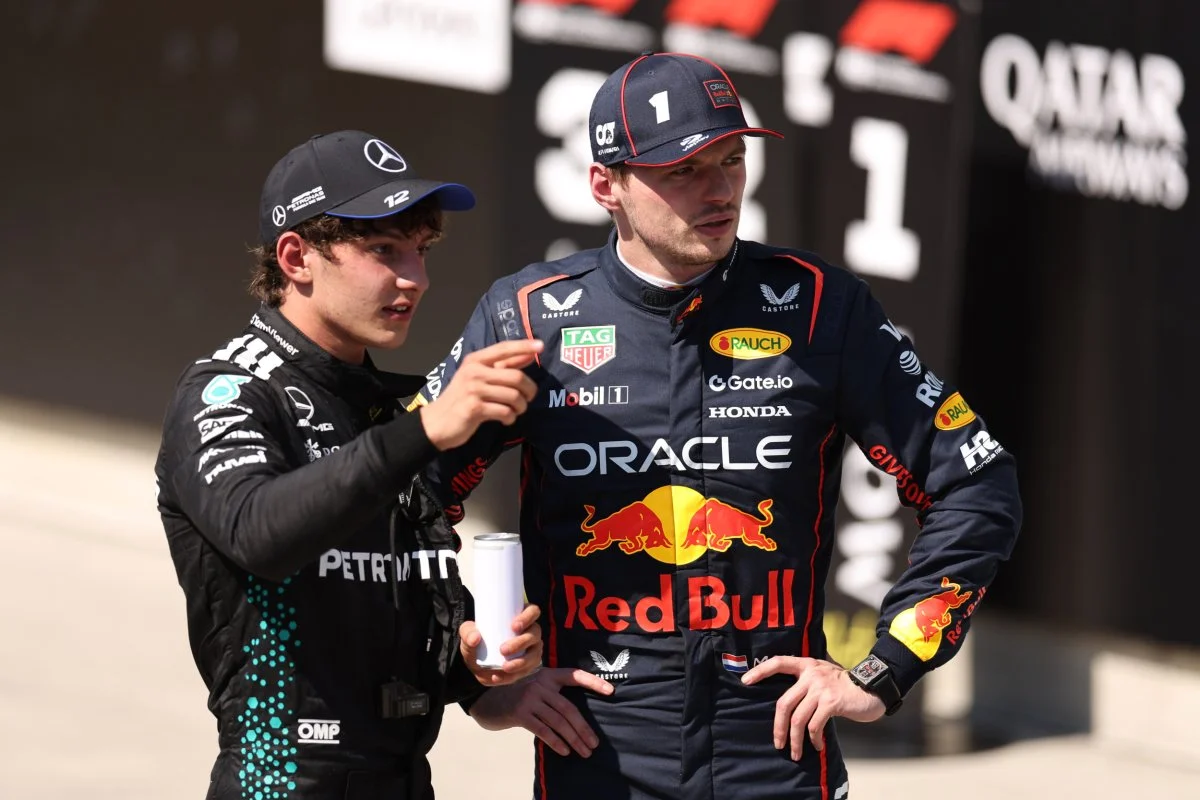
Speculation surrounds Verstappen’s contract and team options for 2026 and beyond
Verstappen is currently under contract through 2028, raising questions about why Horner would publicly hint towards 2027 as a pivotal year. This has prompted pundits like Kravitz to consider that securing Verstappen’s commitment for 2026 was paramount, while the possibility of renegotiation or team changes might resurface based on 2026’s outcomes.
Kravitz also noted comments from George Russell, Mercedes’ driver, who recently expressed confidence about remaining with Mercedes in 2026. Kravitz connected these insights to the broader narrative, asking rhetorically if the ongoing maneuvering is really about drivers’ positions in 2027, once the full impact of regulatory reforms settles in.
During their exchange on Sky Sports, Kravitz questioned Horner on how Red Bull could assure Verstappen that moving forward wouldn’t mean a loss of competitiveness. Horner replied,
“Absolutely no guarantees for any team or any engine manufacturer that can, hand on heart, say that they are significantly ahead of any other manufacturer.”
—Christian Horner, Former Red Bull CEO
Horner further emphasized,
“I think 2026 represents the biggest regulation change with both chassis and an engine in probably the last 50 years of Formula 1.”
This indicates the unpredictable nature of next year’s season, underscoring why Verstappen might need to
“see what happens next year, and then they can decide for 2027.”
Horner underscores Verstappen’s loyalty to Red Bull amid ongoing tensions
Despite the uncertainty, Horner stressed Verstappen’s expressed desire to conclude his career with Red Bull, saying his preference has consistently been to remain with the team from beginning to end. However, Horner admitted that Verstappen is also driven by the relentless ambition to win more titles and secure victories that reflect his exceptional talent.
“His desire, and he’s said it numerous times, is to finish his career in a Red Bull car, from start to finish. And I think if he sees that there is that potential, then I don’t see why that isn’t achievable,”
Horner explained.
Nonetheless, with the major shifts expected in team performances for 2026, Horner’s comments suggested Red Bull must prove its capability to continue offering Verstappen a championship-winning package to maintain his loyalty.
Could Horner’s exit be a calculated move by Red Bull’s management?
On The F1 Show, Kravitz speculated that Oliver Mintzlaff and Red Bull leadership orchestrated Horner’s departure as a calculated action to secure Verstappen’s services for at least next season. He suggested,
“And if then Mintzlaff and the people at Red Bull are thinking, ‘Okay, we bought Max’s services for next year; that’s confirmed by doing this, by getting rid of Horner,’ in 2027 they could lose Verstappen and Christian Horner, and then be in an even worse place.”
—Ted Kravitz, Sky Sports Pundit
This highlights a complex balance Red Bull must navigate: ensuring Verstappen stays long enough to compete under new regulations while managing internal leadership dynamics and the risk of losing key personnel in subsequent years.
The looming 2026 regulations add to team and driver uncertainty
The impending overhaul of Formula 1’s technical rules is causing unsettled conditions across the grid, with both chassis and engine regulations undergoing their biggest revisions in decades. This creates an unusual degree of unpredictability for drivers and teams alike, making contract decisions especially challenging during this “silly season.”
Horner’s subtle messaging to Verstappen reflects this uncertainty, advocating patience as the 2026 season will reveal which teams and technologies adapt best, guiding driver choices for 2027 and beyond.
Looking ahead: Verstappen’s path still unclear amid tense negotiations
Max Verstappen’s 2027 future plans remain a topic of intense speculation, galvanized by Christian Horner’s dismissal and cryptic remarks about the season ahead. With Verstappen arguably the most sought-after driver‘s position up for debate, the next year will be critical for defining the competitive landscape and contractual alignments.
As the regulatory changes take effect and teams recalibrate, Verstappen’s camp will closely monitor performance trends to decide whether remaining at Red Bull suits their ambitions or if exploring other options, such as Mercedes, becomes more attractive. Meanwhile, Red Bull must demonstrate clear progress to retain their defending champion beyond 2026.
The saga underscores the tension and high stakes in modern Formula 1, where leadership upheavals, driver loyalties, and technical revolutions collide in shaping the sport’s near future.
Our Reader’s Queries
Q. Is Max Verstappen a millionaire?
A. As of December 2024, Verstappen’s net worth is estimated to be about $200 million, according to Celebrity Net Worth. He has amassed his wealth through endorsements, investments, and a high-paying Formula 1 salary. Before 2020, his earnings were lower compared to other leading F1 drivers.
Q. Did Max Verstappen apologize?
A. Christian Horner shared that Max Verstappen said sorry to the Red Bull team after his crash with George Russell at the Spanish Grand Prix. The incident caused Verstappen to fall from fifth place to tenth at the finish line because of a 10-second penalty.
Q. Max Verstappen: Who has the bigger net worth in 2025? Lewis Hamilton, with a net worth of $300 million, surpasses Max Verstappen’s $200 million. Hamilton’s wealth is from Formula 1 earnings, endorsements, smart investments, and properties.
A. Who has more money, Hamilton or Verstappen?
Q. Who did Max Verstappen lose respect for?
A. Max Verstappen expressed that he “lost all respect” for George Russell following a stewards’ meeting in Qatar related to a qualifying incident in Formula 1.