

Disqualifications in Formula 1 are always a source of disappointment, but a few stand out as particularly humiliating moments that shocked fans and altered the course of races dramatically. This article examines the most embarrassing disqualifications in F1 history, detailing the who, what, when, and why behind these infamous incidents.
When outside help leads to a shocking disqualification
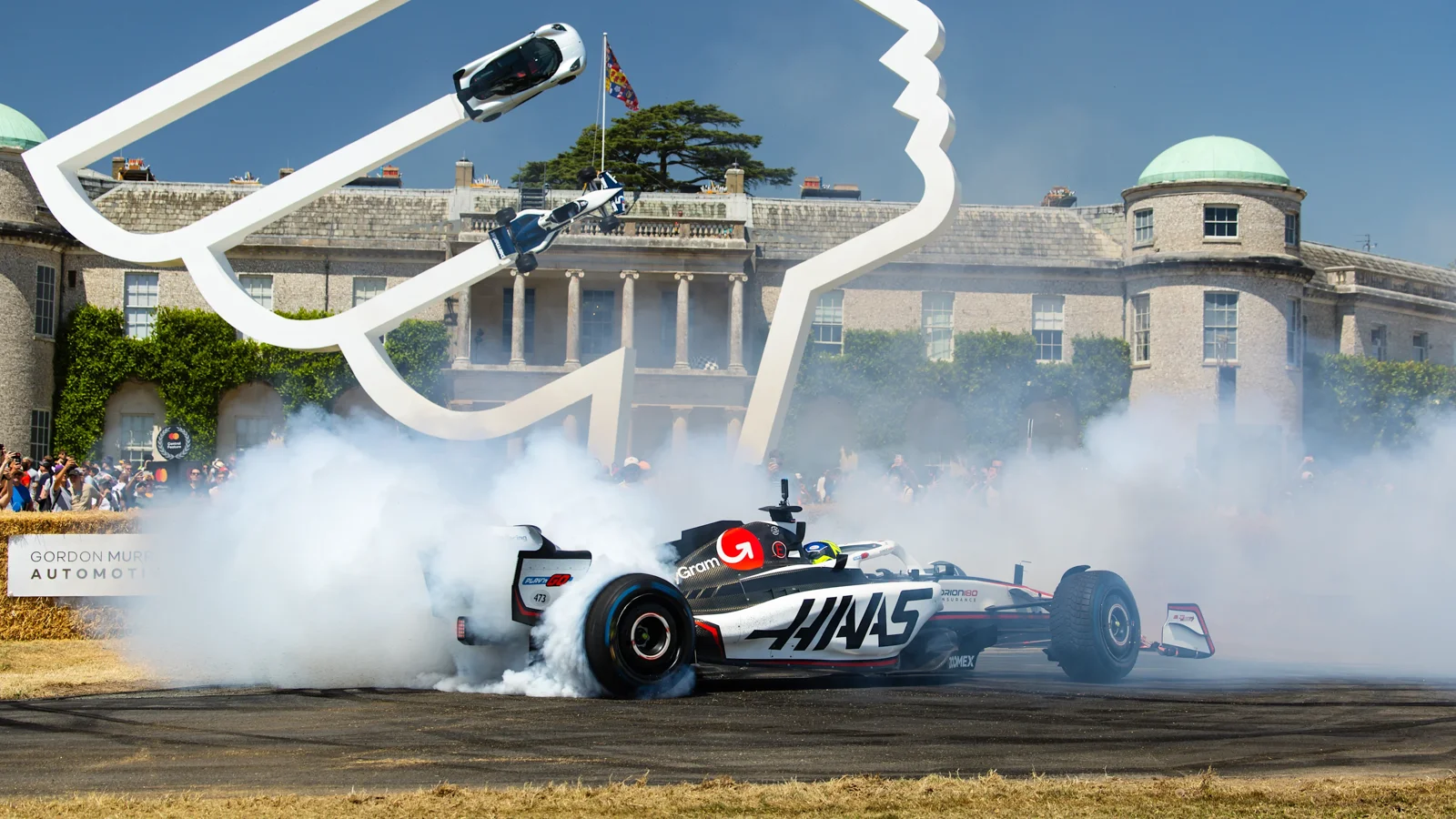
At the 2024 Sao Paulo Grand Prix, the chaotic weather conditions caused numerous disruptions, including the postponement of qualifying until race day and several red flags. Amidst this turmoil, Nico Hulkenberg, driving for Haas, experienced a spin on Lap 27 that left him stuck on the track. Despite his objections, marshals pushed his car to help him continue.
Unaware that this act constituted outside assistance, the stewards black-flagged Hulkenberg, marking the first black flag given during a race since the 2007 Canadian Grand Prix. This moment underscored just how strict the rules are, even when marshals intend to help.
The fallout from dishonesty on the track
In the 2009 Australian Grand Prix, Lewis Hamilton, then racing for McLaren, became embroiled in one of F1’s most damaging controversies involving deception. Under safety car conditions, Hamilton passed Jarno Trulli but was instructed by his team to let Trulli retake the position. Hamilton complied, but both denied any radio communication to the stewards.
This lie led to Trulli being penalized for passing illegally, which affected the race results and Hamilton’s standing. The truth emerged only at the subsequent Malaysian Grand Prix, resulting in Hamilton’s disqualification from the Australian race and the dismissal of McLaren’s sporting director Dave Ryan. This incident remains a stark reminder of how dishonesty can tarnish reputation and alter championships.
The dramatic collision that decided a championship
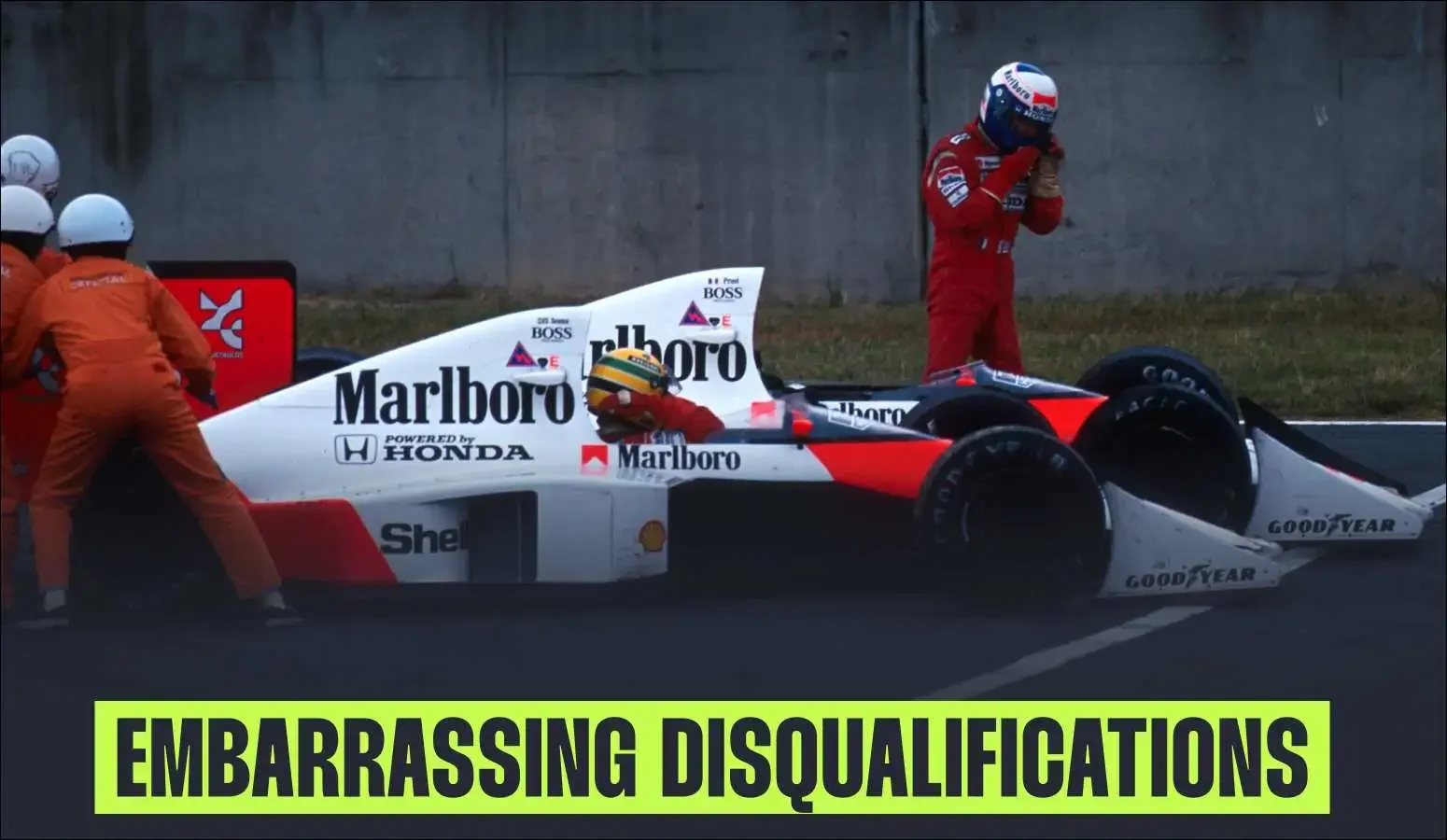
The 1989 Japanese Grand Prix is remembered not only for its high stakes but also for the controversial collision between Ayrton Senna and Alain Prost—title rivals separated by 16 points. Senna, starting from pole, was chasing Prost when on Lap 46 they collided, forcing Prost to retire with suspension damage.
Senna attempted to restart his car with help from marshals, then illegally cut a chicane and rejoined the track before winning. After the race, the stewards disqualified Senna for rejoining the circuit improperly and fined him $100,000, handing the World Championship to Prost with one race remaining. This event marked one of the most contentious conclusions to a season in F1 history.
Dangerous moves that led to multiple disqualifications
Takuma Sato endured several disqualifications across his Formula 1 career, but none more embarrassing than his 2005 home race at the Japanese Grand Prix. After a hazardous start that caused him to run wide and be hit by Rubens Barrichello, Sato later attempted a reckless overtaking maneuver on Jarno Trulli, which resulted in Trulli spinning out and retiring from the race.
Although Sato finished the race, he was disqualified post-event for dangerous driving. Trulli’s condemnation was blunt:
“I think we have a dangerous person on the track and we have seen that for a few years,” Jarno Trulli told ITV.
“The [FIA] has to take action because his move was impossible.” —Jarno Trulli, Driver
Sato’s reputation for risky behavior was further cemented by another disqualification at the 2006 Chinese Grand Prix for ignoring blue flags. His aggressive style made him one of the more controversial figures on the grid.
The only F1 driver disqualified after starting without qualifying
Hans Heyer’s story from the 1977 German Grand Prix is a uniquely embarrassing chapter in F1 history. Entering the sport with little experience in Formula 1, Heyer failed to qualify for the race. However, a chaotic race start—triggered by a damaged lighting system that instead used the German flag to signal the start—led to confusion and multiple driver accidents.
Heyer took advantage of the disorder by joining the race despite not qualifying. He managed to stay on track for nine laps before retiring due to mechanical failure. Once stewards realized he had raced without proper qualification, he was disqualified. This remains the only instance in F1 where a driver did not qualify, did not finish, and was disqualified in the same event.
Why these disqualifications remain etched in Formula 1’s memory
These five episodes are painful reminders of how strict and unforgiving Formula 1 regulations can be, even when mistakes stem from team errors, misjudgments, or unforeseen circumstances. Each incident not only embarrassed the drivers and teams involved but also left fans stunned and in some cases changed the outcome of season-long championships.
The most embarrassing disqualifications in F1 history often expose vulnerabilities in decision-making or rule interpretation, forcing teams to evaluate their strategies carefully. Moving forward, these events serve as cautionary tales, highlighting the critical importance of abiding by the sport’s stringent guidelines and maintaining honesty during competition. As Formula 1 continues to evolve, ensuring fairness and transparency remains paramount to preserving its integrity and thrilling its global audience.
Our Reader’s Queries
Q. Is number 13 banned in F1?
A. Yes, using the number 13 is permitted. Pastor Maldonado chose it when the permanent numbering system was introduced in 2014. Despite some cultures viewing 13 as unlucky, Formula 1 allows drivers to select their own numbers.
Q. Which F1 driver has ADHD?
A. Lewis Hamilton, a British race car driver born in 1985, currently races in Formula One for Mercedes and previously drove for McLaren. He openly shares his experiences with ADHD and talks about his various interests and hobbies.
Q. Is 69 allowed in F1?
A. At present, drivers can choose a number for their career between 0, 2, and 99. Only the World Champion can use number 1. If a number hasn’t been used for two seasons, it can be taken by another driver, except for number 1.
Q. Which F1 drivers have ADHD?
A. Lewis Hamilton. Sir Lewis Carl Davidson Hamilton, born in 1985, is a British driver in Formula One. He currently races for Mercedes and previously drove for McLaren. Hamilton openly talks about living with ADHD and explores his wide range of hobbies and interests.