
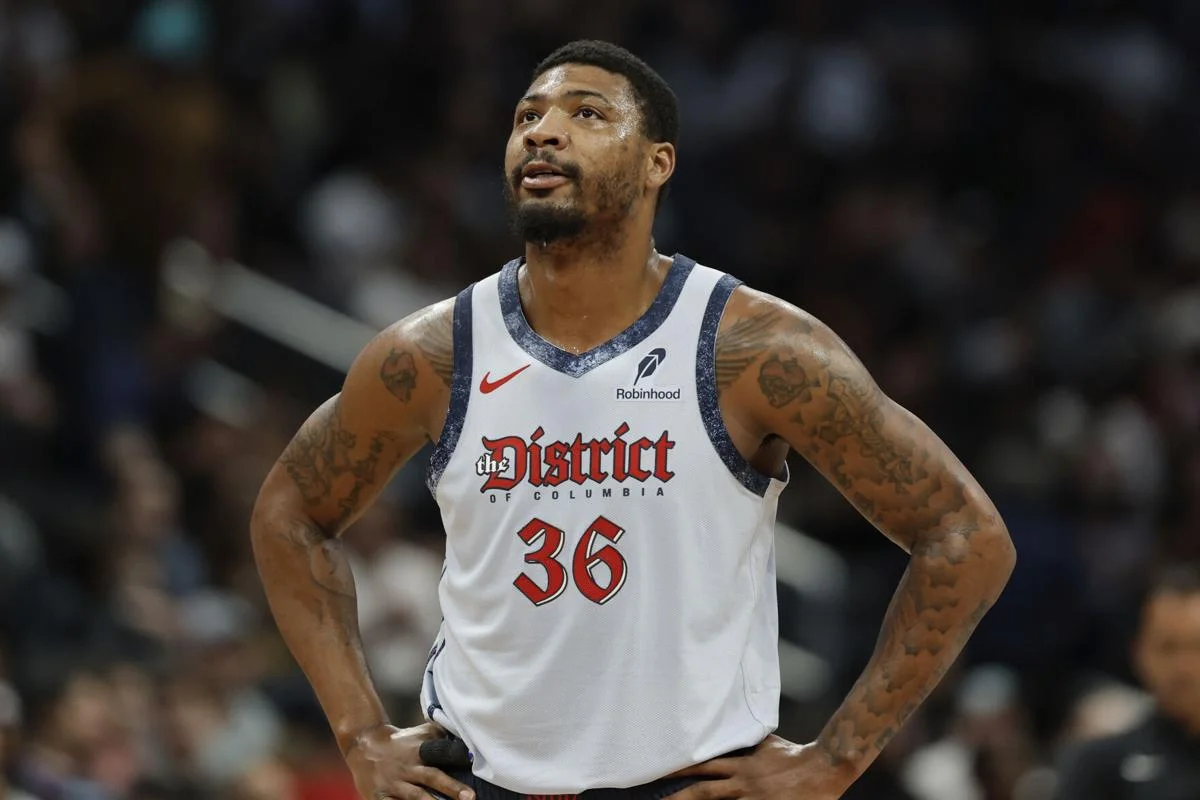

The Los Angeles Lakers waived guard Jordan Goodwin shortly after releasing Shake Milton to create salary cap space necessary for the anticipated signing of Marcus Smart. This move took place as the team aimed to comply with the league’s financial regulations to finalize Smart’s contract deal.
ESPN insider Shams Charania was the first to report the developments regarding these roster changes. The Lakers had to reduce their payroll beneath the “first apron” salary threshold to complete the signing, a critical step due to the NBA’s hard cap rules.
Financial Details and Roster Adjustments Following Waivers
According to ESPN’s salary cap expert Bobby Marks, Jordan Goodwin’s contract contained $25,000 in guaranteed money. After waiving Goodwin, the Lakers’ payroll fell approximately $1 million below the first apron, providing sufficient room to take on Marcus Smart’s deal. Milton’s release cleared around $3 million from the cap, which was important as his salary was about to become guaranteed.
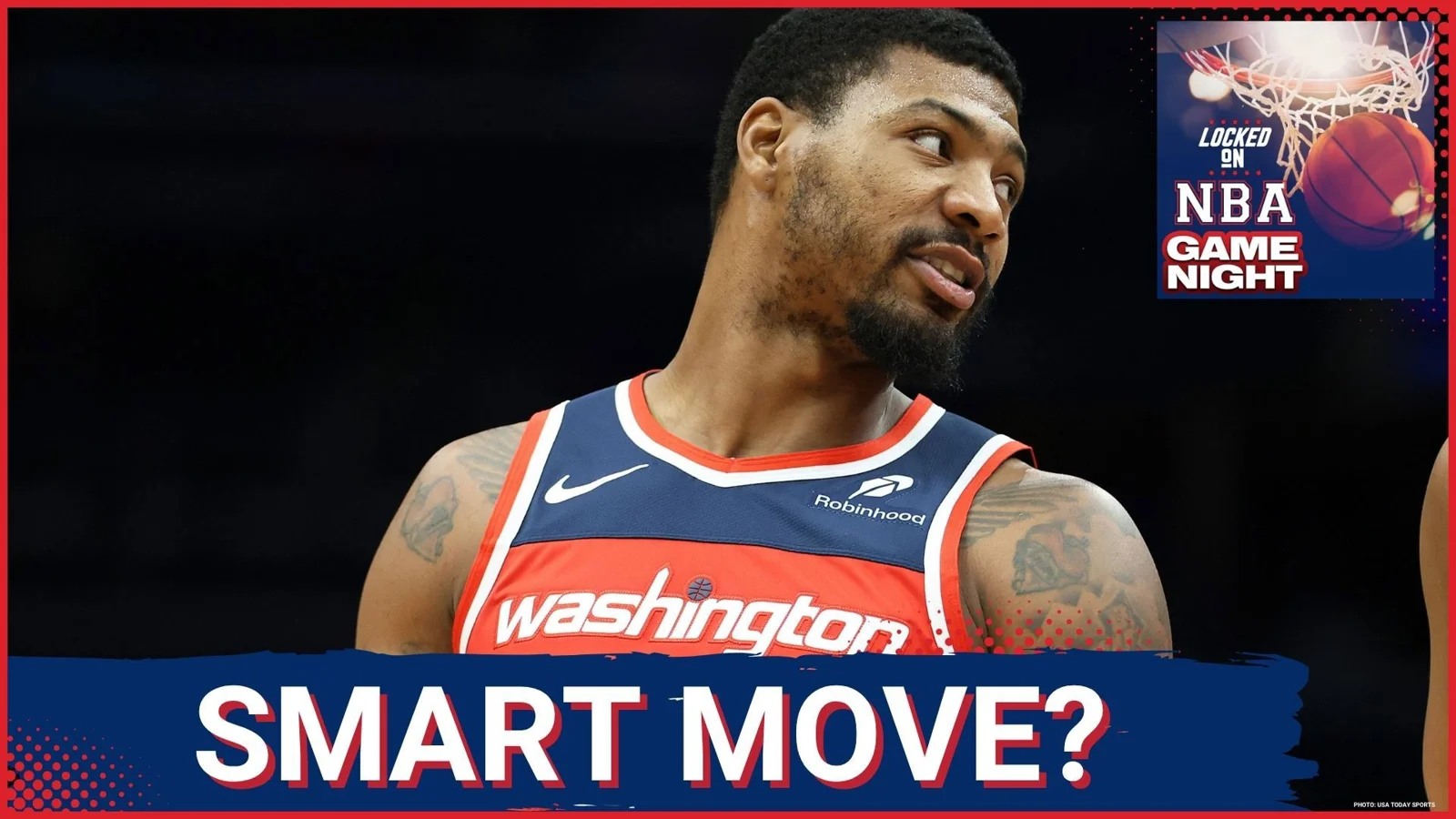
By waiving both Goodwin and Milton, the Lakers cleared space to accommodate Smart’s expected two-year contract valued at $11 million. Smart, a former Defensive Player of the Year, is expected to bolster the Lakers’ defensive capabilities and provide veteran leadership.
Roster Impact and Strategic Value of Marcus Smart
Jordan Goodwin and Shake Milton contributed off the bench last season, providing reliable minutes when called upon. Goodwin averaged 5.6 points, 3.9 rebounds, and 1.4 assists while shooting 43.8% from the field across 29 games, playing nearly 19 minutes per contest. Head coach JJ Redick increasingly relied on Goodwin toward the end of the season.
However, ESPN’s Kevin Pelton highlighted that despite their rotation roles, neither Goodwin nor Milton played significant minutes in the playoffs.
“Although Goodwin and Milton played rotation roles at times in the second half of last season, neither could stay on the court as JJ Redick relied more heavily on his starters in the opening round of the playoffs against the Minnesota Timberwolves,”
Pelton explained.
Pelton stressed the advantage Smart brings over the two waived players, particularly noting his extensive playoff experience with the Boston Celtics.
“Goodwin played 31 minutes in the series and Milton just four. Given Smart’s history, including 108 career playoff games with the Boston Celtics …he has a better chance of earning Redick’s trust and improving the team’s shaky perimeter depth,”
Pelton added.
Implications of the Contract Clearance for the Lakers’ Future
This salary cap maneuver reflects the Lakers’ commitment to strengthening their backcourt through the addition of Marcus Smart, whose defensive prowess and playoff experience are highly valued. By creating room through waiving Goodwin and Milton, the Lakers position themselves better to compete in the coming season. The contract clearance allows the team to adapt to the NBA’s strict financial rules while enhancing their roster strategically.
The move signals confidence in Smart’s ability to contribute significantly, both defensively and as a seasoned presence during critical moments. Looking ahead, the Lakers expect Smart to play a pivotal role in addressing depth issues at the guard position, especially in high-pressure playoff situations.
Essentially, Smart will replace Jordan Goodwin and Shake Milton, two Lakers guards on non-guaranteed contracts who they will have to waive to make room for Smart under a hard cap at the lower luxury tax apron,
— Kevin Pelton, ESPN
Milton’s $3 million salary was set to guarantee Sunday,
— Bobby Marks, ESPN
Although Goodwin and Milton played rotation roles at times in the second half of last season, neither could stay on the court as JJ Redick relied more heavily on his starters in the opening round of the playoffs against the Minnesota Timberwolves,
— Kevin Pelton, ESPN
Goodwin played 31 minutes in the series and Milton just four. Given Smart’s history, including 108 career playoff games with the Boston Celtics …he has a better chance of earning Redick’s trust and improving the team’s shaky perimeter depth.
— Kevin Pelton, ESPN