

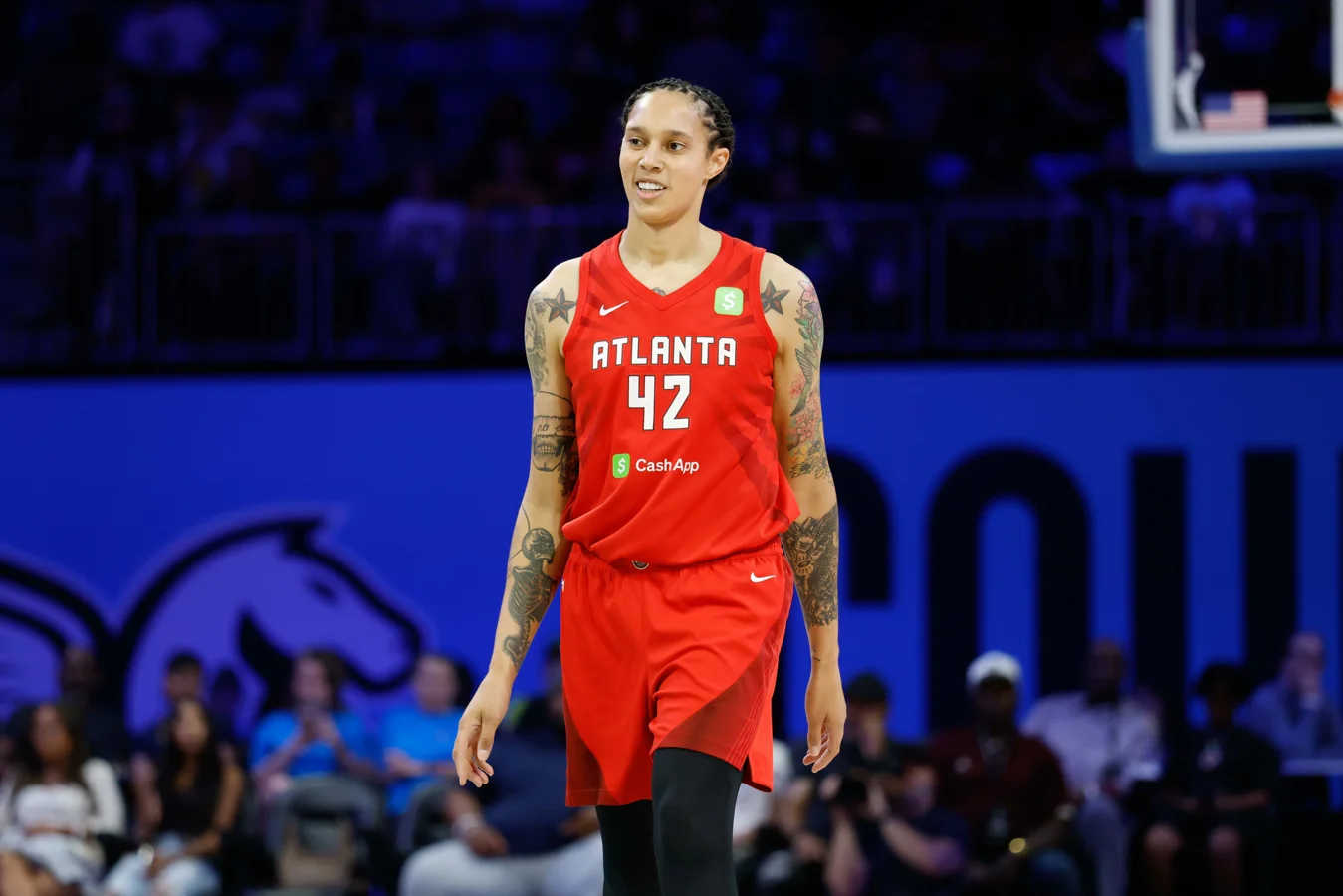
Brittney Griner is poised to begin her 13th WNBA season after a year-long absence that marked a major interruption in her career. Her recent return follows a terrifying prison swap ordeal in Russia, where she was detained, threatened, and ultimately freed through a complex prisoner exchange negotiated by the U.S. government. This exchange prevented her from remaining confined in Russia and losing more than just her freedom—her basketball future was also at stake.
Inside Brittney Griner’s Difficult Prison Transfer and Humiliation
<pGriner recently detailed her experience during an interview on Cam Newton’s podcast, describing the final stages leading up to her release. Her journey began with a transfer from IK-2, a notorious women’s penal colony in Russia, to a holding facility used specifically for the prisoner swap. Shockingly, that staging area was a men’s prison in Moscow, a setting designed to further exert control over her.
The Russian authorities made clear their dominance through a degrading intake procedure that forced Griner to strip naked in front of several men. They conducted body searches and took photographic evidence, acts Griner likened to being displayed like an animal in a circus, highlighting the intent to humiliate and intimidate her before the exchange occurred.
“The trade took a little minute to happen, too, on my end. I had to get transferred from the penal colony to a men’s prison in Moscow, and I got checked into there. I knew I was getting traded, but the way they were treating me, their one little last play to terrorize me or mess with me. Because they were checking me in, they had me stripped down, butt naked, in front of a room like probably 7 to 8 men, and they had Polaroid and had me spinning in a circle, while they were taking the photos.” —Brittney Griner
After this dehumanizing process, masked men, likely members of Russian special forces, arrived to escort her to an undisclosed airfield—a location that doesn’t officially exist on any map. From there, Griner was flown to Abu Dhabi, the neutral site chosen for the prisoner exchange.
The Harrowing Flight and Final Moments Before Freedom
Even during the flight to Abu Dhabi, Griner faced ongoing psychological torment. The masked captors mocked her, taunting her sexuality, and their oppressive atmosphere did not allow her to relax. Griner refused to eat, fearing the possibility of being poisoned despite being so close to release. Her mind remained alert, consumed by fear and paranoia until the plane landed.
Upon arrival, Griner saw an American plane waiting, offering the first glimpse of safety she had felt in a long time. A U.S. official greeted her and explained how the exchange would proceed, giving her a clearer sense that the ordeal was nearing its end.
Finally, the moment she had long awaited arrived. Griner disembarked from the Russian aircraft at the exchange site and met Victor Bout, the prisoner the U.S. was releasing in her stead. The two briefly exchanged pleasantries before parting ways, marking the official conclusion of the swap.
Before heading home, Griner made a brief stop to acknowledge the Abu Dhabi officials who facilitated the exchange. It was there she silently vowed never to leave American soil again. Despite boarding an American plane, true relief only crystallized once the plane landed back in the United States, where she could finally breathe freely.
Controversy Surrounding the Exchange for Arms Dealer Viktor Bout
The prisoner exchange reignited heated debate in the United States, with significant criticism surrounding the deal that freed Brittney Griner. Many Americans expressed anger and frustration, with some opposition tinged by racism, homophobia, or misogyny. But a central point of contention was Viktor Bout—an infamous international arms trafficker—the man Griner was swapped for.
Viktor Bout, often called the “Merchant of Death,” earned notoriety by trafficking vast quantities of weapons worldwide, contributing to brutal conflicts in numerous countries. He was arrested in Thailand in 2008 in a U.S.-led sting operation and extradited to Manhattan, where a jury convicted him of conspiring to supply millions of dollars worth of arms, including thousands of AK-47 rifles and surface-to-air missiles, to Colombian Marxist rebels. Bout received a 25-year sentence for plotting to kill Americans and supporting terrorist organizations.
Many critics also faulted the deal for not including Paul Whelan, a former U.S. Marine held in Russia since 2018 on espionage charges he denies. Calls for Whelan’s inclusion intensified concerns that the U.S. may have given up too much to secure Griner’s release, raising questions about negotiation priorities and the value placed on different prisoners in international diplomacy.
Ultimately, while the swap reunited Griner with her family and basketball career, it exposed the complex and painful decisions faced by governments when resolving hostage situations. The exchange underscored ongoing tensions between justice, diplomacy, and national interests in high-profile prisoner negotiations.
Our Reader’s Queries
Q. Did Brittney Griner give birth to a child?
A. In July, Griner announced that she and her wife had their first child. She shared this news with CBS Sports before the 2024 Summer Olympics in Paris. The Phoenix Mercury player said their new baby arrived on July 8, adding, “That’s my man.”
Q. Did Brittney Griner give birth to a baby?
A. Brittney Griner, who has won two Olympic gold medals, recently announced the birth of her first child. She and her wife, Cherelle Griner, are new parents. During an interview with We Need to Talk, Griner shared the joyful news about their son. “He’s here. Yes, 7/8/24,” she said.