
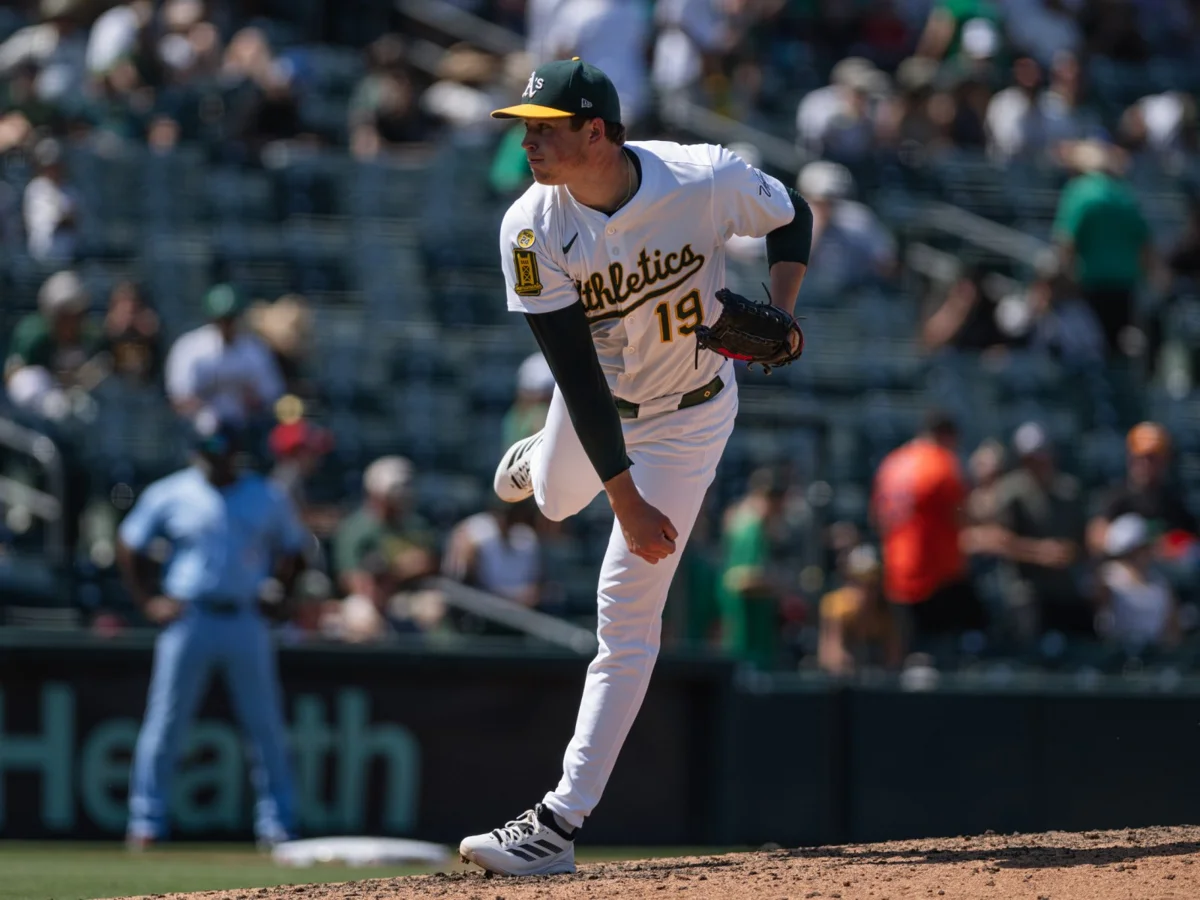

The Oakland Athletics are preparing to be sellers at the upcoming trade deadline on July 31, but Mason Miller remains off the market despite rising interest. According to Bob Nightengale of USA Today, the Athletics have made it clear to other teams that Miller is not available in any trade discussions, underscoring his status as untouchable among the club’s assets. This decision comes amidst growing speculation about Miller’s future due to his increasing value as a dominant closer.
Miller’s Team Control and Arbitration Status Increase His Value
Mason Miller is under team control through the 2029 season, which adds significant value to his contract situation. Although he has not yet reached salary arbitration, Miller is on track to qualify early for Super Two status, granting him four years of arbitration eligibility instead of the standard three. This means Miller could command larger pay raises during the arbitration process, especially because arbitration hearings tend to favor traditional statistics like saves, where Miller excels with 47 saves in 53 opportunities across his first three major league seasons.
This financial trajectory makes Miller a valuable asset for the Athletics, who have no pressing reason to move him despite ongoing rumors. While an exceptionally high offer from another team could potentially prompt reconsideration, the Athletics are focused on retaining Miller for his dominating pitching and contract control over the next several years.
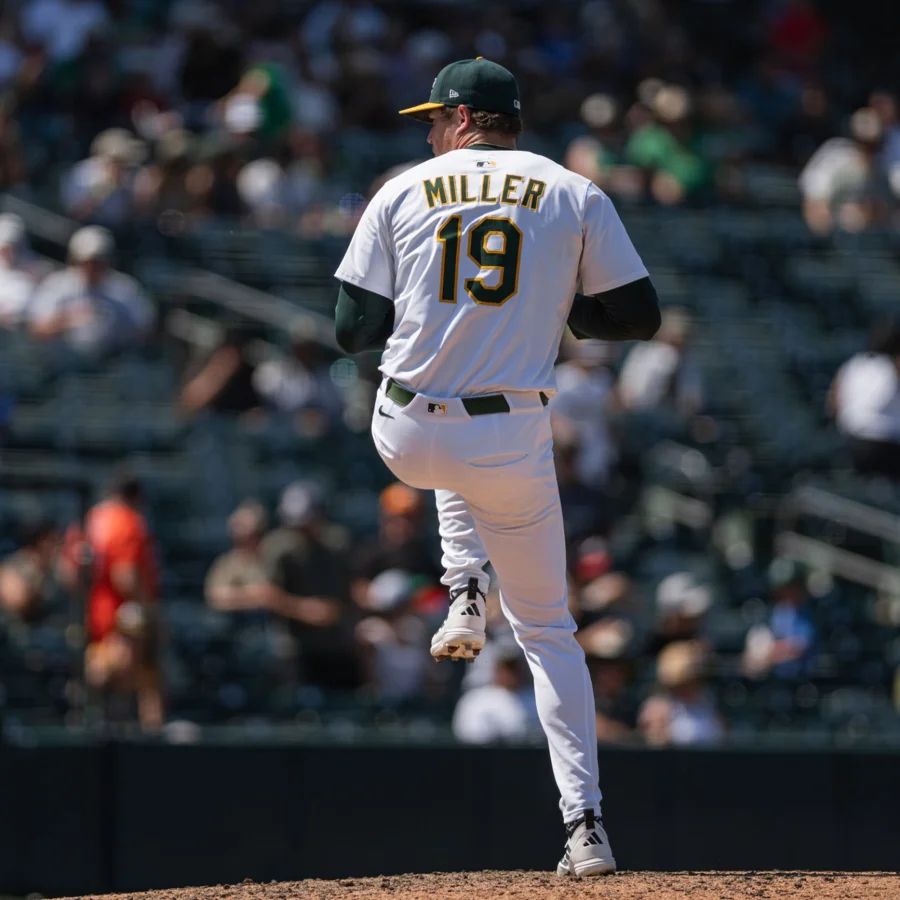
Miller’s Performance Highlights and Control Concerns
Mason Miller’s rise to prominence started after his MLB debut in 2023, quickly establishing himself as Oakland’s closer with consistent success in the 2024 season. Over 134 innings pitched, Miller has maintained a 3.22 ERA alongside an impressive 37.5% strikeout rate. His fastball averages 100.2 mph, pairing power with a sharp 87.2 mph slider that ranks among the more effective pitches in baseball. However, his performance includes control challenges; his walk rate, which was below average in 2024, has deteriorated to around 12% in 2025, raising concerns about his consistency on the mound.
Trade Considerations and Injury History
Despite these control issues and the naturally unpredictable nature of relief pitching, there remains an argument for the Athletics to consider trading Miller while his value is high. Early injuries forced Miller’s transition from starting pitcher to reliever, which adds a layer of uncertainty regarding his long-term health. These factors might motivate the front office to contemplate a trade for the right offer, particularly given the team’s broader roster and rebuild plans.
Team’s Commitment and Rebuilding Strategy
On the other hand, the Athletics have shown signs of shifting away from their long rebuild phase, even though their 2025 results have been underwhelming. The team made notable commitments this past offseason, notably locking up Lawrence Butler and Brent Rooker with long-term extensions and signing Luis Severino to a record $67 million contract, signaling a willingness to spend more aggressively. However, Miller has not yet been included in any long-term extension talks, as he mentioned in March that negotiations had not begun.
A multi-year deal could provide the Athletics with cost certainty through Miller’s arbitration years, which might be advantageous. Still, hesitation about committing to the reliever beyond 2029 appears to influence the current stance. For now, Oakland seems intent on holding onto Miller, balancing his potential salary increases against his value as a key piece in their bullpen.
Outlook for Miller and the Athletics Moving Forward
Mason Miller’s untouchable position during trade talks reflects the Athletics’ recognition of his critical role and the financial control they possess over his career in the near future. As the trade deadline approaches, the team’s stance signals a strategic choice to retain a pitcher who could be a foundation for their bullpen improvements. While the potential for future trades exists, especially if Miller’s salary escalates during arbitration, Oakland appears focused on maintaining stability in their pitching staff amid ongoing roster changes.
Our Reader’s Queries
Q. Is Mason Miller a diabetic?
A. Miller was diagnosed with Type 1 juvenile diabetes at age 20 and fully supported the idea. During a 10-game road trip through Seattle, Houston, and Kansas City, the A’s invited a local child with diabetes to attend a game.