
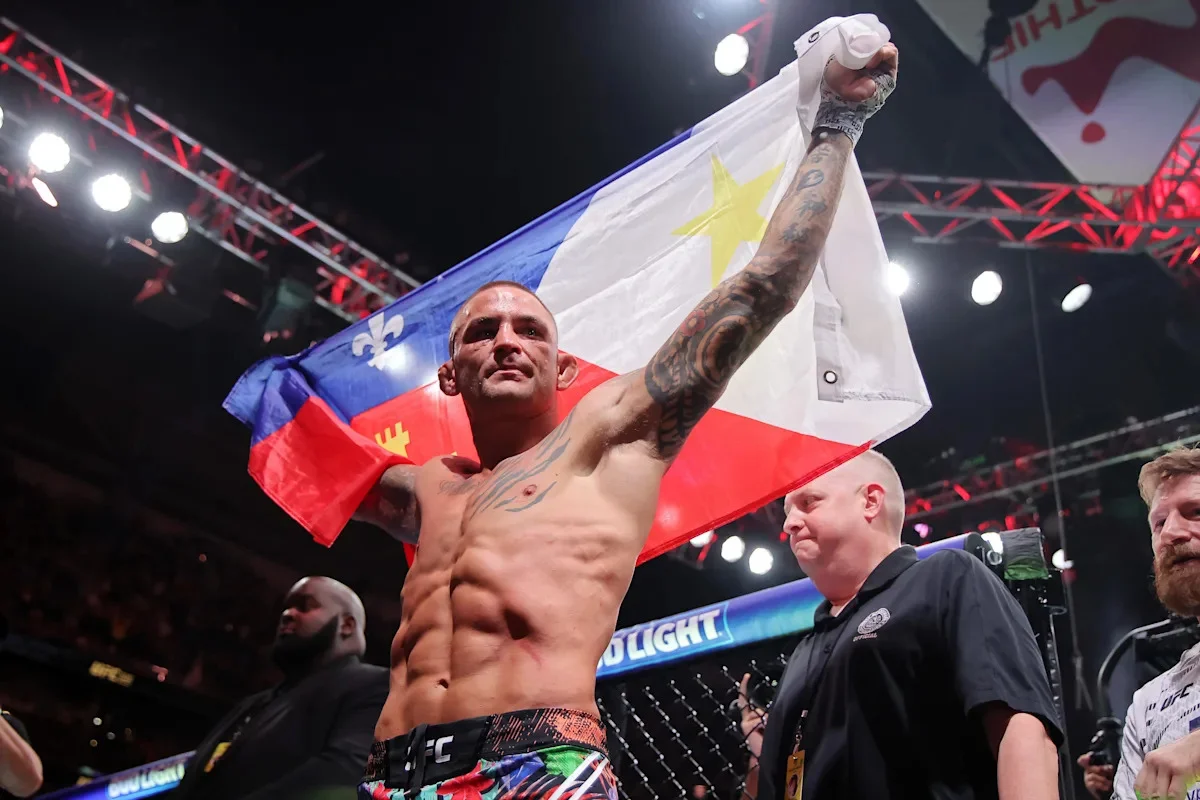

Dustin Poirier’s accomplished 32-fight career in the UFC concluded this past Saturday at UFC 318, where he faced Max Holloway in the main event. Known for his willingness to engage in fierce battles, Poirier’s final bout quickly devolved into a rapid exchange that did not escalate into a full-on brawl, highlighting an unexpected but critical choice rooted in self-preservation.
While the intense confrontation lasted barely 10 seconds, it emphasized the scoreboard advantage held by Holloway, who maintained relentless pressure and volume striking, ultimately leading to a unanimous decision victory. Poirier’s split-second decision to avoid reckless exchanges helped him avoid what could have been a devastating knockout.
Max Holloway’s Ferocious Volume Striking Dominates Octagon Records
Max Holloway has earned a reputation for overwhelming opponents with a barrage of strikes, holding the UFC record with seventeen fights featuring over one hundred significant strikes landed. By UFC 318, he had accumulated 3,655 significant strikes in his career, surpassing all others in UFC history, with Sean Strickland far behind at nine such performances.
During the fight, Holloway outstruck Poirier 198 to 109, maintaining a high striking accuracy of 52%, according to UFC statistics. His signature rapid-fire combinations left Poirier little space to counterattack, forcing the Louisiana lightweight to clinch and wrestle early in the bout to avoid further damage.
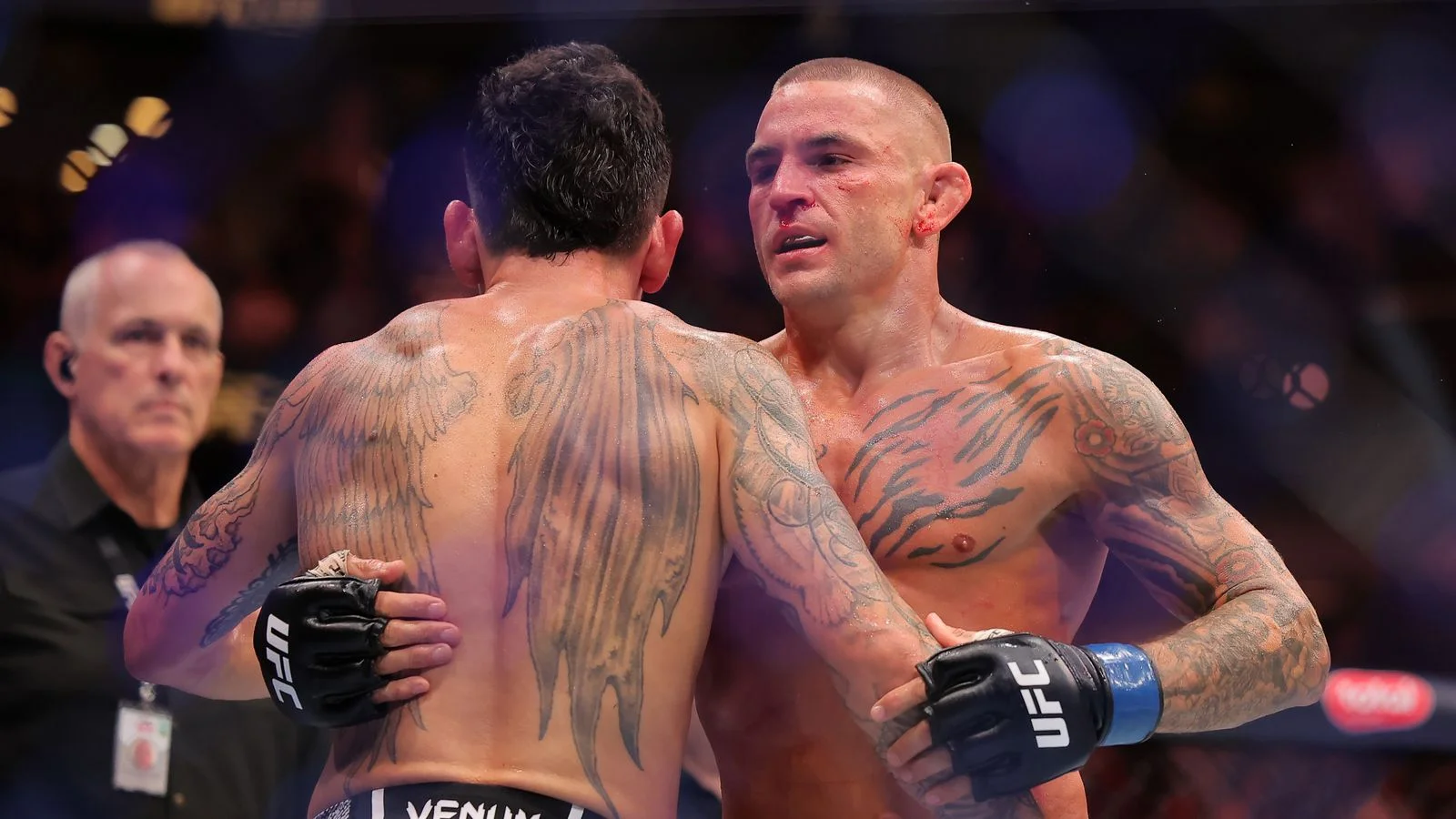
Choosing Safety Over Risk: Poirier’s Moment of Realization
Throughout his career, Dustin Poirier was known for his toughness and willingness to engage in high-risk exchanges, often thriving in grueling battles. However, UFC 318 marked a different approach. When Holloway signaled for an intense punch exchange using his trademark “point down” cue, Poirier recognized the speed and volume of Holloway’s offense as overpowering.
Reflecting on the moment during The Ariel Helwani Show for Uncrowned Combat, Poirier said:
“The point down, and we were going to exchange punches. But he was [just] too fast. He was too fast. And I was like …I might have threw one or two punches back at him. And I said, [No] we’re just going to clinch up….We’re going to wrestle a little bit. [But then] I’m not doing this…but I could have landed a shot, too. I just did. I just didn’t. Once I threw one or two, he was throwing off three or four. By the time my two were thrown, you know, it’s just like [over]. And I thought it was. I just thought it was a lot closer, uh, in the moment.” —Dustin Poirier on The Ariel Helwani Show for Uncrowned Combat
This recognition of Holloway’s overwhelming speed and volume made Poirier shift tactics immediately, weighing the risks of trading blows versus clinching and grappling, which significantly reduced the damage he sustained in this fleeting exchange.
The Impact of Self-Preservation on Poirier’s Final Fight Strategy
Poirier’s decision to protect himself rather than pursue an aggressive firefight was a departure from his typical combative style and reflected a growing awareness of long-term health and family priorities. Facing a record-setting striker like Holloway, combined with personal considerations, led him to pragmatically focus on survival rather than reckless engagement.
In an interview with MMAJunkie’s Mike Bohn, Poirier elaborated:
“Going through the fight, immediately my thoughts about what just happened, I thought I did enough…[but] then…But I went back and watched it. What you’re feeling and going through in there, and what you see from an outside view, is two different things. I could see him winning rounds, throwing more volume, body shots, pulling away [in between rounds]. I felt like in between rounds I was talking to my boxing coach, and I could’ve taken more chances…But I was trying to protect myself at the same time, and I’ve never really fought like that before.” —Dustin Poirier to MMAJunkie’s Mike Bohn
This illustrates the internal conflict Poirier experienced as his instinct to fight recklessly was tempered by a deeply rooted sense of vulnerability and the need to avoid damaging consequences in what he understood might be his final UFC appearance.
Respect and Reflection: The Lead-Up and Aftermath of UFC 318
In the lead-up to their third encounter, Holloway, mindful of Poirier’s retirement announcement and his status as a beloved fighter from the ‘Big Easy,’ displayed considerable respect for his opponent. Fellow fighters and analysts, including Aljamain Sterling, speculated that Holloway might have held back early in the fight, preventing a potential early finish, in recognition of Poirier’s long career.
Fans and pundits echoed this sentiment, observing that both fighters demonstrated mutual respect in what was billed as a high-stakes farewell. Poirier’s emerging role as a father-heightened his sense of self-preservation, contributing to his cautious approach during the contest and influencing his decision to retire on his terms.
Legacy Preserved: What Dustin Poirier’s UFC Exit Means for the Lightweight Division
Dustin Poirier leaves the UFC with a lasting legacy as one of the most durable and skilled lightweights in company history. His restraint at UFC 318, born from quick thinking and a desire to protect himself from serious injury, allowed him to end his career without the damage that often accompanies brutal knockout losses.
Looking ahead, Poirier’s cautious and calculated departure sets an example for fighters prioritizing long-term health, especially after years of grueling competition. His many battles, including memorable wars with Holloway and others, will continue to serve as benchmarks in the sport’s history.
Though the door to a rematch was briefly considered due to the intense nature of their rivalry, Poirier’s retirement finalizes his UFC journey and will likely inspire future fighters to weigh the balance between valor and self-preservation inside the Octagon.