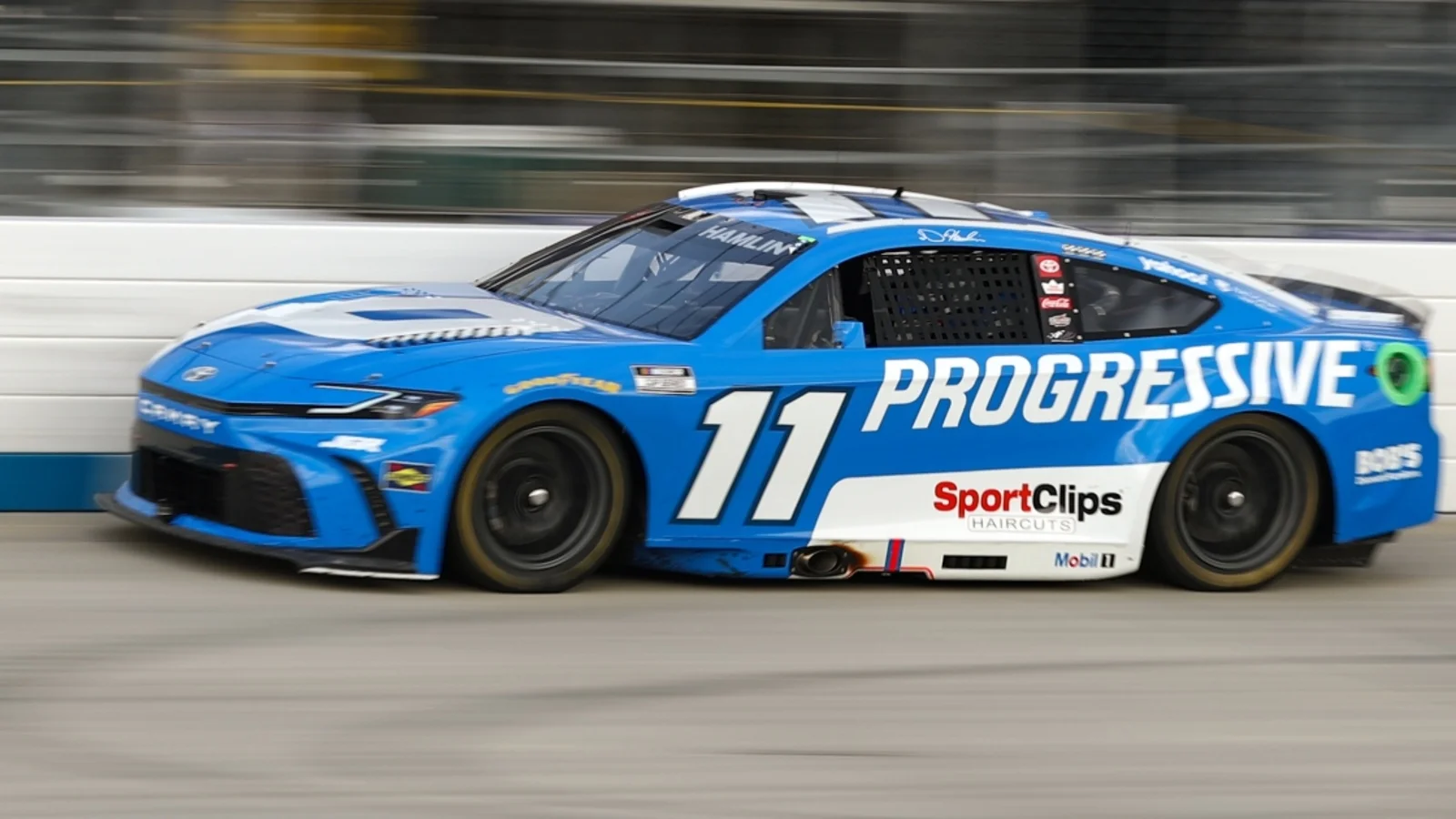
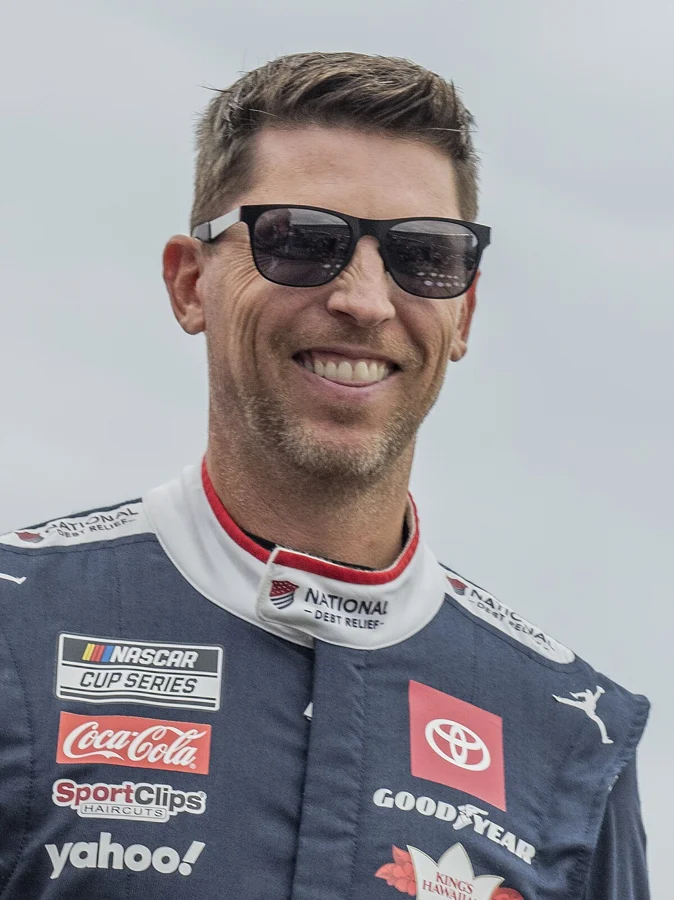
Denny Hamlin seamlessly balances NASCAR victories with his growing role in broadcasting, showcasing his expertise beyond the track.
Denny Hamlin took center stage at Dover on Sunday, not only by winning his 58th career Cup Series race but also by stepping behind the microphone in the NASCAR Xfinity Series broadcast booth the day prior. This rare shift from driver to commentator offered fans a fresh perspective into Hamlin’s NASCAR broadcasting experience, revealing the challenges he faced while trying to translate his deep racing knowledge into live commentary.
Insights from Hamlin’s First Time in the Broadcast Booth
Hamlin shared candid thoughts about his recent experience on his Actions Detrimental podcast, explaining that working the broadcast booth during the Dover weekend was far more complicated than many might assume. Contrary to popular belief, he stressed that being in the booth didn’t provide any competitive edge for his race performance.
“I got asked post-race if it was an advantage to be up there,”
Hamlin recounted. He continued,
“In the bus, it’s like I don’t—I’m not distracted with all the other stuff. And so I would say it’s not an advantage at all to go up there and do the booth.”
He elaborated on the difficulties of soaking in the race while focused on broadcasting duties. Rather than gaining new insights, he found the booth more distracting than helpful.
“Truthfully, I’d see a hell of a lot more sitting in my motorhome.”
Hamlin pointed out the chaos of constant camera changes, communication with producers, and other technical demands made it tough to genuinely observe the event live. He praised his co-hosts, particularly Adam Alexander and Jamie Little, for their effortless handling of these complexities, noting
“Adam makes it so freaking easy…”
Despite the elevated vantage point the booth provided, Hamlin found it challenging to balance commentary with the format’s demands.
Image of: Denny Hamlin
“You’re trying to concentrate on, ‘Okay, what do the people see? Let’s talk about what the people are seeing.’”
he explained. This meant focusing on the live broadcast’s camera angles and visuals rather than providing the nuanced, technical analysis he is known for. He described the necessity to abandon some of his deeper insights in favor of reacting to what the audience was shown.
“You want to be talking about what the camera is showing, and so, even though you’ve got something good you want to say, you’ve got to throw it out the window and go with what’s on the screen.”
The Technical Challenges of Live Broadcasting Hamlin Faced
The fast pace and live production elements in the booth created a constantly shifting environment that clashed with Hamlin’s natural style of deeper racing breakdowns. Hamlin reflected on how his ideal contribution in broadcasting would involve sharing technical perspectives—advising drivers on race tactics like setting up passes, for example—which was difficult to express under tight broadcast constraints.
“Um, so I just I feel like my role in the booth would be talking about what the drivers need to be looking for, how they need to be setting up passes, things like that,”
he said.
“You know, being a little more technical in that aspect. I think that’s kind of my lane.”
Still, Hamlin appreciated the camaraderie and teamwork involved in the broadcast. He described smooth interactions with Jamie Little, sharing how they used hand signals back and forth to coordinate speaking turns during broadcasts. He credited the talent and professionalism of the on-air team for making the experience manageable.
“They’ve got great on-air talent that makes things extremely easy,”
Hamlin noted. When discussing whether he would take on the broadcast booth role again in the future, Hamlin did not hesitate to affirm:
“Yeah, I would do it again. I would.”
Denny Hamlin’s Ongoing Career Ambitions and Legacy in NASCAR
At 44 years old, Hamlin continues to race with an intensity that belies his years. With 58 Cup Series victories, he remains deeply motivated to reach the landmark 60-win club, a distinction attained by only a revered few such as Kevin Harvick. Hamlin’s sharp racing intellect and relentless drive ensure he remains a formidable presence every weekend on the track. While a championship title has eluded him so far, his consistent high-level performances have earned him a place among NASCAR’s all-time great competitors.
Outside the race car, Hamlin’s influence within NASCAR is expanding rapidly through his role as a co-owner of 23XI Racing, a team he operates alongside basketball legend Michael Jordan. Since 23XI Racing’s foundation in 2021, the team has quickly established itself as a serious contender, securing wins and attracting top-tier drivers and crew talent. Hamlin’s unique position balancing full-time driving with team ownership solidifies his status as a key figure shaping NASCAR’s modern era.
This dual responsibility highlights how Hamlin is preparing for a future that goes beyond driving. He is building a lasting legacy that will impact the sport both on and off the track, positioning himself not as a fading veteran but as a dynamic force influencing NASCAR’s trajectory. His ventures, whether competing for more victories or developing his team’s success, show a commitment to growth and evolution within the sport.
Balancing Racing and Expanding Roles in NASCAR
Hamlin’s recent foray into broadcasting has added another dimension to his NASCAR career, exposing him to a new way of engaging with the sport. His reflections reveal that transitioning from racing to commentary presents unexpected hurdles but also fresh opportunities for growth. Through his passion for racing and candid willingness to tackle challenges, Hamlin demonstrates a readiness to diversify his contributions to NASCAR’s landscape.
Whether behind the wheel, in the team garage, or in the broadcast booth, Hamlin is stepping forward with purpose. By exploring roles beyond driving, he is broadening his impact and staying relevant amid the sport’s evolving demands. Fans and insiders alike watch with anticipation as Hamlin pursues new milestones and continues to shape NASCAR’s future — on the track and in the spotlight.
Our Reader’s Queries
Q. How did Denny Hamlin get so rich?
A. Since he started racing full-time in the Cup Series in 2006 with Joe Gibbs Racing, Hamlin has achieved a lot. He has won 51 Cup Series races and three Daytona 500s in 2016, 2019, and 2020, and has made millions over the years.
Q. Did Denny Hamlin and Jordan Fish get married?
A. Denny Hamlin is engaged to Jordan Fish. They didn’t connect well when they first met, but things improved the second time, and they started dating in 2007. Despite facing some challenges, they stayed together and strong.
Q. How is Denny Hamlin so rich?
A. How Denny Hamlin Built His $65 Million Wealth: He has earned over $100 million from NASCAR contracts and race winnings. He also has valuable endorsement deals with FedEx, Jordan Brand, and Toyota. Additionally, he co-owns 23XI Racing, a franchise now worth more than $100 million.
Q. What happened between Denny Hamlin and Jordan Fish?
A. Eleven years later, Hamlin and Fish are still together. They had their second child, Molly, in 2017. After 17 years as a couple, they got engaged. They shared their news of getting engaged on New Year’s Day this year.