

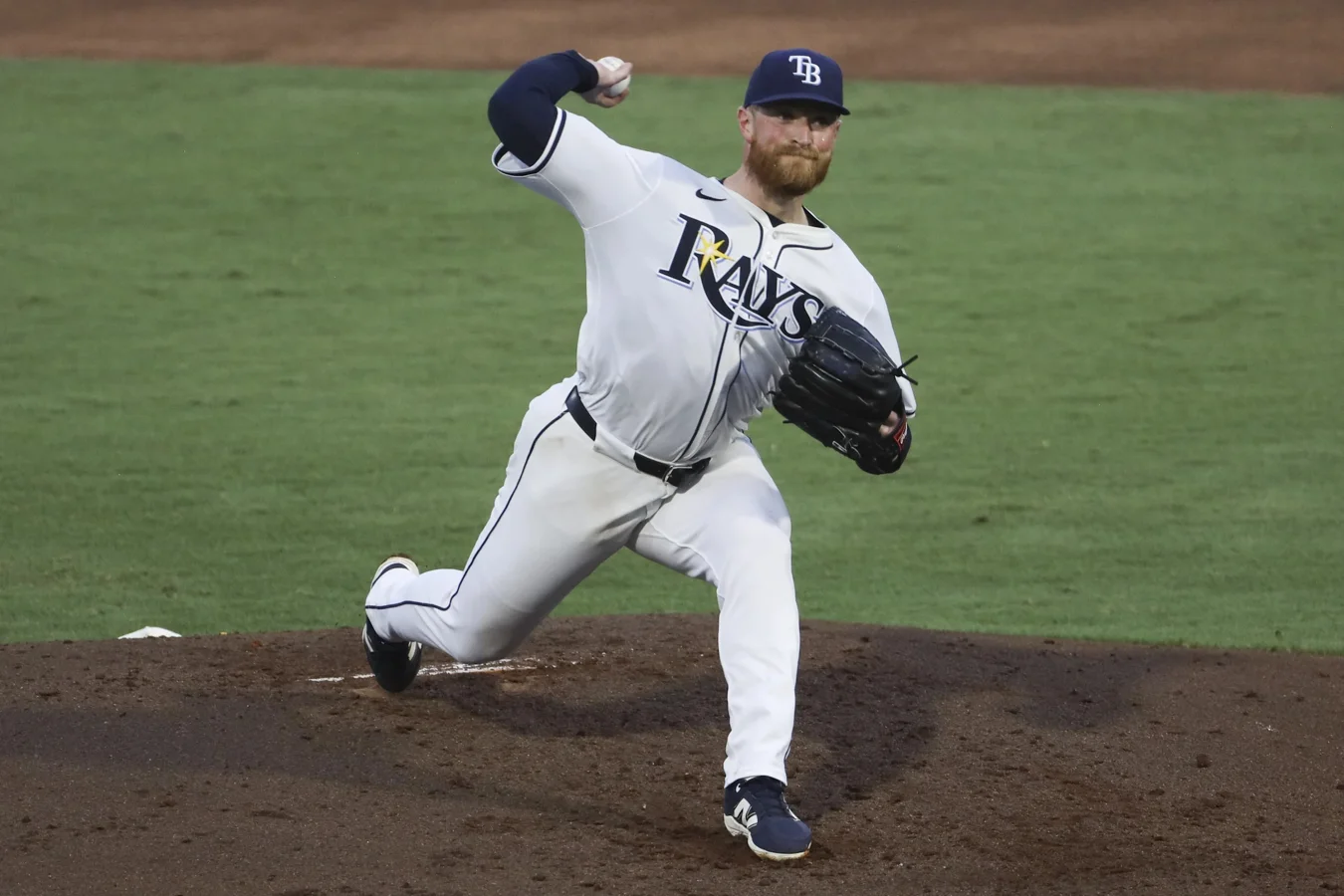
Drew Rasmussen’s fantasy value has significantly dropped due to the Tampa Bay Rays’ strict workload restrictions, which have limited his innings and thus hindered his ability to secure quality starts. After two consecutive starts in early July where he was held to just two innings, Rasmussen’s role in fantasy baseball began to diminish, raising concerns for managers relying on his production moving forward.
Although there was some optimism during the All-Star break that Rasmussen might return to a typical workload for the second half of the season, his first start back against the Chicago White Sox demonstrated that the Rays remain cautious. He was pulled after just four innings, despite not pitching poorly, reflecting the ongoing pitch count and inning limits that are undermining his fantasy usefulness.
Pitch Count Limits Continue to Restrict Rasmussen’s Effectiveness
In his recent start, Rasmussen threw 75 pitches over four innings, striking out five batters, walking one, and allowing two runs. There was an expectation that he might extend deeper into the game if he had maintained pitch efficiency, but the team’s conservative approach has allowed him to exceed 80 pitches in only six of 19 starts this season, with a single outing surpassing 90 pitches.
This limitation has translated to short outings and limited chances for Rasmussen to accumulate fantasy value. In starts where he has remained under 80 pitches, he has completed six innings just three times. Given that he often fails to reach even five innings now, his reliability as a fantasy starter has diminished substantially, particularly in points-based leagues where longer appearances and quality starts are critical.
Long-Term Injury History Influences Team’s Workload Caution
Rasmussen’s history of three elbow ligament reconstruction surgeries and a combined 80.2 innings pitched over the prior two seasons has necessitated the Rays’ cautious approach to his usage. This careful management affects his ability to contribute as a must-roster pitcher in any format, especially in 12-team leagues where consistent length and strikeout volume matter more.
His relatively low strikeout totals further compound the issue; without the ability to log deep innings or rack up strikeouts, Rasmussen now offers limited upside. Eli Schwartz, a fantasy analyst, summarized this concern:
“It’s frustrating, because Rasmussen is a great pitcher. But he’s a great pitcher who has had three ligament reconstruction surgeries in his elbow and threw just 80.2 innings in his previous two seasons combined.”
—Eli Schwartz, Fantasy Baseball Analyst
Analysis of Rasmussen’s Current Fantasy Outlook
Fantasy managers must reconsider Rasmussen’s role on their rosters, as he is increasingly unlikely to qualify for wins or quality starts. His primary fantasy contributions now depend on maintaining a low ERA and WHIP, but even those may not justify a roster spot in most competitive formats. In comparison, dominant middle relievers might provide similar ratios with additional chances to earn saves or wins.
Given these factors, Rasmussen is no longer a reliable option for fantasy teams seeking consistent pitching production. His workload limitations effectively cap his ceiling, pushing him toward droppable status in leagues where roster space is valuable and starting pitching depth is abundant.
Wednesday’s Noteworthy Waiver Wire Options
While Rasmussen’s fantasy value fades, several other players offer appealing opportunities for managers looking to bolster their rosters:
Francisco Alvarez’s Return to Power Hitting Sparks Interest
Mets catcher Francisco Alvarez, owned in only 29% of leagues, shows renewed power after focusing on consistent contact hitting last season without success. Mets hitting coach Eric Chavez’s philosophy led Alvarez to prioritize contact, but Alvarez struggled as a result. Following a demotion to Triple-A, Alvarez has reverted to driving the ball with power, posting a 51% fly ball rate and pulling 42.9% of his batted balls.
He slugged 11 homers in 19 games in the minors and hit his first home run back with the Mets on Tuesday. While his fantasy relevance remains marginal in one-catcher formats, he is a valuable pickup in two-catcher leagues, especially if other options like Sean Murphy or Drake Baldwin are unavailable. Alvarez’s power rebound could make him a difference-maker in the final part of the season.
Edward Cabrera’s Strong Comeback Start Bolsters Marlins’ Rotation
Marlins starter Edward Cabrera returned healthy from elbow soreness and impressively struck out six in 5.2 innings against the Padres, limiting runs to one. Cabrera’s reliance on his changeup and sinker has paid dividends, featuring excellent control with only one walk in his last four starts.
Since May, Cabrera maintains a 2.49 ERA, 72 strikeouts, and 19 walks over 68.2 innings, confirming him as a trustworthy fantasy starting pitcher for the remainder of the season and a potential waiver-wire priority.
Ramon Laureano’s Consistent Play Makes Him a Reliable Outfielder Option
Ramon Laureano, currently owned in 24% of leagues, appears to have solidified his career resurgence since his mid-2024 run with the Braves. Over the past year, his slash line of .291/.342/.512 is backed by a .362 wOBA and a .352 expected wOBA, driven by improved contact quality, a lower strikeout rate, and his highest career pulled-air rate at 25.2% in 2025.
Playing nearly every day for the Orioles, Laureano’s consistent playing time combined with solid production makes him an attractive option for fantasy teams seeking a dependable outfielder.
Angel Martinez’s Hot Streak Bears Watching Despite Underlying Metrics
Cleveland Guardians’ second baseman Angel Martinez has emerged as a surprise in July, hitting .319 with four homers and a .961 OPS. However, his performance raises questions given his modest average exit velocity of only 88.5 mph and an expected wOBA of .289 for the month, which typically suggests unsustainable production.
Martinez’s success is largely attributed to a high percentage (28%) of pulled fly balls, a strategy that has temporarily boosted his numbers. While he may resemble a version of Isaac Paredes with this approach, managers should consider Martinez a hot-hand candidate best suited for deeper leagues focused on multi-category contributions.
Brice Matthews Shows Early Power and Versatility in MLB Debut
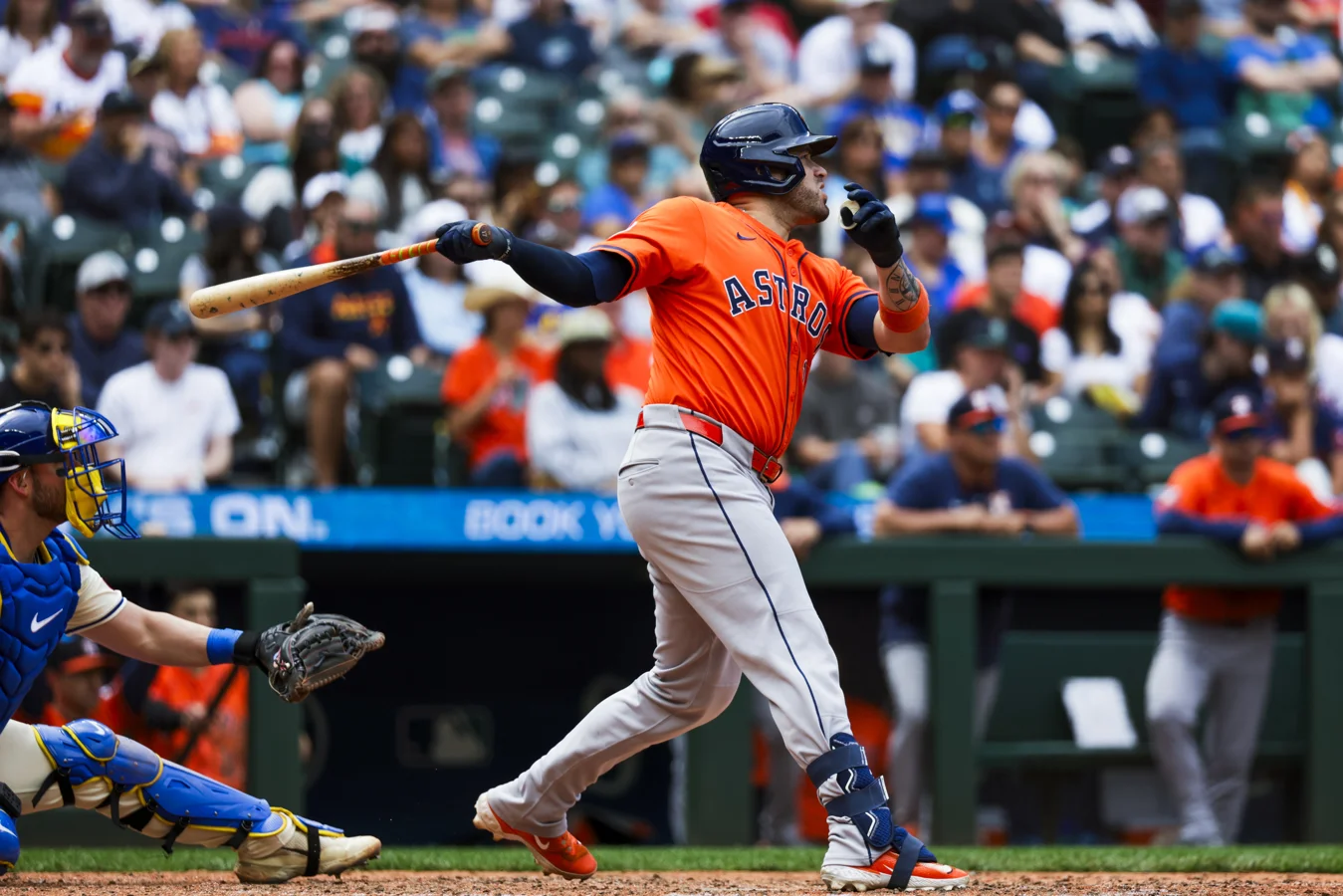
Astros shortstop Brice Matthews, owned in 21% of leagues, has displayed a powerful bat despite striking out 37.5% of the time over his first six major league games. His three home runs, five runs scored, and seven RBIs highlight his potential as a dynamic player.
Matthews provided 10 homers and 25 steals at Triple-A before his promotion and is showing enough promise to remain an asset even when regular shortstop Jeremy Pena returns from the injured list. Matthews’ eligibility at second base further enhances his fantasy value across infield positions.
Impact of Workload Management on Fantasy Pitching Strategies
Drew Rasmussen’s decline underscores a broader trend where teams closely monitor pitchers with injury histories, imposing strict pitch counts and inning limits to preserve their health. While this cautious approach benefits the player’s longevity, it hinders his fantasy contribution by preventing him from pitching deep into games and accumulating the traditional stats fantasy managers covet.
Fantasy baseball owners must adapt by prioritizing pitchers who not only maintain health but who can also consistently reach deeper into games with strong strikeout rates. As Rasmussen’s value diminishes, middle relievers or other starters with greater workloads and strikeout potential may represent better assets.
The Rays’ handling of Rasmussen illustrates the challenging balance between managing real baseball priorities and fantasy expectations, and it presents a cautionary example for fantasy managers relying on promising arms with limited usage caps.