
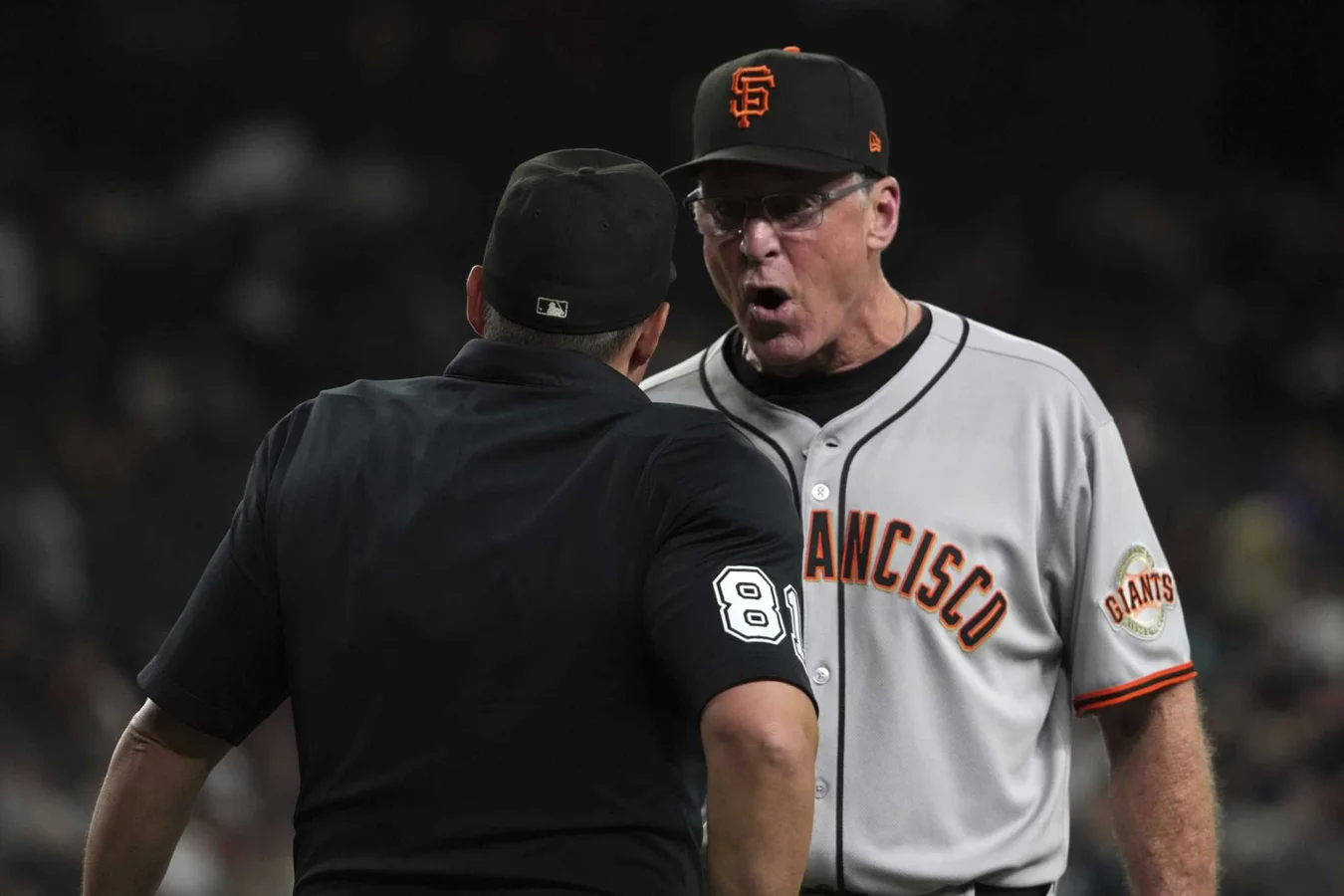

During a recent game between the San Francisco Giants and the Toronto Blue Jays, 42-year-old pitcher Justin Verlander faced a difficult night on the mound. Despite being a future Hall of Famer and widely respected, Verlander struggled once again, lasting only 2.2 innings and giving up multiple hits and runs. The game became even more contentious when umpire Chad Whitson made several questionable strike calls against the Giants, leading to a tense exchange between Verlander and Whitson.
After the disputed calls, Verlander expressed his frustration from the dugout. Whitson responded sharply, saying,
“How about you just worry about getting out of the third inning, huh?”
—Chad Whitson, MLB Umpire
Why Umpire Behavior Matters in High-Pressure Games
Trash talking from umpires is largely considered inappropriate, especially when directed toward players performing at an elite level. Whitson’s behavior drew criticism because his poor calls were the real issue, not Verlander’s difficult outing. More concerning was Whitson’s apparent satisfaction in engaging in verbal sparring instead of maintaining professionalism during the game.
Umpires must focus on their primary responsibility: calling balls and strikes fairly and managing player reactions calmly. While the job involves scrutiny and pressure, escalation through personal jabs undermines the game’s integrity. Verlander, a veteran pitcher with a distinguished career, is not typically known for clashing with officials, which made Whitson’s comments stand out as especially unusual and unprofessional.
The Wider Problem of Umpire Conduct and Calls in Major League Baseball
Chad Whitson is not alone in this behavior; other umpires such as Laz Diaz, Angel Hernandez, C.B. Bucknor, Hunter Wendelstedt, and Marvin Hudson have also faced criticism for errant strikes and confrontational behavior toward players. Such incidents contribute to the growing frustration among fans and players alike, calling into question the role and conduct of human umpires.
This ongoing tension has accelerated the push for technological assistance in baseball officiating. Major League Baseball plans to implement “robo umps” starting in 2026, utilizing automated strike zone technology to reduce human error and limit disputes like the one involving Verlander and Whitson. This technological shift aims to protect the integrity of the sport and minimize ego-driven conflicts on the field.
Our Reader’s Queries
Q. Can Justin Verlander get 300 wins?
A. Given his age and performance patterns, Verlander has almost no chance of hitting 300 career wins. Throughout his outstanding career, from winning Rookie of the Year to his latest Cy Young Award, he averaged 16 wins annually. This does not include the shortened 2020 season.
Q. Has Justin Verlander ever thrown a no hitter?
A. Eighteen years back, Justin Verlander achieved his first of three no-hitters in baseball. Only six pitchers in history have thrown three or more no-hitters.