

Formula 1 is preparing to introduce new regulations in the 2026 season that will prohibit staff from transferring instantly between teams, addressing recent controversies such as Red Bull’s rapid promotion of Laurent Mekies from its junior team Racing Bulls. This development follows Mekies’ immediate appointment to replace Christian Horner as Red Bull’s team principal right after the British Grand Prix.
Red Bull’s swift internal staff change has highlighted concerns about fairness and competitive balance, prompting governing bodies to reconsider how personnel movements are regulated across the paddock. The fresh F1 staff transfer ban rules aim to formalize mandatory waiting periods to protect intellectual property and sporting integrity.
Concerns Over Team Relationships and Intellectual Property Protection in F1
Formula 1 teams traditionally maintain cautious relationships with rivals, often cooperating only on limited technical levels—like Ferrari’s connection with Sauber or Mercedes’ collaboration with Williams. Red Bull and Racing Bulls, however, stand as an exception due to shared ownership, allowing easier and faster staff transitions between them.
Teams heavily safeguard their intellectual property using strict security measures enforced by regulations. A notable incident occurred in 2007 when McLaren faced a $100 million fine and a championship ban for illegally holding Ferrari designs. While physical and data transfers face strict controls, there is no way to fully restrict the expertise and knowledge an individual carries when moving teams.
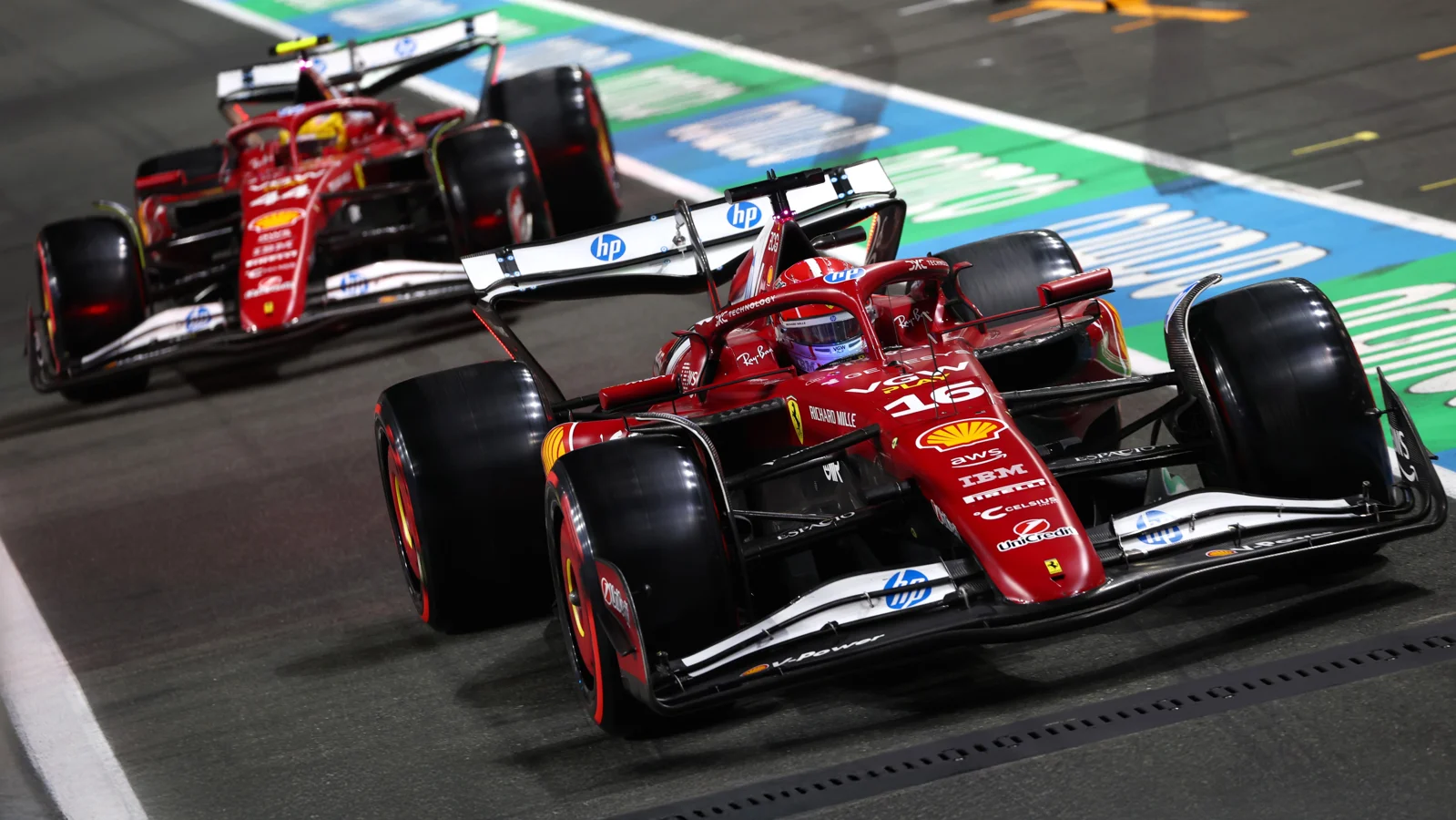
To mitigate risks associated with staff transitioning, most teams enforce a “gardening leave” period, where personnel sit out for six to twelve months before joining a competitor, reducing any competitive advantage from recent insider knowledge. Exceptions exist, such as Jonathan Wheatley moving straight from Red Bull to Sauber, or James Vowles transferring without delay from Mercedes to Williams.
For instance, Alpine’s new managing director Steve Nielsen, previously with Formula One Management, must wait three months after his official announcement before joining the team, exemplifying the current approach to limit information transfer. Conversely, Red Bull bypassed this safeguard by promoting Mekies internally from Racing Bulls, reigniting concerns about the disparity between team structures within the paddock.
Why Red Bull’s Mekies Move Sparked a Call for Clearer Transfer Regulations
While Mekies’ immediate promotion did not violate existing rules, it amplified debate over the competitive fairness of permitting rapid staff transfers between linked teams. This situation exposed a loophole that does not exist for most other teams, which lack the ability to reassign personnel instantly due to independent ownership models.
The FIA and others in Formula 1 have long been uneasy with such practices, and Mekies’ advancement appears to have pushed discussions toward regulatory action. Reports suggest new guidelines will introduce formal gardening leave requirements into the operational section of the 2026 regulations, bundled under Section F, which integrates sporting, technical, and financial rules into one comprehensive document.
This unified regulatory framework will provide clarity and enforce restrictions aimed at ensuring equitable competition while addressing longstanding paddock concerns about knowledge sharing through personnel movements.
The Status of Red Bull’s Dual-Team Ownership and Its Effects on Staff Movement
Red Bull stands alone in Formula 1 as the only organization with ownership of two teams competing against each other: Red Bull Racing and Racing Bulls. This unique structure makes personnel transfers between its teams far simpler compared to independent outfits, stirring disapproval from rival owners and team principals.
Christian Horner, Red Bull’s team principal until his recent departure, maintained in early 2024 that
“The two teams are totally separate.”
He elaborated that one team is based in Italy and the other in the UK, and they operate with different cultures and personalities, all while remaining compliant with the regulations.
“The two teams are totally separate,”
—Christian Horner, Red Bull Team Principal
“Indeed, the relationship is far less tight than some of the teams that enjoy very tight relationships with their engine manufacturer.”
—Christian Horner, Red Bull Team Principal
Despite these assertions, operations between Red Bull and Racing Bulls have become increasingly intertwined, especially as Racing Bulls expanded its UK facility in January. Peter Bayer, CEO of Racing Bulls, admitted the team’s enhanced processes and added personnel had a significant impact on their 2025 car development.
“I think the biggest effect on the 2025 car is probably some of the changes we’ve made to our processes – some of the people we have managed to add to certain areas where we want to be stronger,”
—Peter Bayer, Racing Bulls CEO
This closer relationship between the two teams contrasts with the rest of the Formula 1 grid, which operates under independent ownership without such immediate shared staffing advantages.
McLaren’s Objection to Shared Ownership Points to Broader Sports Context
McLaren CEO Zak Brown has openly criticized the idea of dual team ownership in Formula 1, arguing it undermines competition. Brown highlighted that no major sport allows two teams competing at the highest level to be co-owned by the same entity, considering it an anomaly in professional sports.
“No other major sport, to my knowledge, allows co-ownership of the two teams that compete against each other,”
—Zak Brown, McLaren CEO
Christian Horner countered by drawing comparisons with football, where multi-club ownership is common, involving many top-tier European teams. He emphasized Red Bull’s commitment to the sport, which began in 2005 when the company acquired the struggling Minardi team to save it from bankruptcy. Horner underlined Red Bull’s role in sustaining two teams through financial crises and the COVID-19 pandemic, contributing to Formula 1’s continued growth.
“Then COVID where Red Bull once again stepped up and stuck by both teams,”
—Christian Horner, Former Red Bull Team Principal
“So the commitment that Red Bull has made to Formula 1, the commitment that Red Bull has made for these two teams, is outstanding and should be applauded and be grateful for rather than be derided and try to compromise.”
—Christian Horner, Former Red Bull Team Principal
Previous Examples of Staff Transfers Among Affiliated Teams Stress the Need for Clear Rules
Red Bull’s Mekies case echoes past instances where staff moved quickly between linked teams, prompting ongoing debate on the subject. For example, in 2021, Simone Resta shifted from Ferrari to Haas, two teams with a close technical relationship forged by design collaboration and shared infrastructure at Haas’ Maranello facility near Ferrari’s headquarters.
At the time, Ferrari’s team principal Mattia Binotto clarified the separation between the organizations during Resta’s transition, emphasizing compliance with regulations and limitations on information sharing.
“Those persons will be in Maranello in a completely separate building to Scuderia Ferrari, so they will not have access to the Scuderia Ferrari building,”
—Mattia Binotto, Former Ferrari Team Principal
“It’s not a junior team and we are not exchanging information beyond what’s possible by the regulations, so it’s a completely different organisation independent to Ferrari.”
—Mattia Binotto, Former Ferrari Team Principal
Resta’s move was accompanied by a small number of engineers transitioning to Haas as part of organizational restructuring related to the budget cap, reinforcing Haas’ technical strength.
“If I have to reduce my organisation, I’m certainly more happy to know that those guys are joining Haas and reinforcing their team instead of being simply on the market or available to whatever other teams,”
—Mattia Binotto, Former Ferrari Team Principal
“We tried to create new synergies with our customer teams looking to the future,”
—Mattia Binotto, Former Ferrari Team Principal
“You have seen recently, for example, a technical senior person like Simone Resta has moved into the Haas organisation (in) an important and significant role.”
—Mattia Binotto, Former Ferrari Team Principal
“He is not the only one who will move into the Haas organisation. A few other technicians will move, reducing our organisation which is required for the budget cap, but strengthening somehow the organisation of our customers and I would say partner teams.”
—Mattia Binotto, Former Ferrari Team Principal
How the Upcoming Staff Transfer Ban Could Impact F1 Competition and Operations
Introducing staff transfer restrictions with formal gardening leave provisions will standardize practices across all teams, ensuring no organization enjoys an undue advantage by instantly deploying key personnel from a related team. This is critical as knowledge and experience are invaluable competitive assets that cannot be governed by intellectual property rules alone.
Formalizing these protections within the 2026 regulations will help preserve sporting integrity, create fairer competition, and address long-standing paddock concerns. Teams that lack shared ownership structures will benefit from a level playing field where knowledge transfer is reasonably controlled.
Overall, this move signals Formula 1’s commitment to evolving governance in response to emerging challenges around team dynamics, ownership models, and technical collaboration. The effectiveness of the new rules will be watched closely by teams, fans, and officials, shaping the competitive landscape well into the future.
Our Reader’s Queries
Q. Is number 13 banned in F1?
A. Yes, using number 13 is okay. Pastor Maldonado picked #13 when F1 started the permanent numbering system in 2014. Although some cultures view it as unlucky, F1 allowed drivers to choose their own numbers.
Q. Which F1 driver has ADHD?
A. Lewis Hamilton’s experiences with ADHD and dyslexia have significantly influenced his journey both in racing and in life. His achievements show a new way of thinking about success in Formula 1 and highlight the importance of recognizing learning differences.
Q. Is 69 allowed in F1?
A. F1 racing rules let drivers pick a permanent number between 2 and 99. Number 17 is not available to choose.