
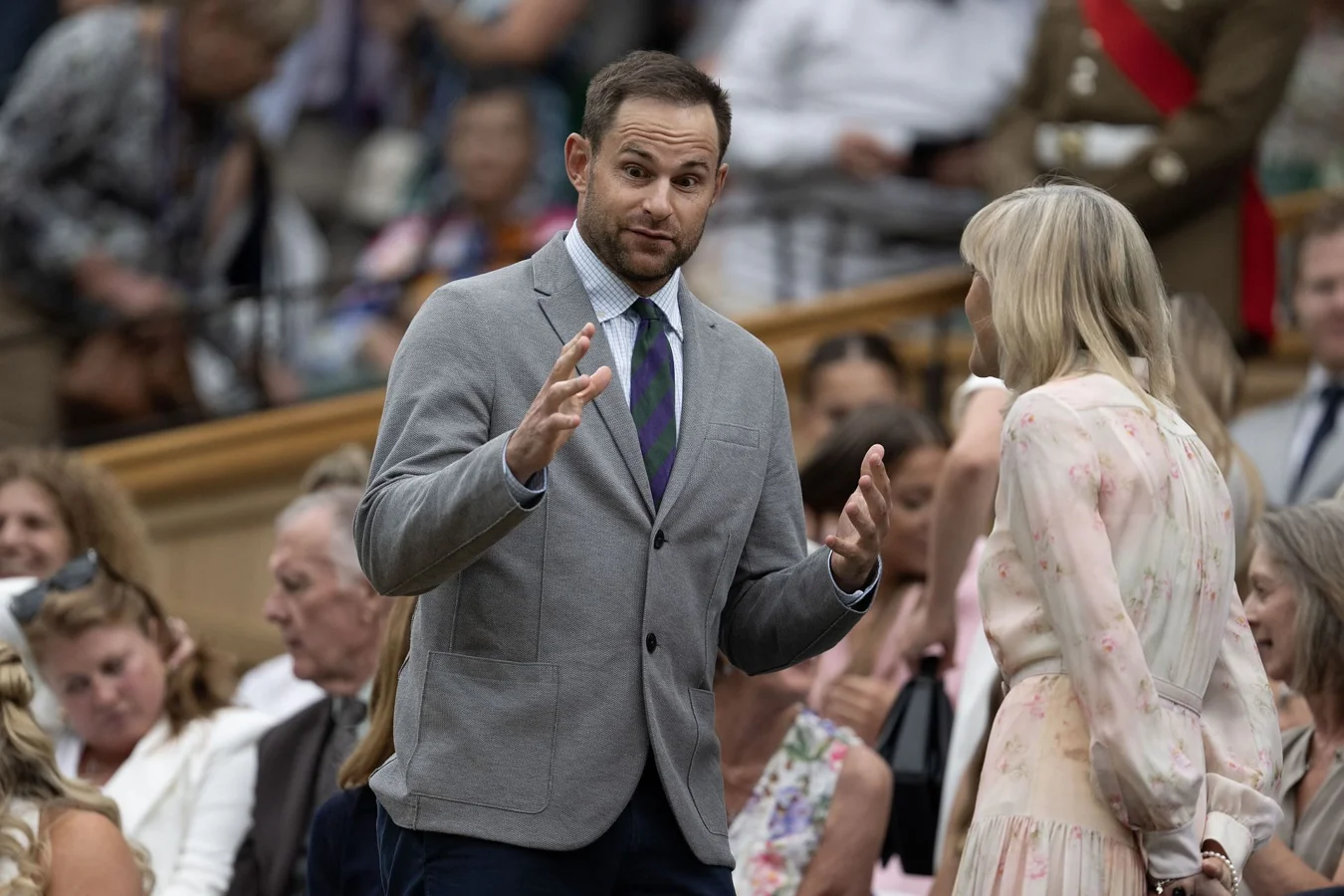

Former world number one Andy Roddick recently shared his perspective on the ongoing debate about whether women’s Grand Slam tennis matches should switch to a best-of-five sets format from the quarterfinal stage onwards. Currently, male players compete in best-of-five sets while women play best-of-three in Grand Slam tournaments. Roddick addressed this topic in response to a fan’s question, bringing forward medical and structural concerns that complicate such a change.
Roddick emphasized that women face specific physiological challenges, particularly those related to menstruation, throughout the demanding two-week schedule of Grand Slam events. He suggested that ignoring these factors when considering a uniform match format overlooks important realities faced only by female athletes.
On his show Served with Andy Roddick, he stated,
“That buzz ain’t going anywhere. That’s just chatter. There are things that women go through—and most likely a lot of them are going through at some point over the course of a two-week event—that men don’t have to go through. That gets left out of every argument, and rolling the dice on when that happens is insane.” —Andy Roddick, Former World No. 1
In addition, Roddick expressed concerns about altering match formats mid-tournament, noting it could unfairly influence the competition by demanding a longer match just before major rounds like the final. He remarked,
“I don’t like starting a tournament in one format and finishing it in another format. You get to the final and they go, ‘Oh, well, I know you’ve had a long week, but here, let’s play seven hours before we go to a Grand Slam.’ That doesn’t define the best players.” —Andy Roddick, Former World No. 1
“I think it completely changes the dynamic of what has already been accomplished in that slam up until that point,” he added. —Andy Roddick, Former World No. 1
Other Tennis Figures Offer Perspectives on Implementing Best-of-Five for Women
Roddick’s views align with a wider conversation among tennis players and experts regarding the prospect of women adopting best-of-five set matches in Grand Slam tournaments. His former rival, British tennis star Andy Murray, also shared his thoughts during an interview with the New York Times. Murray distinguished the formats by comparing them to different athletic events, explaining that playing five sets demands greater physical endurance compared to three sets.

“It isn’t about it being inferior. As I see them, they’re two different sports. It’s just because we play five sets. I’m not saying the men work harder than the women, but if you have to train to play five sets, it’s a longer distance. It’s like someone training to be a 400-meter runner and someone training to be a 600-meter runner. I think the women should play best-of-five sets.” —Andy Murray, Tennis Star
“[Maybe] it doesn’t have to be from the first rounds,” he added. “I think either the men go three sets or the women go five sets. I think that’s more what the guys tend to complain about, rather than the equal prize money itself.” —Andy Murray, Tennis Star
Women’s tennis legend Martina Navratilova has also publicly supported the idea of best-of-five sets for women, asserting that female players possess the capacity to endure the longer format. She receives backing from other prominent players, including former Grand Slam winners like Amélie Mauresmo and other Wimbledon champions.
The Debate’s Implications for Women’s Tennis and Tournament Formats
The discussion about adapting women’s Grand Slam matches to a best-of-five format reflects broader questions around gender equality and competitive fairness in tennis. While some argue that equalizing match length would address perceptions of disparity, others raise concerns about players’ health, biological factors, and consistency throughout tournaments. Roddick’s comments, highlighting the challenges related to menstruation, add a layer of complexity to the debate that is often overlooked.
Should changes be pursued, tournament organizers would face the challenge of balancing player welfare with fairness and fan expectations. The ongoing dialogue among players, experts, and fans is expected to influence how women’s tennis evolves competitively in the near future, potentially reshaping training approaches and tournament scheduling.