
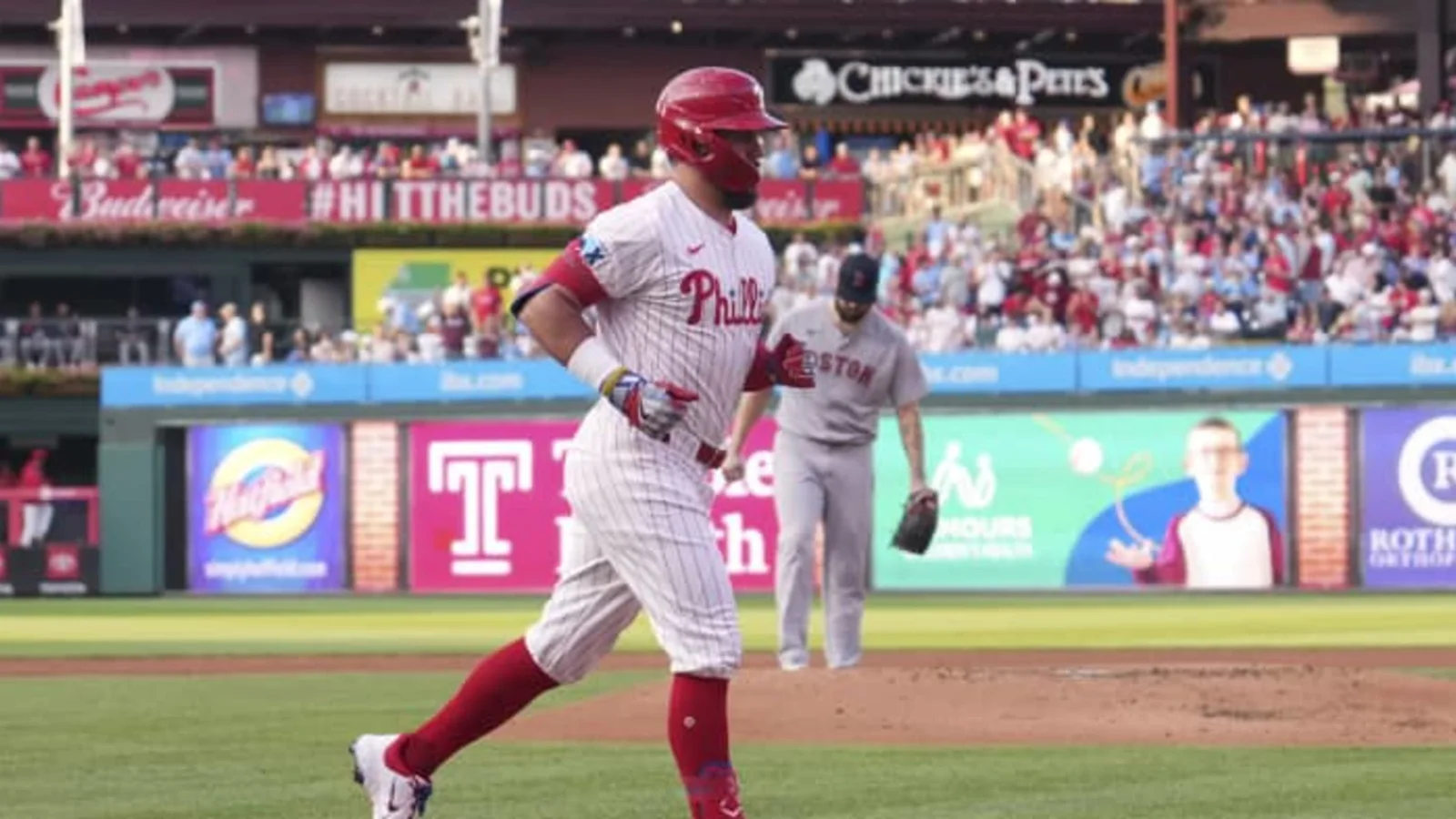

The Philadelphia Phillies secured a series win over the Boston Red Sox on Wednesday, fueled by first baseman Bryce Harper reaching a significant career milestone by hitting his 350th home run. In a tightly contested game that extended into extra innings, Harper launched a 439-foot home run into right field early in the first inning, following a two-run homer by teammate Kyle Schwarber. This achievement makes Harper the youngest active player in Major League Baseball to reach 350 home runs, highlighting his sustained offensive excellence.
Harper’s Impact Since Joining the Phillies
Originally the No. 1 overall draft pick by the Washington Nationals, Harper has emerged as one of Philadelphia’s most impactful acquisitions since signing a $330 million contract following the 2018 season. Over 800 games with the Phillies, he has contributed 166 home runs and nearly 500 runs batted in, despite missing a large part of the 2022 season due to injury that required Tommy John surgery. His ability to bounce back from this setback underscores his resilience and value to the team.
Career Overview and Performance Metrics
Bryce Harper’s Major League debut came in April 2012 with the Nationals, for whom he spent roughly half of his career. During that time, he hit 184 home runs in their uniform, accounting for over half of his career total. Over 1,700 games played, Harper has maintained a robust batting line of .281/.389/.521, with an on-base plus slugging (OPS) exceeding .900. His consistency is further marked by surpassing 1,000 in both runs batted in and walks, showcasing his balanced offensive skill set beyond just power hitting.
Recent Surge as Phillies Aim for Playoff Position
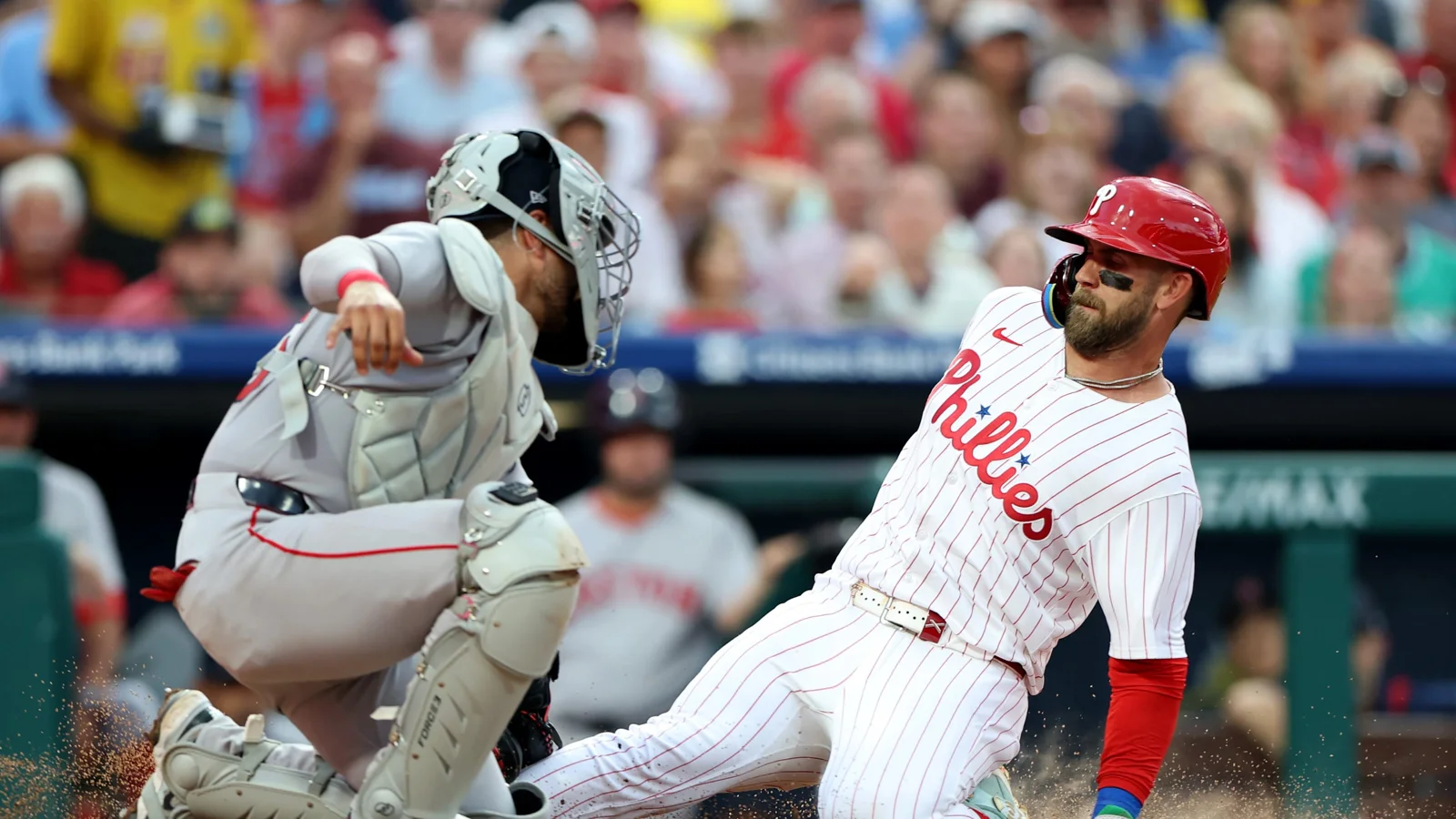
Although Harper’s overall performance this season has been somewhat below his usual standards, he has shown signs of regaining form at a critical juncture. Over his last 15 games, he has raised his slash line to .328/.418/.741, boosting his OPS above 1.000. This timely upswing could provide the Phillies with a much-needed offensive spark as they chase their 60th win of the season. Currently standing at 58-44, the Phillies find themselves only a half-game behind the New York Mets in the National League East division.
Upcoming Challenges in July Road Trip
Philadelphia will soon embark on a pivotal road trip, facing the New York Yankees and Chicago White Sox to close out July. This stretch will be crucial as the Phillies seek to build momentum heading into the later part of the season. Harper’s form and leadership will be integral during this period, as the team attempts to strengthen its position in a competitive division.
Looking Ahead: Harper’s Role and Team Prospects
Bryce Harper’s milestone not only marks a career highlight but also signals his ongoing influence within the Phillies roster. His power and veteran presence come at a valuable time, with the organization poised to capitalize on his resurgence. As Philadelphia continues to pursue postseason success, Harper’s ability to deliver in key moments could help determine the team’s ultimate trajectory this year.
Our Reader’s Queries
Q. Why did Bryce Harper choose 3?
A. Harper decided to wear the No. 3 with his new team because the Phillies were thinking about retiring his old Nationals number, 34, to honor Roy Halladay.
Q. Why was Bryce Harper so hyped?
A. Bryce Harper was the most talked-about baseball prospect I can remember. At 16, people called him the Lebron James of baseball. By the time the Washington Nationals picked him in the 2010 draft, he already had a legendary reputation. At 15, he hit 500-foot home runs, and at 16, he could throw 96 MPH.
Q. Why is Bryce Harper number 3?
A. Harper picked the No. 3 jersey for the team because the Phillies were thinking about retiring No. 34 for Roy Halladay. At his first press conference, Harper accidentally said, “We want to bring a title back to D.C.”
Q. Why did Bryce Harper get kicked out?
A. After the game, crew chief Vic Carapazza explained to reporters that the helmet spike greatly contributed to the ejection. Carapazza mentioned, “Bryce Harper was visibly upset about the pitches, and Brian showed a lot of patience.” He continued, “Brian allowed him to stay in the game, but Bryce continued arguing about the calls.”