
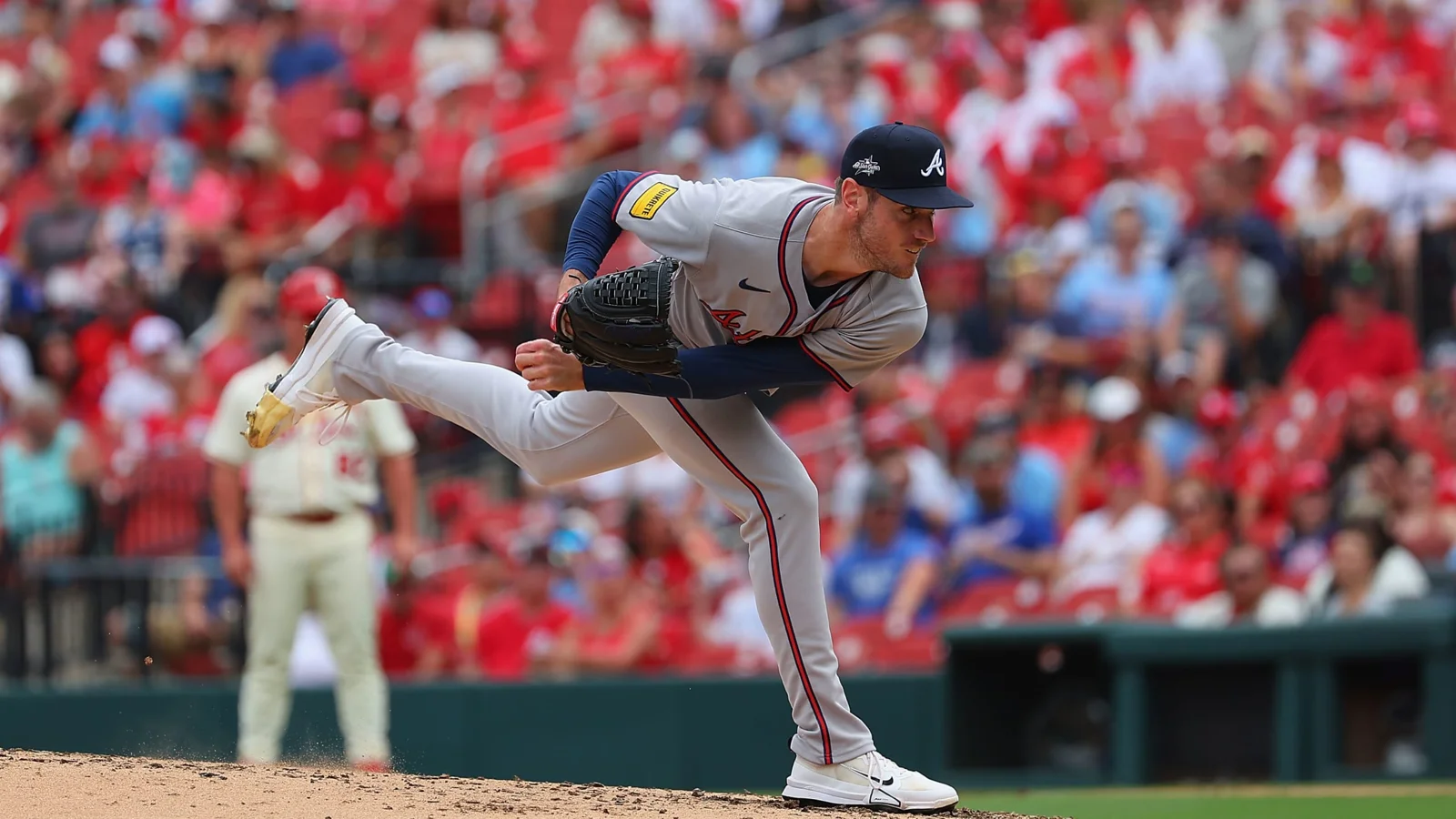

Joey Wentz’s pitching performance analysis reveals a surprising turnaround since joining the Atlanta Braves in 2025. Despite a career marked by inconsistency and injury setbacks, Wentz has recently demonstrated impressive results, particularly in his appearances against the St. Louis Cardinals and New York Yankees. After struggling with a 5.71 ERA over 246.2 innings elsewhere, his performances for the Braves have raised questions about whether this progress is sustainable or just a temporary surge.
From Early Setbacks to a New Opportunity in Atlanta
Drafted 40th overall by the Braves in 2016, Joey Wentz was traded away in 2019 in exchange for reliever Shane Greene. His career since then has been turbulent, including designations for assignment by the Detroit Tigers, Pittsburgh Pirates, and Minnesota Twins. Before rejoining the Braves in 2025, Wentz posted a 6.88 ERA across 34 innings. However, in seven innings with Atlanta, he impressively lowered his ERA to zero, showcasing a distinct transformation in his pitching approach.
Adjustments in Pitch Selection and Mechanics
Wentz’s cutter, once a pitch that filled the strike zone ineffectively at an average speed of 86.7 MPH, has evolved significantly. While with the Pirates and Twins, he relied heavily on this cutter, which hitters capitalized on during the 2023 playoffs, resulting in an .859 OPS against him. His cutter’s spin rate has increased by 125 RPM, now averaging 2,609 RPM, driving a remarkable 46.4 percent whiff rate. Importantly, he has shifted to throwing the cutter first nearly half the time at 49.6%, markedly up from 33.4%, creating a more effective fastball-cutter combination with occasional curveballs.

Improved Curveball Usage Results in More Misses
The curveball has also become a more dominant part of Wentz’s arsenal, with better location below the strike zone leading to higher strikeouts and ground balls. Notably, only one hit against the curveball came from Paul Goldschmidt, who managed a softly hit ball at 67.7 mph that found a gap. This represents a substantial improvement, as the pitch now induces weak contact or misses more frequently than it did in earlier seasons.
Previous Fastball Issues That Led to Demotion
Wentz’s prior struggles primarily stemmed from his fastball, which averaged 94 MPH but was often poorly located, resulting in a dismal 1.133 OPS against when hit. This flaw led to his removal from starting rotations and eventual designation for assignment. The fastball’s tendency to sit in the middle of the strike zone allowed hitters to capitalize, ultimately derailing his earlier major league stints.
Offseason Revamp of the Four-Seam Fastball
According to Chris McCosky of The Detroit News, the key to Wentz’s recent improvement has been a revamped four-seamer fastball rather than overpowering velocity. By raising the axis point on his fastball, Wentz added approximately four inches of vertical break. This modification gave his fastball more “ride” through the strike zone and created vertical separation from his secondary pitches, making him less predictable and more effective.
“They also identified why his 94-mph fastball was so hittable…. The difference-maker has been his renovated four-seamer. Not so much because it’s been an overpowering pitch, but because his ability to locate it and use it at the top of the strike zone is setting up his three secondary pitches. Wentz this offseason raised the axis point on his fastball and that created four extra inches of vertical break. Which resulted not only in more ride through the strike zone, it created vertical separation between his fastball and secondary pitches. The result: He’s not throwing dead-zone fastballs like he was last season. The numbers show a very different pitcher — 30% hard-hit rate, .200/.302/.236 opponent slash line, 47% ground ball rate, 31% chase rate, 30% whiff rate.”
—Chris McCosky, The Detroit News
Improved Control, But Challenges Remain
Though Wentz’s control and overall pitching metrics improved, sustaining this level of performance in a relief role proved difficult. Earlier in 2025, his fastball often drifted into the “meatball” zone—over the heart of the strike zone—a habit that cost him consistency. Since joining the Braves, however, his fastball placement has changed, now targeting higher and inside spots to right-handed hitters and moving away from lefties, helping him avoid past issues.
The High Stakes of Relying on a Pitcher in Transition
Longtime baseball followers often approach pitchers with inconsistent minor league-to-major league transitions, like Wentz, with caution. The Braves experienced similar frustrations in the mid-2010s with pitchers who exhibited strong pitches but lacked control, leading to unstable performances. Wentz’s revamped pitching style offers hope that he can avoid slipping back into the “Quad-A” player category, which describes a borderline major leaguer who excels in Triple-A but struggles to establish himself in the big leagues.
What Wentz’s Transformation Means for the Braves
Joey Wentz’s improved pitching arsenal represents a notable asset for the Braves’ rotation and bullpen, especially amid injury concerns. If he can maintain his upgraded fastball and cutter mechanics while keeping his curveball effective, he might solidify a steady role rather than a temporary fix. The Braves’ coaching staff will likely continue focusing on fastball location and pitch sequencing to prevent regression into previous struggles.
Looking Ahead: Can Wentz Sustain This Level?
The question now centers on whether Joey Wentz can keep up his breakthrough pitching performance analysis and avoid reverting to past mistakes. His revamped approach has generated impressive statistical indicators, but the long-term test will be consistency across a full season. If he can stay healthy and command his refined pitches, Wentz could emerge as an unexpectedly reliable arm for the Braves, turning a once precarious career trajectory into a sustained success story.