


Nearly a year ago, the New York Knicks completed a major trade to acquire Karl-Anthony Towns from the Minnesota Timberwolves. The Karl-Anthony Towns Knicks trade was highly anticipated, as Towns, the No. 1 overall pick in the 2015 NBA Draft, had spent nine seasons with Minnesota and reached the Western Conference Finals in his final year with the Wolves.
Since the trade, both the Knicks and Timberwolves have returned to the Conference Finals this season. However, opinions on how the deal has panned out for New York are mixed, with some experts offering critical assessments of the team‘s performance with Towns.
Assessing Team Performance and Player Synergy Post-Trade
Bleacher Report analyst Grant Hughes gave the Knicks a grade of C- when evaluating the trade one year later. He noted that while the team posted a positive net rating and strong offensive numbers overall, the on-court chemistry between Towns and fellow star Jalen Brunson weakened significantly during the playoffs.
Last season, the Knicks posted a plus-5.2 net rating with a 119.5 offensive rating overall, and both numbers were markedly better when Towns shared the floor with [Jalen] Brunson…right up until the playoffs. Against dialed-in opponents, the modest in-season synergy between the Knicks’ top two offensive players nearly disappeared while the defense got even worse. Teams spammed pick-and-roll sets those two couldn’t cover, exposing a concerning postseason frailty,
Hughes wrote.
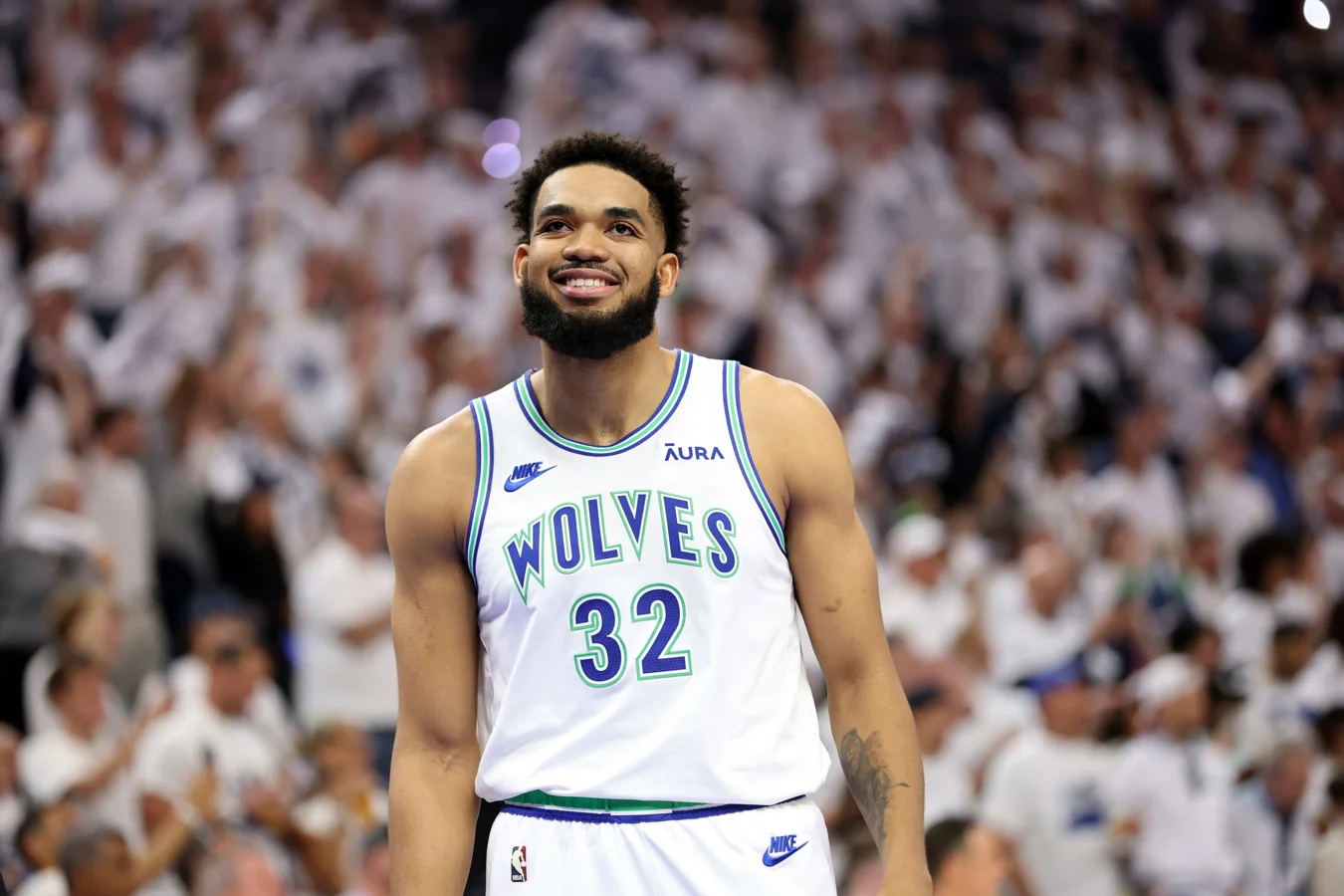
Towns and Brunson, together, didn’t add up to more than the sum of their parts. New York was better with one or the other playing solo in the postseason than it was with both sharing the floor.
These observations point to challenges in maximizing the potential of the Knicks’ key players as a duo during high-pressure situations. Defensive vulnerabilities and a lack of effective teamwork in crucial moments have raised questions about the long-term benefits of the trade.
Financial Commitments and Future Implications for the Knicks
The financial aspect of the deal also complicates the Knicks’ position. Towns is under contract for three more seasons with escalating salaries, including $53.1 million next year, $57.1 million in 2026-27, and $61 million in 2027-28. This sizable contract may be difficult to trade if the team decides to adjust its roster moving forward.
Towns’ deal—which pays him $53.1 million next year, $57.1 million in 2026-27 and $61 million in 2027-28—might now be among the hardest to move in the league.
Given the heavy investment in both Towns and Brunson, the Knicks are counting on these two to develop into the franchise’s main pillars. However, with Towns’ contract stretching into the late 2020s and Brunson possibly nearing the end of his prime by then, the team faces pressure to find success soon.
The Knicks’ need for Towns to elevate his performance and improve on-court fit has become critical in justifying the trade’s value and guiding the franchise’s strategic decisions in the near future.
Outlook for the Knicks Amid Ongoing Roster Developments
While the Karl-Anthony Towns Knicks trade remains one of the most significant moves for New York in recent seasons, its mixed results have sparked debate on the team’s direction. The Knicks’ ability to overcome defensive weaknesses, enhance player chemistry, and satisfy the financial demands of Towns’ contract will be key factors in determining their competitive trajectory.
As the playoffs continue and new developments emerge, observers will be watching closely how coach Mike Brown integrates Towns and Brunson in the quest for postseason victories and longer-term success in the NBA.
Our Reader’s Queries
Q. What is Karl-Anthony Towns 3 point percentage?
A. Throughout his career, Karl-Anthony Towns has successfully made 40% of his three-point shots.