
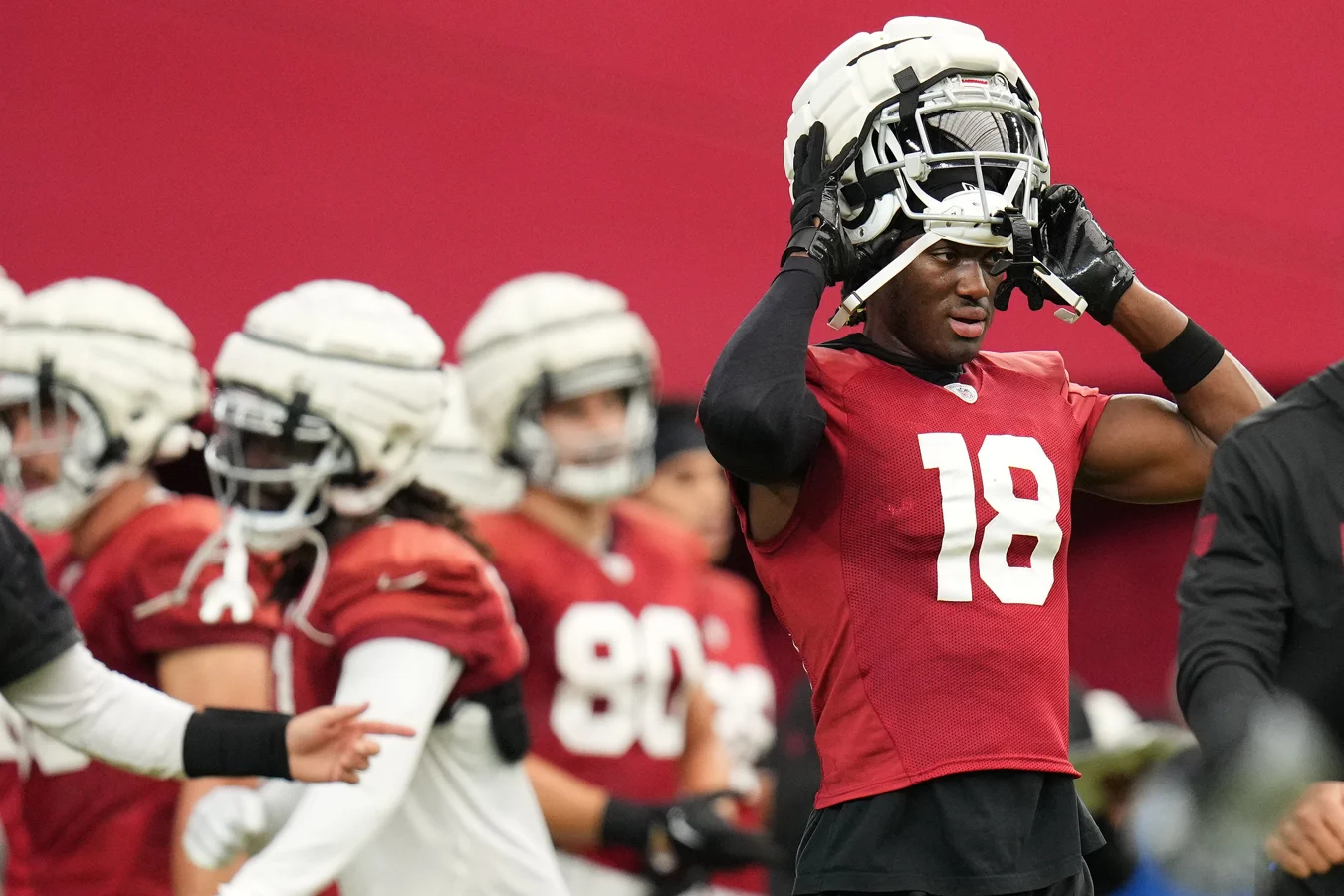

Marvin Harrison Jr. Year 2 holds significant promise after a rookie season that fell short of the lofty expectations placed on him. Selected as one of the most highly regarded wide receiver prospects in recent <a href=”https://www.buzzineintl.com/category/football/nfl/”>NFL drafts, Harrison entered the league anticipated to make an immediate and impactful contribution for the Arizona Cardinals. Instead, his debut was solid, yet inconsistent, leaving room for growth in the upcoming season.
During his first year, Harrison recorded 62 receptions for 885 yards and tallied eight touchdowns. While these numbers demonstrate potential, deeper metrics reveal challenges: his catch rate stood at a modest 53.4%, and his yards per route run averaged just 1.74, ranking him 75th among NFL receivers. Furthermore, Harrison struggled to maintain a consistent presence in Arizona’s offense, occasionally disappearing during games despite his evident skill set.
His performance lagged behind several rookie receivers drafted after him, including Malik Nabers, Brian Thomas Jr., and Ladd McConkey. In a class that many viewed as one of the strongest in recent memory, Harrison’s output appeared somewhat underwhelming in comparison.
I’m not going to lie and say I don’t pay attention to it,
Harrison admitted,
You’ve got to run your own race, though. Everyone is in different situations. Everyone has different journeys. You have to focus on yourself.
—Marvin Harrison Jr., Wide Receiver
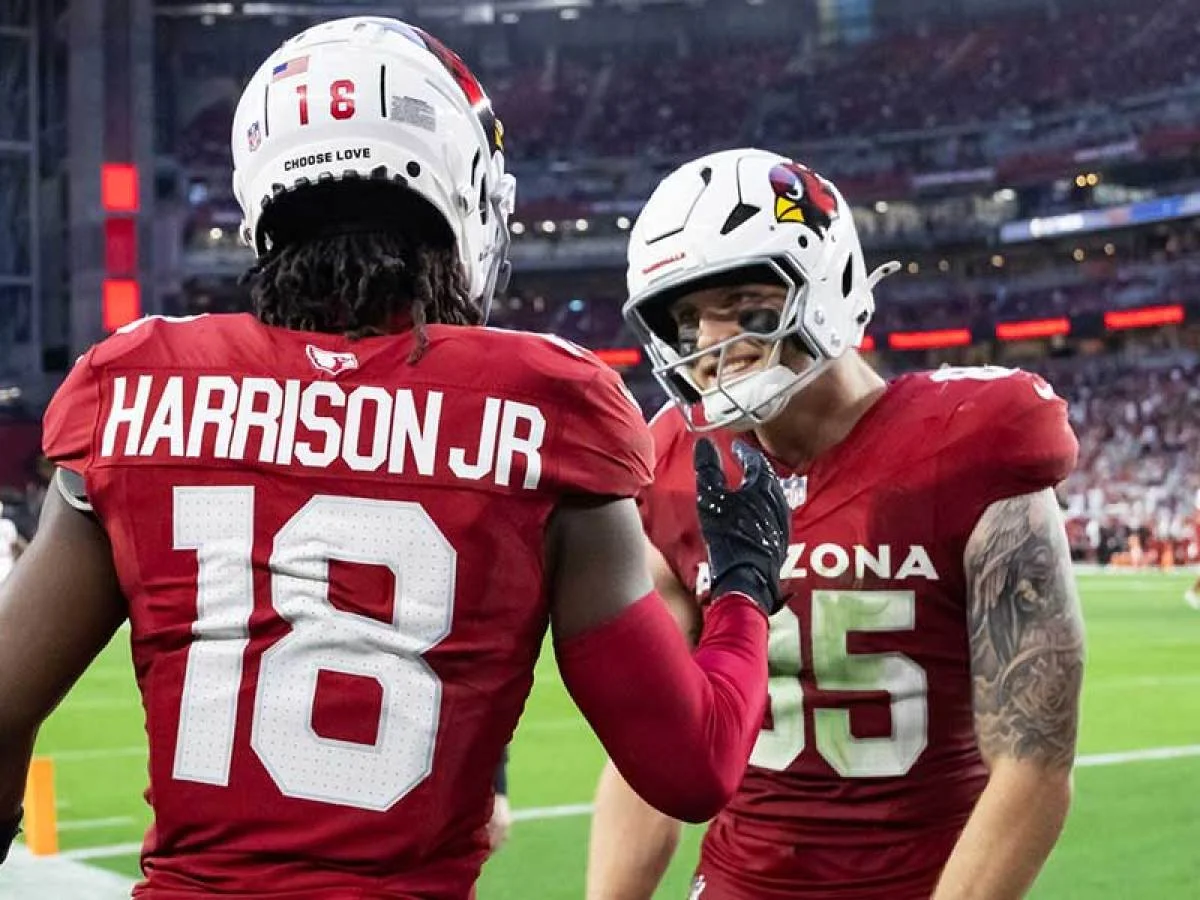
Key Areas Where Harrison Can Elevate His Game
Harrison’s struggles in creating separation from defenders were stark. Data from NFL Pro showed that he averaged only 2.0 yards of separation on his targets, placing him last among 84 qualified receivers. This lack of space forced him to rely on contested catches far more frequently than is ideal.
Out of 116 targets in 2024, 40 occurred with less than a yard of separation—the highest such number in the NFL. Harrison’s production on these tight-window opportunities was underwhelming: he managed just 12 catches for 170 yards and posted a notably negative catch rate compared to expectations.
This underperformance stemmed in part from a lack of physical assertiveness. Harrison often allowed defenders to position themselves over the ball rather than using his body to shield the defender, which limited his ability to finish contested receptions or draw pass interference calls in his favor.
Now standing at 220 pounds, up from 209 last year, Harrison’s increased size should empower him to be more physical at the catch point and better withstand coverage pressure. However, he also experienced challenges with ball tracking and timing—the subtleties needed to synchronize with quarterback Kyler Murray on route nuances, such as shoulder throws and jump balls. Enhancing these areas will be critical for Harrison to fulfill his role as a leading receiver.
Given his stature and skill set, Harrison is expected to remain the Cardinals’ primary X receiver, which demands precision in route running, timing, and contested catch situations. Improving these dimensions will unlock his ability to maximize his impact in that position.
Opportunities for the Cardinals to Optimize Harrison’s Usage
The Cardinals’ offensive scheme in Harrison’s rookie year arguably limited his ability to generate separation and easier catch opportunities. For 2025, there is considerable potential for Arizona to adjust their approach to better highlight Harrison’s strengths and increase his productivity.
A key adjustment would be to diversify Harrison’s alignment on the field. The Cardinals frequently deployed him as the X receiver on the wide side, but Harrison can be more effective if moved around the formation. He has shown success both on and off the line of scrimmage, and increasing his snaps in the slot could create favorable matchups. In 2024, Harrison caught 19 of 28 targets when lined up in the slot, compared to only 43 receptions from 88 targets when positioned outside. This aligns with his collegiate performance, where he averaged more yards per route run inside the slot, though on fewer routes.
Varying his positioning would make Harrison less predictable and likely yield easier catches by confusing defenders and finding advantageous matchups.
Additionally, the types of routes Harrison runs should be expanded. Last season, he ran a high percentage of complex or deep routes—go routes, posts, corners, and crossing patterns—that require high difficulty to complete consistently. These accounted for nearly half of his routes, reflected by his 12th-highest average route break distance among those running more than 100 routes.
The Cardinals could increase his involvement and overall efficiency by incorporating more short to intermediate routes, such as slants, hitches, and receiver screens. These plays better suit his size and strength, enabling him to gain yards after the catch and help sustain drives. Although screen passes were not a significant part of his college usage, the increased use of shorter, more manageable routes would likely improve his catch rate and contribution to the offense.
Reducing the reliance on contested fades and jump balls, which he struggled with last season, will likely boost both his confidence and statistics.
Looking Ahead: Harrison’s Role in the Cardinals’ Offense Moving Forward
Marvin Harrison Jr.’s Year 2 will be pivotal in determining whether he can emerge as the elite wide receiver the Arizona Cardinals envisioned when drafting him. His physical growth from 209 to 220 pounds and self-reported improvements in speed and power set the stage for a breakthrough, but he must refine his technique in contested catch scenarios and improve his chemistry with Kyler Murray.
For the Cardinals, unlocking Harrison’s full potential will depend largely on how creatively and strategically they deploy him within the offense. Expanding his role beyond the traditional X receiver spot, varying his route tree, and focusing on easier catch opportunities will not only help Harrison build consistency but also boost the overall efficiency of Arizona’s passing game.
If these changes are implemented alongside Harrison’s natural development, 2025 could mark the season when he transforms from a good rookie into one of the league’s most dangerous and reliable wide receivers, reshaping the Cardinals’ aerial attack.