
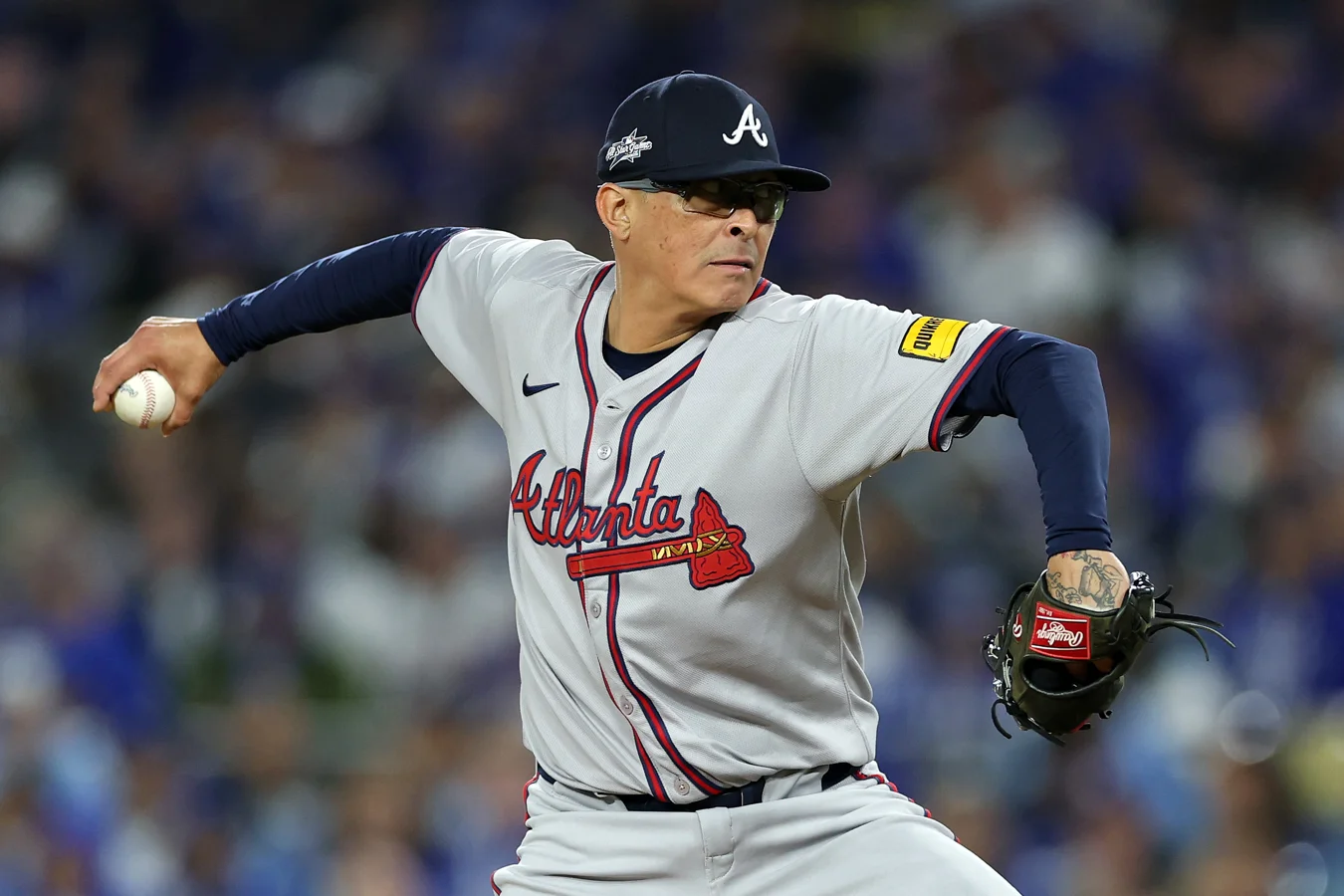

In baseball, a swing-and-miss represents the ideal outcome for a pitcher because it prevents the ball from being put into play and advances the count favorably. Pitchers who maintain multiple pitches with above-average whiff rates generally produce strong strikeout numbers. This season, only eight starting pitchers have multiple pitches that generate whiffs over 40% of the time. Among these, standout strikeout pitchers like MacKenzie Gore lead with three elite whiff pitches, while two pitchers—groundball specialist José Soriano and rookie Cade Horton—surprise with much lower strikeout rates despite their ability to induce swings and misses.
Lowering the benchmark to pitches with whiff rates exceeding 30% reveals 18 starters who have three or more such effective pitches. Soriano remains an outlier in this expanded group, joined by rookies and veterans alike. Typically, pitchers with several whiff-producing offerings accumulate higher strikeout totals, making Soriano’s comparatively low strikeout numbers especially striking given his elite whiff rates.
José Soriano’s Unique Pitching Approach Prioritizes Contact Over Strikeouts
While some high-velocity pitchers struggle to translate that into strikeouts, Soriano stands apart with a pitch mix tailored more to inducing contact than chasing whiffs. He currently leads the majors with an exceptional 67.6% groundball rate—six percentage points clear of the next-best pitcher, Andre Pallante—and has increased this rate substantially compared to last year. His sinker now accounts for over half of his pitches after a modest increase in usage, reflecting a strategy focused on quick innings rather than strikeout accumulation.
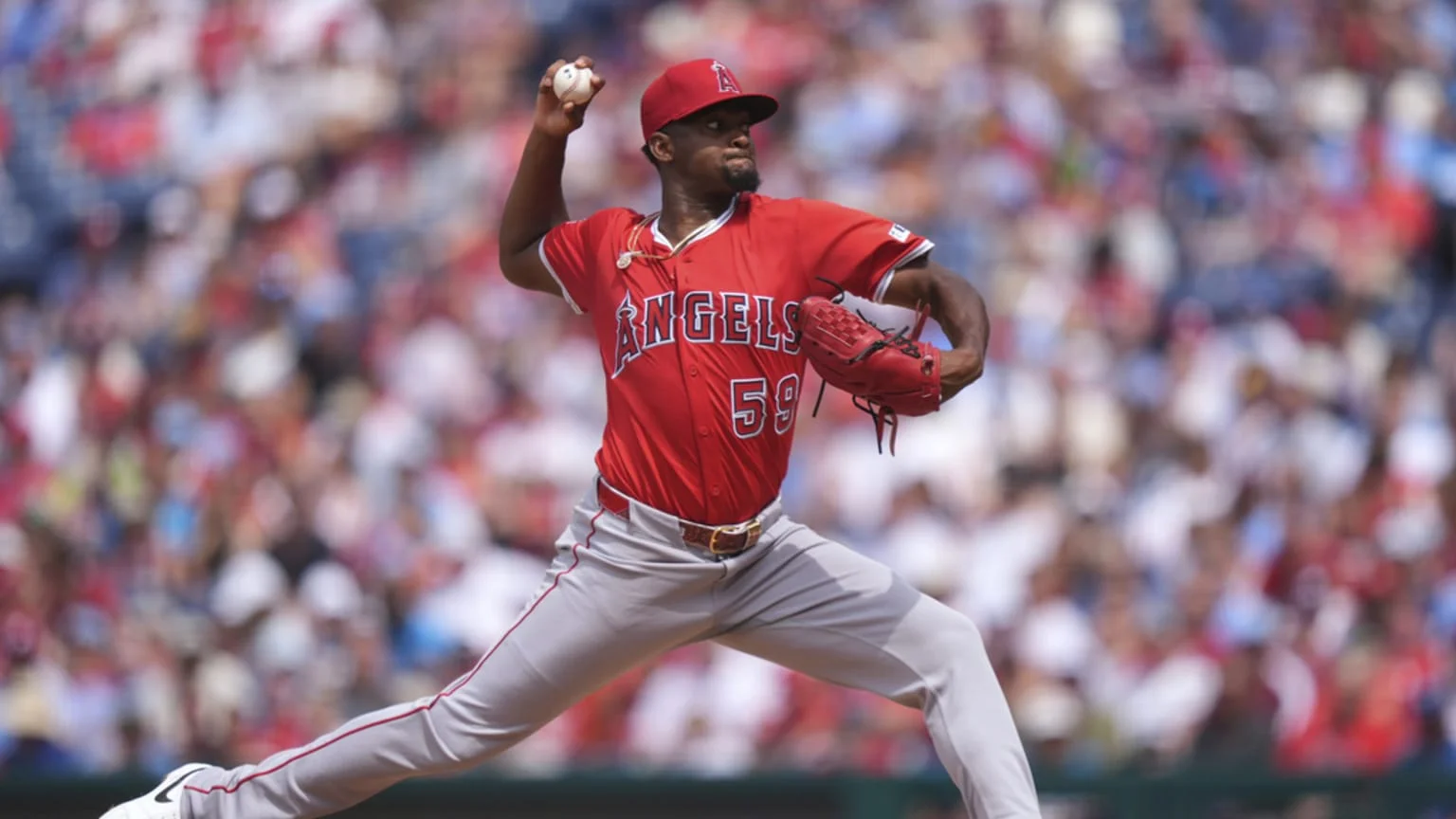
In an April interview with Jeff Fletcher of the Orange County Register, Soriano explained his preference for sinkers:
“I love throwing my sinkers because they go through the innings quicker, with less pitches,”
and added,
“I’d rather do that than have more pitches and more strikeouts.”
Currently, he averages just 3.79 pitches per plate appearance, ranking 17th out of 59 qualified starters, underscoring his intention to work efficiently and rely on contact outs.
Limited Two-Strike Pitches Reduce Soriano’s Strikeout Opportunities
A key factor in Soriano’s lower strikeout numbers is the lack of two-strike counts where pitchers typically hunt for strikeouts. While nearly 30% of all major league pitches are thrown with two strikes, only 26.7% of Soriano’s pitches come under those circumstances. This shortage diminishes his chances to deploy secondary pitches aimed at producing swings and misses, contributing directly to his modest strikeout totals relative to his elite whiff rates.
Changing Pitch Usage with the Count Reflects Strategic Adjustments
Soriano’s pitch selection shifts as the count progresses. Early in the count, he heavily relies on his sinker, but when facing two strikes, he begins to incorporate more sliders and splitters. Despite this, over 40% of his two-strike pitches remain sinkers, suggesting he does not fully pivot to his secondary pitches even when putting batters in more vulnerable situations. The combined use of his three secondary pitches at two strikes totals about 57.7%, highlighting a continued emphasis on his primary sinker even when pursuing strikeouts.
Plate Discipline Metrics Reveal Challenges with Secondary Pitches
Analysis of plate discipline data shows batters swing more frequently at each of Soriano’s pitch types with two strikes but paradoxically whiff less often compared to earlier counts. His splitter, in particular, suffers from poor command: he rarely throws it in the strike zone, and when he does, it often falls into areas classified by Statcast as the “waste zone,” locations that are easy for batters to take. About one-third of his splitters thrown with two strikes land in these non-threatening zones, producing just one swing and one whiff on such pitches. This lack of precision undermines the pitch’s effectiveness as a chase pitch.
Soriano’s curveball, although thrown more often than other secondary pitches and ideally suited to generating whiffs before two strikes, has seen a decline in its Stuff+ grade from 104 to 73 this season. Despite opponents hitting worse against it than last year, the statistical model indicates a downgrade, possibly due to its interaction with his other pitches rather than pure effectiveness. Differences in release point—two inches higher vertically and three inches horizontally compared to his sinker, along with a six-degree higher release angle—may allow batters to recognize the curveball sooner, diminishing its impact in two-strike counts.
Intentional Groundball Strategy May Be Hampered by Team Defense
Soriano’s preference to maintain sinker dominance, even with two strikes, signals a deliberate approach focused on quick outs and groundballs rather than maximizing strikeouts. However, this strategy clashes with the realities of the Los Angeles Angels’ defense, which currently ranks near the bottom of Major League Baseball according to Outs Above Average (OAA) metrics. Their infield defense is 27th in the league, increasing the likelihood that contact against Soriano will result in hits rather than outs.
This poor defensive support partially explains Soriano’s elevated batting average on balls in play (BABIP) of .317 this season and his earned run average (ERA) outpacing his fielding-independent pitching (FIP) by nearly half a run. While inducing groundballs can be effective, it relies heavily on quality defense, making Soriano’s reliance on that approach problematic given the Angels’ current defensive profile.
Fine-Tuning Secondary Pitches Could Improve Outcomes
Simply increasing the frequency of Soriano’s secondary pitches may not fully address his performance challenges. His struggles to command the splitter and the noticeable release point signature on his curveball are mechanical and control issues rather than strategic choices. Among his secondary pitches, the slider stands out as consistently effective irrespective of the count.
Focusing on improving command with his breaking balls, particularly the splitter, offers a clearer path toward better results than continuing to depend on weak defense. His breaking pitches retain elite whiff rates, and better utilization of these weapons could increase Soriano’s strikeout numbers while maintaining efficiency. Given his current performance and team context, making these adjustments seems critical for Soriano to realize his pitching potential more fully.